


Infinix Note 60 Pro first impressions show a surprisingly fun upgrade
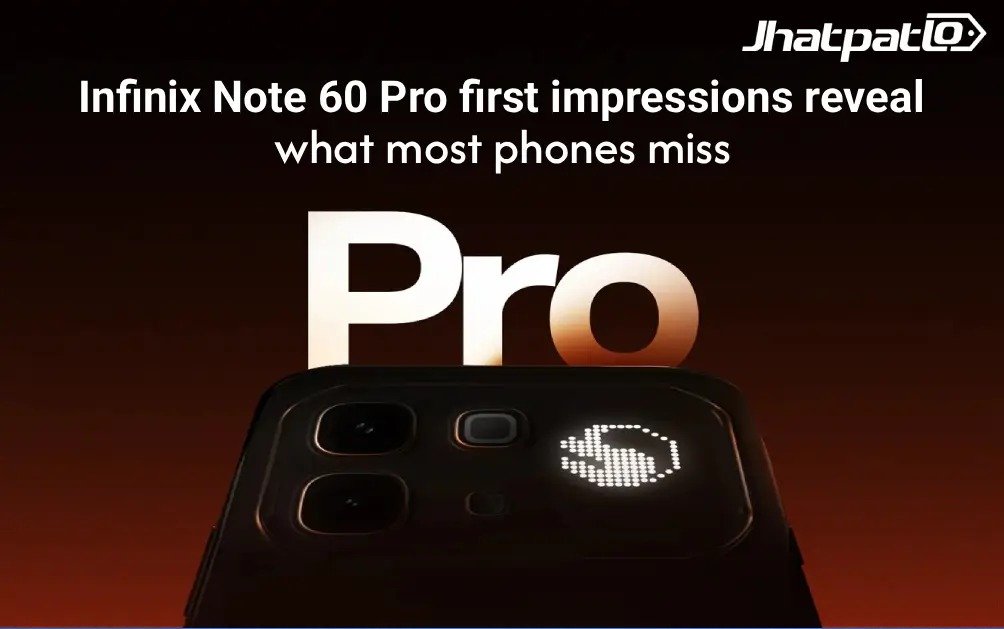
The mid-range phone market is full of devices that look good on paper, then quietly disappear into the crowd. That’s why the **Infinix Note 60 Pro first impressions** feel a little more interesting than usual. It’s not just another “big battery, decent camera” story. There’s an actual personality here, and that already makes a difference.
Launching in India on April 13, the Note 60 Pro brings a few things that are hard to ignore: it’s the first Snapdragon-powered Infinix phone, it introduces an Active Matrix Display on the back, and there’s even a special Call of Duty: Mobile edition for people who like their phones with a bit of flair. After some early hands-on time, it’s pretty clear that Infinix is trying to do more than just check spec-sheet boxes.
Quick Highlights
- Back panel doubles as a tiny LED screen
- First Infinix phone with Snapdragon power
- Custom health and accessory features add novelty
- Design feels premium, even if the influences are obvious
- Pricing will decide how far this phone can go
That back panel is the real conversation starter
Let’s start with the thing most people will notice first. The Active Matrix Display on the rear isn’t just a fancy light strip or a small decorative touch. It’s a mini LED panel built from 288 independent LED pixels, which means it can actually show different animations, symbols, and little functions instead of just blinking for effect. And honestly, that’s where it gets more fun than expected.
You can use it for pixel pets, mini games, custom signatures, and different notification alerts. Incoming messages? It can light up. Weather update? It can show that too. Charging status and battery alerts? Also covered. That makes it feel more like a small interactive canvas than a simple design flourish.
Now, to be fair, phones have tried playful back designs before. Sometimes they end up feeling like a gimmick you show off once and then forget about. But this one seems more useful than that. The fact that you can tweak brightness and personalize it adds a bit of depth. It’s not huge, but it’s the kind of thing that makes a phone feel a little more yours.
And yes, there’s a subtle “look at me” vibe to it. But in a market where so many phones blend together, maybe that’s not a bad thing.
Design that borrows ideas, but still doesn’t feel boring
The design story here is a bit interesting, because it’s hard not to notice the influences. The camera module and the Solar Orange finish clearly bring to mind the iPhone 17 Pro, while the rear LED setup has some obvious overlap with the Nothing Phone (3)’s Glyph Matrix. Even the wallpapers lean a bit iOS-ish. So, if you’re hoping for a completely original visual language, this probably isn’t that.
But here’s the thing: inspiration doesn’t automatically mean imitation, at least not in the way people usually fear. The Infinix Note 60 Pro still manages to feel like its own device. The build is comfortable in hand, the finish feels premium enough for the segment, and it doesn’t come across as overly bulky or awkward. That matters more than people sometimes admit.
The colour options also help. Mocha Brown is the safest, most understated choice, and it has a kind of mature look that should age well. Solar Orange is louder, naturally, but it looked better in person than it did in teasers. That’s one of those rare cases where a phone’s actual presence feels more convincing than the promotional images. Deep Ocean Blue sits somewhere in between, giving people a more vibrant option without going full neon.
There’s also a Call of Duty: Mobile edition, which includes themed UI elements, custom icons, and special packaging. The hardware doesn’t change, so this is mostly for fans who enjoy a bit of thematic dressing. Still, it’s a nice touch. Not essential, but definitely more memorable than a plain “special edition” sticker slapped on a box.
There’s a health trick hidden in the side button
One of the more unusual additions is the dedicated side button that can measure heart rate and SpO₂. You press and hold it, and the readings appear in the My Health app. On paper, it sounds like the sort of feature that might be buried in a marketing slide and never used again. In real life, though, it could actually be handy for quick checks.
Of course, this isn’t meant to replace proper medical devices, and nobody should treat it like a clinic-grade sensor. But for casual, on-the-go tracking, it’s a smart little extra. You don’t often see this kind of health-focused convenience in the mid-range segment, and that’s what makes it notable. It’s not groundbreaking. It’s just thoughtful, which is often better.
That same idea seems to run through the phone overall. A lot of the features here don’t scream “industry first” in a dramatic way, but they do suggest someone spent time thinking about how people actually use their phones during the day.
MagPower speaker accessory sounds weird until you see it work
Then there’s the MagPower speaker accessory, which is one of those features that sounds slightly odd at first and then becomes more interesting the more you think about it. It magnetically attaches to the back of the phone and works as a Bluetooth speaker, a portable stand, and even supports 10W wireless charging. That’s a pretty crowded list for one accessory.
Infinix is bundling it with the Note 60 Pro for free for a limited time, which definitely helps. If you were buying this phone, that accessory would probably be one of the more fun extras in the box, especially if you like desk-friendly setups or low-effort media watching. It feels like the kind of thing you’d actually try instead of tossing back into the packaging.
And really, that’s one of the more appealing things about this phone so far. It doesn’t just want to sit in your pocket and do standard phone things. It wants to be a little interactive, a little playful, and a little more flexible than the average mid-ranger. That doesn’t automatically make it better, but it does make it easier to remember.
The Snapdragon shift matters more than it sounds
This is also the first Qualcomm-powered Infinix phone, and that’s a bigger deal than it may sound at first. The Note 60 Pro is powered by the Snapdragon 7s Gen 4, which should bring a healthy jump in performance compared to older models in the lineup. That doesn’t mean it’s suddenly a gaming beast or some kind of flagship killer, but it does suggest a more confident, more stable experience overall.
The move to Snapdragon matters because chipset choice affects a lot more than benchmark numbers. It influences everyday smoothness, thermal performance, app switching, camera processing, and even how long a phone stays usable before it starts feeling sluggish. In short, it shapes the whole experience.
To help with that, Infinix has also included a vapour chamber cooling system. That should help when the phone gets pushed a bit harder, especially during gaming or longer sessions. We’ll need full testing to know how effective it really is, but on paper it sounds like the right move. Heat can quietly ruin a phone’s performance, and cooling is one of those things people only notice when it’s missing.
| Feature | Infinix Note 60 Pro | Why it stands out |
|---|---|---|
| Processor | Snapdragon 7s Gen 4 | First Qualcomm chip in an Infinix phone, promising stronger performance |
| Rear display | Active Matrix Display with 288 LED pixels | Supports animations, alerts, pixel pets, and custom signatures |
| Health shortcut | Side button for heart rate and SpO₂ | Quick health checks without opening multiple menus |
| Accessory | MagPower speaker | Bluetooth speaker, stand, and wireless charging support |
| Special edition | Call of Duty: Mobile edition | Themed software and packaging for gamers |
So, what’s the early verdict?
At this point, the Infinix Note 60 Pro first impressions are pretty positive, with one big caveat: pricing will decide a lot. The phone clearly wants to stand out in a crowded mid-range smartphone market, and it does that through a mix of design, playful interaction, and practical extras. That combination is refreshing.
The Active Matrix Display is the obvious headline feature, but the Snapdragon chipset shift might end up being just as important in day-to-day use. A cool design is great, sure, but smooth performance is what people live with. If both of those hold up well, the Note 60 Pro could become one of those phones people recommend simply because it feels different in a good way.
There’s still plenty to test, especially around camera performance, long-term thermals, and how useful the rear display actually feels after the novelty wears off. But right now, this doesn’t look like a phone that’s trying to quietly exist. It looks like a phone with opinions. And honestly, that’s kind of fun.
If Infinix gets the final pricing right, this could be one of the more memorable mid-range launches of the year. And maybe that’s the real win here: not just packing in features, but making them feel like they were added with a bit of personality. Wouldn’t that be nice for a change?
Related Products


What Makes Infinix Note 60 Pro So Special?
Infinix Note 60 Pro Teased by Official Teasers Infinix has confirmed the Note 60 Pro will launch soon as a successor to the Note 50 Pro. Official teasers on the company’s social media channels reveal design language, colourways and a subset of key specifications. The device is listed in S...
.webp)
Infinix Note 60 Series Uses Snapdragon Chips for First Time
Infinix Teams with Qualcomm to Power Note 60 Series With Snapdragon Infinix confirms that select models in the Note 60 lineup will be powered by Snapdragon mobile platforms for the first time. The company says the Note 60 Pro will debut in Nigeria soon, and the collaboration with Qualcomm...

Infinix Hot 70 Brings Colour Changing Design to Budget Phones
Infinix Hot 70 launches in Indonesia with reactive rear panel Infinix has launched the Hot 70 in Indonesia, adding a temperature-reactive rear panel called Thermo Orange to the budget smartphone segment. The phone also comes with a 6,000mAh battery, 45W charging, and a MediaTek Helio G100 Ult...

Infinix Note 60 Ultra Geekbench Listing Reveals Dimensity 8400 Ultra Chip and 200MP Camera
Geekbench Listing Points to Dimensity 8400 Ultra and 12GB RAM An upcoming Infinix smartphone, the Note 60 Ultra, appeared on the Geekbench benchmarking database on February 12 under model X6877. The listing suggests a Dimensity 8400 Ultra octa‑core chipset, with four cores at 2.10GHz, three cores a...

Pixel 10a Price Drop and Poco F8 Pro Discount Ahead of Pixel 10a Launch
The Pixel 10a was announced earlier this week and is positioned to shake up the European mid‑range market, though sibling rivalry with the 9a may be the biggest hurdle for the younger model. The official details frame the 10a as a device closely aligned with its predecessor, offering similar core sp...
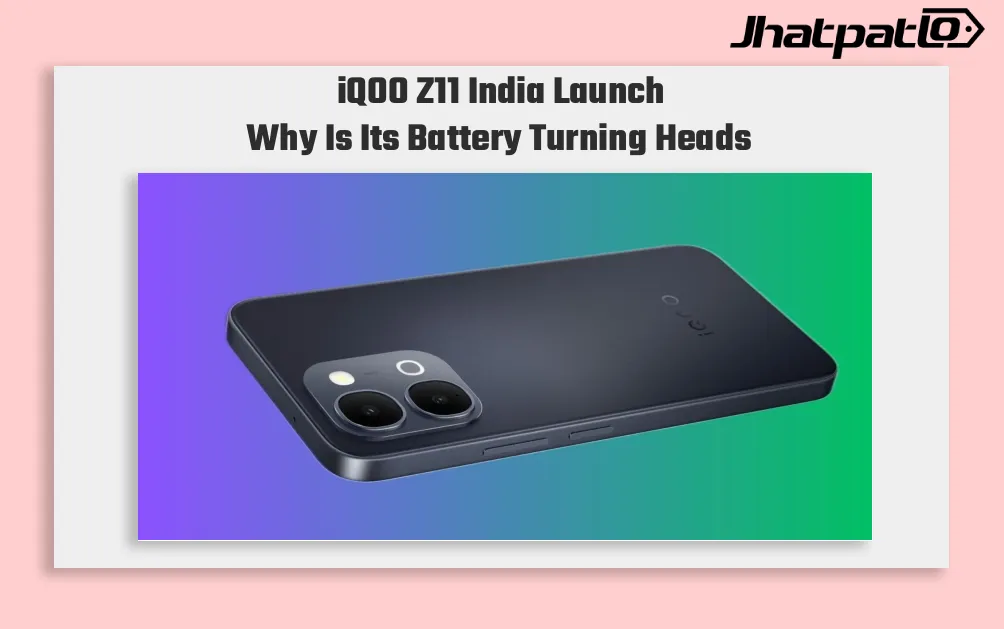
iQOO Z11 India Launch Tipped With 9020mAh Battery and Rs 30000 Price
iQOO Z11 India launch tipped for June iQOO Z11 is tipped to launch in India in June with pricing under Rs 30,000, according to the provided input. The phone is said to stand out with a 9,020mAh battery, 90W charging and the Snapdragon 7s Gen 4 chip for the Indian market. The reported India v...