


Infinix Note 60 Pro reasons to buy or skip if you want style, speed, and less compromise
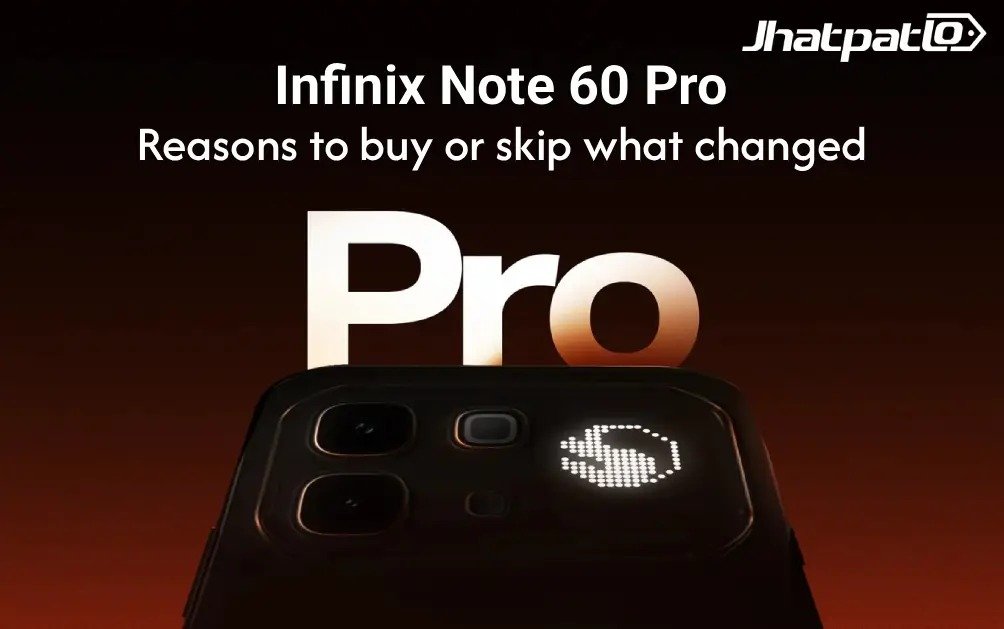
If you’ve been scrolling through mid-range phones lately, the Infinix Note 60 Pro reasons to buy or skip is probably one of those devices that makes you stop for a second. Not because it’s trying to be quiet. Quite the opposite, actually. It shows up with an iPhone 17 Pro-like design, a rear Active Matrix Display, a bright AMOLED screen, and enough software tricks to make the usual mid-range sameness feel a little tired.
But here’s the thing. A phone can look exciting and still not be the right buy for you. That’s where the Infinix Note 60 Pro gets interesting. It’s a strong all-rounder in a few very visible ways, but it also has some very real trade-offs, especially if comfort and durability matter more than flash.
Quick Highlights
- Bright 1.5K AMOLED display with 144Hz support
- Rear Active Matrix Display adds useful flair
- Snapdragon 7s Gen 4 handles gaming well
- XOS 16 feels more polished and interactive
- Big size and IP64 rating may push some buyers away
So if you’re trying to decide whether the Infinix Note 60 Pro is worth buying or whether it’s smarter to skip it, the short answer is this: it makes a lot of sense for people who want a feature-packed mid-range phone that feels lively and different. It’s less ideal if you want a compact, rugged, no-nonsense device that disappears into daily life and just works without drawing attention.
A display that does a lot of heavy lifting
The first reason the Infinix Note 60 Pro stands out is the screen. And honestly, that matters more than people sometimes admit. You stare at your phone all day. If the display is dull, the whole experience feels cheaper than the specs sheet suggests. Infinix goes in the opposite direction here with a 6.78-inch 1.5K AMOLED display, a 144Hz refresh rate, HDR10+ support, Gorilla Glass 7i, and a claimed 4,500 nits peak brightness.
That’s a lot of screen value for a mid-range smartphone, and the real-world result sounds just as good as it looks on paper. Colours are vibrant without becoming silly, contrast is strong, and the panel remains easy to see outdoors. That outdoor visibility part may sound minor, but it’s one of those quality-of-life things you notice every single day. It also performs well at lower brightness, which is good news if you read at night or scroll in bed like the rest of us.
One small detail worth knowing: while the display can reach 144Hz in supported games, everyday UI usage is capped at 120Hz. That’s not exactly a dealbreaker, and most people won’t care once the scrolling feels smooth. Still, it’s a reminder that spec numbers and actual daily behavior don’t always match perfectly.
The rear display is gimmicky, but not useless
Now let’s talk about the feature that will probably get the most attention: the Active Matrix Display on the back. This is Infinix being playful, and maybe a little bold. The rear camera area includes 288 individual LEDs that can show notifications, charging status, battery levels, custom text, emojis, pixel pets, and even a few mini-games.
That sounds fun because it is fun. And unlike some phone features that exist mostly to impress in a launch video, this one has a bit more personality than you’d expect. You don’t need it to check the time or read alerts, obviously. But it does give the Note 60 Pro a more interactive feel, and that can make the phone feel less like a slab and more like something with a bit of character.
If you like phones that stand out, this is a win. If you prefer a cleaner, simpler design, you may see it as unnecessary noise. Fair enough. The interesting part is that the rear display isn’t just decorative. It adds quick-glance convenience in small moments, and those little moments sometimes shape how much you enjoy a phone more than benchmark scores do.
Gaming is better in practice than the numbers suggest
On the performance side, the Infinix Note 60 Pro uses the Snapdragon 7s Gen 4. That puts it in a fairly competitive spot among mid-range Android phones, though it doesn’t always top the charts in synthetic tests. And that’s fine, because most people don’t sit around running benchmarks all day. They open games, switch apps, stream videos, and try not to heat up the phone like a hand warmer.
In daily use, the Note 60 Pro comes across as stable and well-optimised. Infinix seems to have leaned more toward gameplay consistency than raw benchmark bragging rights, which is probably the smarter move for most buyers. Games like Honor of Kings can run at 120fps, while COD Mobile averages closer to 56.9fps in testing rather than the claimed 120fps. That gap matters, sure, but it doesn’t make the phone a bad gaming pick. It just means the marketing is a little more ambitious than the experience in some titles.
What helps a lot is the cooling setup. The phone includes a large 4758mm² 3D IceCore VC cooling system with crystal graphite, which keeps thermals under control during longer sessions. That means less overheating, less throttling, and fewer moments where the phone starts feeling tired before you do. If you enjoy gaming and want something that stays reasonably steady instead of flashy for ten minutes and shaky after that, this part of the phone makes a strong case for itself.
In short:
- Good for stable everyday performance
- Better at gaming consistency than raw numbers
- Cooling is one of its stronger practical strengths
XOS 16 feels more alive than before
Software can make or break a phone’s personality, and this is another area where the Infinix Note 60 Pro tries to be a little more engaging than usual. It runs XOS 16 based on Android 16, with a promise of three major OS updates and five years of security patches. That’s not perfect, but it’s pretty respectable for the segment.
The interface itself feels more polished than older Infinix software versions, which is nice because the brand has not always had the cleanest reputation in this area. There’s better customisation, smoother day-to-day use, and a more playful approach to interaction overall. Yes, you can see the inspiration from other Android skins and even iOS in places. That’s not exactly surprising anymore. A lot of phone makers borrow the same visual ideas and then repackage them with their own flavor.
Still, features like Mind Hub, which organizes and summarises notes captured through the One-Tap FlashMemo shortcut, add genuine utility. The Dynamic Bar also makes music and notifications feel more contextual, which is a small thing that can improve the feel of the phone every day. If you’re someone who likes software that feels interactive rather than plain and invisible, the Note 60 Pro will probably click with you.
Why some people should think twice
Okay, now for the part where the phone stops sounding like a universal yes. Because it isn’t. The first big reason to skip the Infinix Note 60 Pro is simple: it’s bulky. The design is eye-catching, and the oversized camera island plus the orange finish definitely give it personality. But personality can come with consequences.
This is a large phone, and that matters more in daily use than people expect when they’re comparing spec lists online. One-handed use is awkward. Long sessions of gaming or video watching can make your hand feel it. The weight may be balanced, but the overall size still turns it into a device you notice in your pocket and in your grip. If you’ve ever used a phone that seemed fine for the first ten minutes and then slowly became annoying, you already know the feeling.
So, if comfort matters to you, this is a real caution sign. The Note 60 Pro is not the sort of phone that disappears into the background. It announces itself every time you pick it up. Some people love that. Others will get tired of it fast.
Durability is the other weak spot
The second major reason to hesitate is the IP64 rating. That gives you basic protection against dust and light splashes, which is better than nothing, but not especially impressive in 2026 where plenty of phones in this price zone advertise IP68 or even IP69 resistance. And that’s a pretty big difference if you live in a place where rain, dust, spills, or the occasional bad luck moment are part of normal life.
Here’s the plain version: the Infinix Note 60 Pro isn’t built like a rugged phone, and it doesn’t pretend to be one. If you’re rough on your devices, if you work outdoors, or if you simply want more peace of mind around water exposure, this is one area where rival phones may be safer choices. The screen and performance are strong, yes, but durability is where the Note 60 Pro feels a step behind the more cautious options around it.
That doesn’t make it fragile in the dramatic sense. It just means it doesn’t offer the same confidence level as tougher competitors. And for some buyers, that’s enough to rule it out.
So who should buy it, really?
The Infinix Note 60 Pro makes the most sense if you want a feature-rich mid-range smartphone that feels fun, modern, and a bit different from the usual crowd. It’s a good fit if you care about display quality, enjoy customisable software, like small design quirks, and want gaming performance that stays stable rather than showy.
It also suits people who appreciate a phone with personality. Not everybody wants a boring rectangle with a safe design and zero surprises. Some buyers want a device that feels like it has opinions. Infinix clearly understands that crowd.
On the other hand, you should probably skip it if you want a lighter phone, if you care a lot about strong water resistance, or if you’re looking for something that’s easy to use one-handed all day. It’s also not the best pick if you’re very sensitive to weight and bulk, because those things can become annoying faster than you’d expect.
If I had to boil it down, the Infinix Note 60 Pro reasons to buy or skip are really about priorities. Buy it for the screen, the playful rear display, the steady gaming performance, and the lively software. Skip it if comfort and durability sit higher on your list than style and extras.
And maybe that’s the real question here: do you want a phone that quietly blends in, or one that tries a little harder to be memorable? Because with the Note 60 Pro, that answer pretty much decides everything.
Related Products


What Makes Infinix Note 60 Pro So Special?
Infinix Note 60 Pro Teased by Official Teasers Infinix has confirmed the Note 60 Pro will launch soon as a successor to the Note 50 Pro. Official teasers on the company’s social media channels reveal design language, colourways and a subset of key specifications. The device is listed in S...

Infinix Note 60 Ultra Geekbench Listing Reveals Dimensity 8400 Ultra Chip and 200MP Camera
Geekbench Listing Points to Dimensity 8400 Ultra and 12GB RAM An upcoming Infinix smartphone, the Note 60 Ultra, appeared on the Geekbench benchmarking database on February 12 under model X6877. The listing suggests a Dimensity 8400 Ultra octa‑core chipset, with four cores at 2.10GHz, three cores a...

Infinix GT 50 Pro Leaks Design and Dimensity 8400 Ultimate Chip
An alleged design render for the Infinix GT 50 Pro has surfaced online along with prospective specifications. The render shows a black device with green LED lighting at the bottom and a carbon fiber style rear panel. The back camera module sits in the upper left corner. The leak, attribute...

iQOO Neo 10 Price in India Updated with New Colour Variants
iQOO Neo 10 Gets New Colours in India iQOO Neo 10 has arrived in two new colour variants, Alpine White and Asphalt Black, while the existing options remain Inferno Red and Titanium Chrome. The phone continues with the same hardware, including a 6.78-inch AMOLED display, Snapdragon 8s Gen 4 ch...
.webp)
Infinix Note 60 Series Uses Snapdragon Chips for First Time
Infinix Teams with Qualcomm to Power Note 60 Series With Snapdragon Infinix confirms that select models in the Note 60 lineup will be powered by Snapdragon mobile platforms for the first time. The company says the Note 60 Pro will debut in Nigeria soon, and the collaboration with Qualcomm...
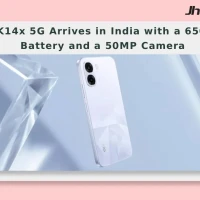
Oppo K14x 5G Arrives in India with a 6500mAh Battery and a 50MP Camera
Oppo K14x 5G at a glance Budget smartphones that actually feel solid are finally common, but the Oppo K14x 5G tries to stand out with one standout feature: a very big battery for the under Rs 15,000 range. If you’re after long days without hunting for a charger, this one could be worth a...