


iQOO 16 camera specs confirmed with OV50Q main sensor
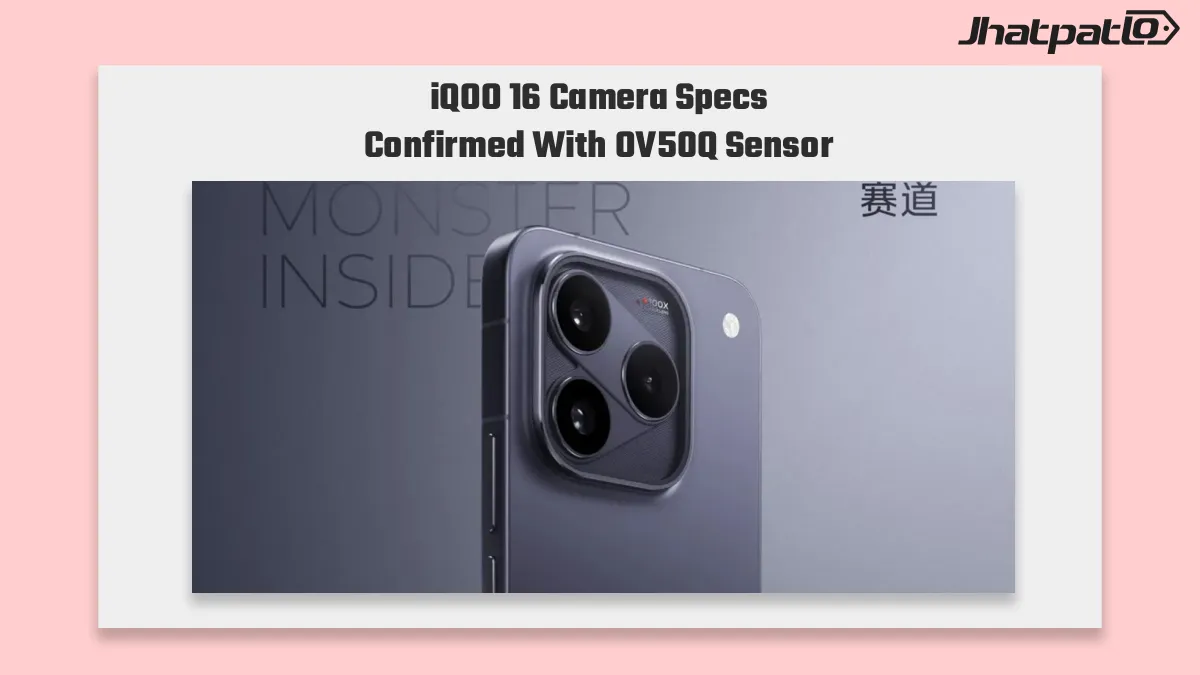
iQOO has confirmed the iQOO 16 camera setup before its China launch, and the headline detail is a 50MP OmniVision OV50Q main sensor with a 1/1.3-inch size, OIS, and CIPA 5.5 stabilization. The phone also adds a 50MP Sony IMX882 3x periscope lens, making this a more complete rear camera system than a simple upgrade on paper.
The iQOO 16 camera specs are now confirmed to include an OV50Q main sensor, promising a major upgrade in camera performance. The new sensor could improve image quality, detail, and low-light photography.
For buyers tracking flagship camera changes, the interesting part is not just the larger main sensor. iQOO is pairing it with telephoto hardware, an ultra-wide camera, and several Vivo imaging features that suggest a broader focus on detail, zoom, and processing. That makes the iQOO 16 easier to compare against other premium Android phones expected later in 2026.
What You Need to Know
- iQOO 16 camera specs are now confirmed with a 50MP OmniVision OV50Q main sensor, a 1/1.3-inch sensor size, OIS, and CIPA 5.5 stabilization ahead of the China launch.
- The rear setup includes a 50MP Sony IMX882 3x periscope lens, which gives the phone a stronger zoom story than phones that rely mainly on one large primary camera.
- A 50MP ultra-wide camera rounds out the system, so the camera package is built to be more balanced across everyday shots, wide scenes, and zoom use.
- Vivo’s Ultra Light Shadow HDR, NICE 3.0 optical reconstruction, and 4K Ultra HD Live Photos support are also part of the imaging stack.
iQOO 16 3x periscope camera adds 50MP Sony IMX882 telephoto
The second confirmed camera detail is the 50MP Sony IMX882 3x periscope lens. That matters because periscope zoom is usually where flagship phones start to separate themselves from basic triple-camera setups. A 3x lens gives the iQOO 16 a more practical telephoto option for portraits, distant subjects, and everyday zoom shots.
Alongside that, iQOO is including a 50MP ultra-wide camera. The result is a rear setup that looks more evenly matched than a spec sheet built around one main camera and a secondary wide lens that feels like an afterthought. In simple terms, the phone is being positioned as a device that can cover more shooting situations without leaning too hard on one sensor.
That should matter in a market where premium Android phones often compete on camera versatility as much as raw image quality. A larger sensor can help with low-light detail, but a proper telephoto lens still gives users more flexibility. The iQOO 16 appears to be chasing both angles at once, at least on paper.
Vivo Ultra Light Shadow HDR and 4K Ultra HD Live Photos support
iQOO is also borrowing several imaging features from Vivo. The list includes Ultra Light Shadow HDR, NICE 3.0 optical reconstruction, and 4K Ultra HD Live Photos support. These are software and processing additions, but they matter because camera performance is not only about hardware anymore. Image reconstruction and HDR tuning can change how the phone handles contrast, highlights, and motion.
Live Photos support at 4K Ultra HD is another small but notable detail. It suggests iQOO is trying to make the camera experience feel more complete, especially for users who care about video-friendly captures and social-ready content. The outline does not go into deeper camera modes or video limits, so those details remain unclear for now.
The broader context is the rest of the hardware around it. The iQOO 16 is tied to the Snapdragon 8 Elite Extreme Gen 6 and the iQOO Q4 gaming chipset, which points to a flagship built for speed as well as photography. That combination may help iQOO frame the phone as more than a gaming device with cameras attached. It is shaping up as a more serious all-round premium Android option for launch-day comparisons.
What is still missing is just as important. iQOO has confirmed the core camera hardware, but it has not yet shared full sample images, detailed video specs, or the final launch timing in the outline provided here. Even so, the confirmed sensor list already gives a clear picture of where the company is aiming: bigger main-camera hardware, usable 3x zoom, and software support that should improve the final output.

Related Products








iQOO 16 tipped for 165Hz display and bigger battery
iQOO 16 165Hz display leaks point to a 6.85-inch flat 2K Samsung OLED with a 165Hz refresh rate, alongside an 8,500mAh battery and 120W wired charging. The latest rumors also mention a Snapdragon 8 Elite Gen 6 Pro, a 50MP OV50Q main camera, and IP68/IP69 protection, giving an early lo...

iQOO 15T Specs Leak Suggests 200MP Camera and 8000mAh Battery
Leaks around the iQOO 15T specs leak are pointing to a spec-heavy phone that could sit between the standard iQOO 15 and the rest of the brand’s lineup. Reports from Weibo tipsters Experience More and Digital Chat Station suggest the phone may arrive with a Dimensity 9500 chipset, a 6.82-inch 2...

iQOO 16 September Launch Confirms 165Hz AMOLED and 8,400mAh Battery
iQOO’s September launch teaser points to two devices built around performance first: the iQOO 16 and iQOO Pad Ultra. The phone is teased with a 165Hz AMOLED display, 8,400mAh battery, 16GB RAM and 1TB storage, while the tablet is being positioned as a gaming-focused device with an 8.8-inch OLE...
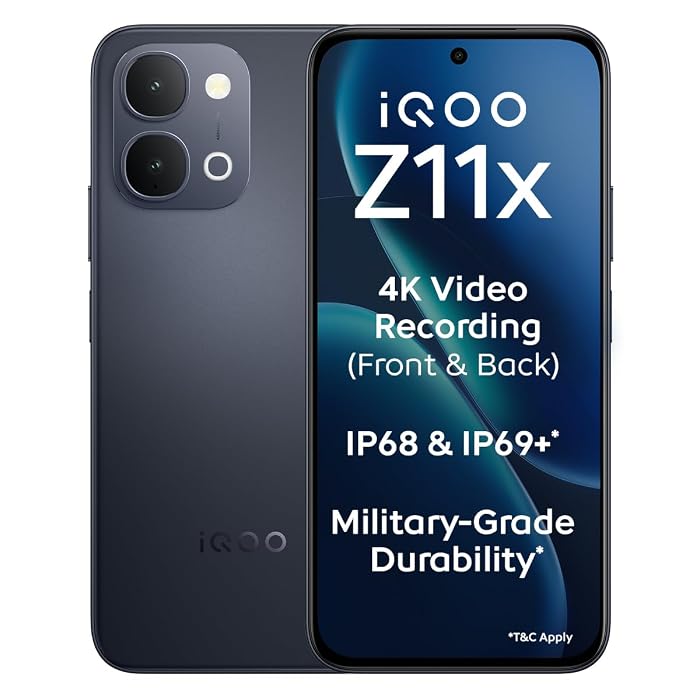
iQOO Z11x and Z11 Spotted on 3C Database With 90W Charging Hint
3C certification listing signals two new iQOO Z11 models The iQOO Z11x and iQOO Z11 have reportedly appeared on China’s 3C certification database, suggesting the Vivo sub-brand is lining up a second and third model in the Z11 series. The listings show model numbers V2547A and V2551A, wi...

iQOO 16 design leaks point to a UFO camera module and square deco
iQOO 16 design leaks suggest a major rear redesign, with a rounded square camera island, three linked lenses, and a more mechanical-looking frame. The leaked look also points to a textured back panel, while a separate teaser hints that iQOO may launch a compact gaming-focused tablet alongs...