


KENT vs Aquaguard for Indian Water Supply: Which Is The Perfect Purifier
Introduction
If you’re trying to pick between KENT and Aquaguard, the real question isn’t which brand sounds better on paper. It’s which purifier actually fits the water coming into your home. And honestly, that’s where most people get caught out. A purifier can look impressive in a showroom or online listing, but if your water is coming from a borewell with high TDS, or a tanker that changes quality from week to week, the wrong choice starts feeling expensive very quickly.
The clearest clue in the whole comparison is the 2000 mg/L TDS mark. Once you’re around that level, filter choice matters a lot more than brand familiarity. That’s the point where a purifier has to do more than just “clean water.” It has to handle hardness, recovery, mineral balance, and maintenance in a way that makes sense for Indian supply conditions. So, this comparison is really about matching purification to the water in front of you, not just buying the name you’ve heard the most.
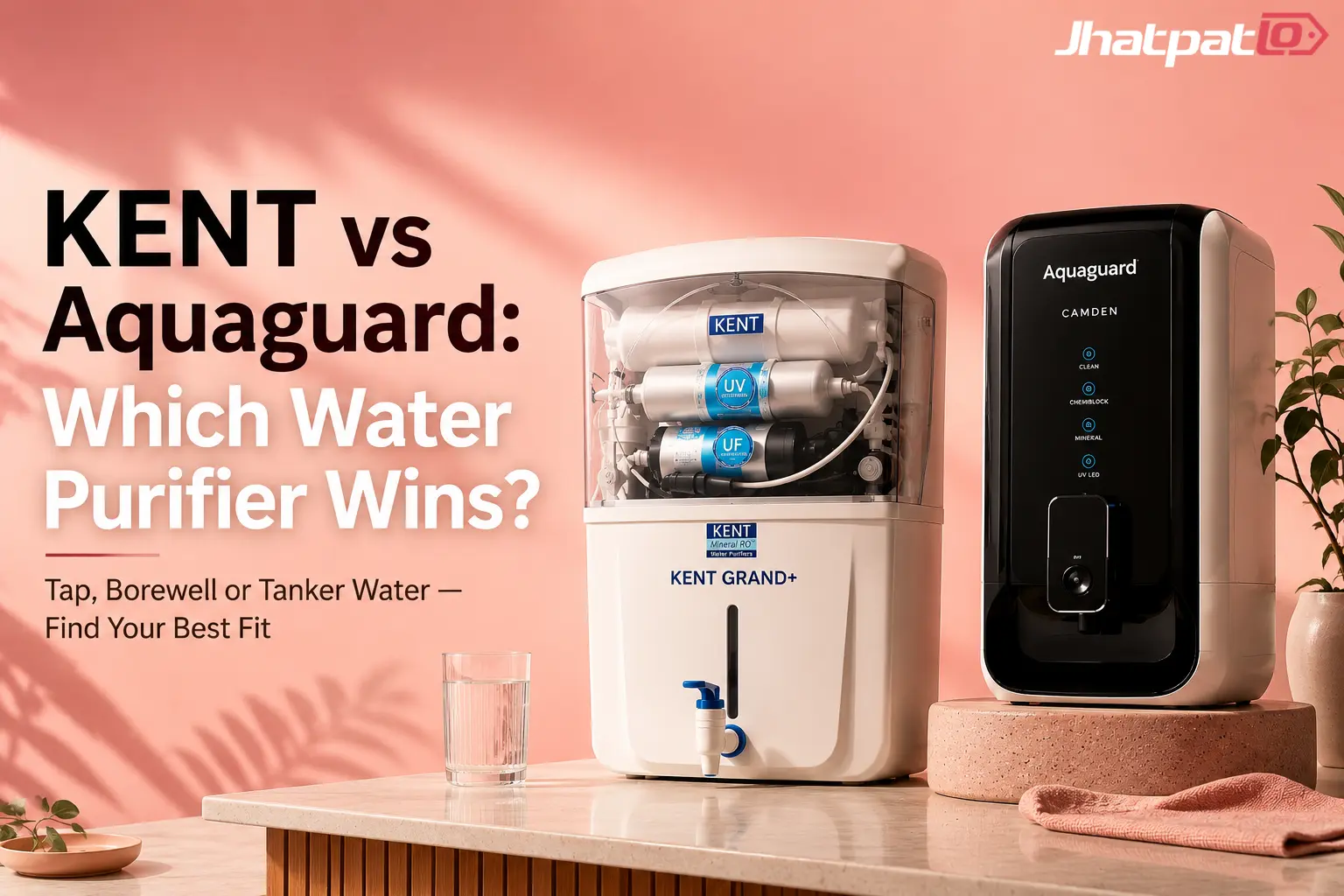
- KENT leans toward hard water and lower wastage.
- Aquaguard feels stronger for changing water sources.
- 2000 mg/L TDS is a major decision point.
- Filter life and service costs matter more than sticker price.
Which brand fits your water source better: KENT or Aquaguard?
Both brands are built for Indian conditions, but they don’t approach the problem in exactly the same way. KENT leans harder into mineral retention and lower wastage, while Aquaguard spreads its strength across multi-stage filtration and higher water recovery. That difference sounds small until you look at actual usage.
If your water is consistently hard, brackish, or full of swings in TDS, KENT tends to feel more aligned with that kind of environment. If your supply changes often — say municipal water one day, tanker water the next, maybe borewell on weekends — Aquaguard starts to look more practical. The split is less about which purifier is “better” in the abstract and more about which one is built for the messiness of your daily water supply.
The comparison table in the source already points to the split clearly: KENT is better aligned with borewell and hard water with high, varying TDS, while Aquaguard is positioned for municipal and tanker supplies where hygiene and mineral enrichment matter. That’s the real starting point. Everything else comes after that.
KENT’s stronger angle: hard water, lower wastage, and bundled mineral support
KENT’s case is strongest when the concern is brackish or hard water, especially where you do not want an RO system throwing away more water than it keeps. That matters more than people think. A purifier that wastes a lot of water can feel fine for a month, then annoying for years. KENT tries to reduce that friction with its Zero Water Wastage recirculation system, and that’s a meaningful advantage in homes where water conservation matters.
The Supreme Plus line pushes pH to around 9.5, adds copper, and uses a manual TDS controller valve. On paper, that sounds technical. In everyday terms, it means the purifier is trying to balance purification with a more mineral-friendly output, instead of stripping everything out and leaving you with very plain water. KENT’s Mineral RO tech also blends UF-filtered water back into the RO output, which is part of the reason it appeals to people who want purification without making the water feel too “flat.”
- Blends UF-filtered water back into RO output via Mineral RO tech
- Manual TDS controller valve
- Zero Water Wastage recirculation system
- Food-grade ABS plastic storage tanks across most models
- Selective models with Copper/Alkaline cartridges
- Best suited for borewell and hard water with high, varying TDS levels
There’s also a practical angle here: the storage tanks are food-grade ABS plastic across most models, which keeps the design simple and familiar. For many households, that’s enough. You’re not necessarily chasing fancy features. You just want the purifier to do its job without wasting too much water or struggling with hard supply.
Aquaguard’s stronger angle: source changes, tank hygiene, and water recovery
Aquaguard is framed as the safer match when the water source keeps changing — borewell one season, tanker the next, municipal in between. That sort of shifting supply is extremely common in Indian homes, and it changes what “good purification” actually means. In that setting, Aquaguard’s strengths feel more visible.
The Aquasaver technology, 2X long-life NanoPore filters, and stainless steel tank options make the brand feel practical rather than decorative. The recovery angle matters because no one likes the feeling that a purifier is wasting half the water it processes. The tank hygiene angle matters too, especially if you’re thinking long term and want something that feels cleaner to maintain.
- Multi-stage filtration with dedicated mineral and metal infusion cartridges
- High water-recovery Aquasaver technology
- 2X long-life NanoPore filters
- Surgical-grade 304 stainless steel tanks on premium models
- Active Copper, Zinc, and Alkaline Boost cartridges across many mid-to-high tier variants
- Best suited for municipal and tanker water supplies
What stands out is that Aquaguard doesn’t just focus on removing contaminants. It also pays attention to the life of the filter and the tank. That’s useful if your home supply is unpredictable, because the purifier needs to stay dependable even when the input water isn’t.
Which specific models stand out, and what do they actually do?
The article isn’t treating these as abstract brands; it anchors the decision in named models with clear differences in capacity, design, and what they emphasize. That makes the trade-offs easier to see. Some models are about water wastage and mineral enrichment, others about filter life, TDS visibility, or just keeping the buying price lower. And once you start looking at the actual models, the comparison becomes much less vague.
In other words, you’re not just choosing between KENT and Aquaguard. You’re choosing a specific purifier for a specific kind of water problem.
KENT Supreme Plus Alkaline+Copper RO and KENT Supreme Plus Neo
The KENT Supreme Plus Alkaline+Copper RO is the one built around recirculation, alkaline output, and copper support. It is listed with an ASIN of B0CB8KG44H, 8 liters capacity, dimensions of 40L x 25W x 52H cm, and weight of 8 kg. The article also notes a pH of around 9.5. That higher pH is part of the appeal for users who like the idea of water that feels a bit more balanced after RO purification.
The KENT Supreme Plus Neo keeps the same mineral-rich direction but frames it as the integrated version: alkaline and copper are already part of the base specification, not optional add-ons. It has ASIN B0H1BRKBB7, 8 liters capacity, dimensions of 36L x 32W x 50H cm, and weight of 9.6 kg. So if you want the KENT style but prefer the features built in from the start, this one is easier to understand.
Aquaguard Delight Aquasaver and Aquaguard Enrich Nexen
Aquaguard Delight Aquasaver is built for households that rotate between borewell and tanker water. It can work on input TDS up to 2000 mg/L, uses RO+UV+UF, has ASIN B0GTM4HHD1, 5 liters capacity, dimensions of 32L x 27W x 48H cm, and weighs 9.5 kg. That combination makes it a very relevant option if your water source is not stable enough to trust a simpler purifier.
Aquaguard Enrich Nexen keeps the same high-TDS readiness but adds the long-life angle: the Nanopore filter with scale prevention lasts 2 years, it handles 2000 mg/L TDS, and it includes Active Copper and Alkaline Boost. Its ASIN is B0H44QQ6HB, with 6 liters capacity, 27.5L x 35W x 53H cm dimensions, and 7 kg weight. If you care about not replacing filters too often, that 2-year angle is a big part of the value.
KENT Grand RO and Aquaguard Ritz Pro
KENT Grand RO is the simpler, lower-price option in the set. It uses core RO purification with TDS control, is compact and wall-mountable, and is described as suitable for brackish, tap, and municipal corporation water. Its specs: ASIN B09CGQ6FCK, 8 liters capacity, 39L x 53W x 25H cm, and 7 kg. This is the kind of purifier many households look at when they want a no-drama setup and don’t need too many extra features.
Aquaguard Ritz Pro adds the monitoring angle instead of trying to be the most stripped-down unit. It has a 2-year filter life, real-time TDS display on the device and in the app, a 9-stage RO system, and Titanium Duo filters with a 2-year life span for incoming water less than 1000 PPM. Its specs: ASIN B0DN1KJFY7, 5 liters capacity, 32L x 27.9W x 48H cm, and 8 kg. That real-time TDS visibility is especially handy if you like knowing what’s happening instead of guessing.
| Model | Capacity / Size | What stands out |
|---|---|---|
| KENT Supreme Plus Alkaline+Copper RO | 8 L; 40L x 25W x 52H cm; 8 kg; ASIN B0CB8KG44H | Recirculation system, pH around 9.5, copper support |
| Aquaguard Delight Aquasaver | 5 L; 32L x 27W x 48H cm; 9.5 kg; ASIN B0GTM4HHD1 | RO+UV+UF, up to 2000 mg/L TDS |
| KENT Grand RO | 8 L; 39L x 53W x 25H cm; 7 kg; ASIN B09CGQ6FCK | Compact, wall-mountable, lower-price core RO |
| Aquaguard Enrich Nexen | 6 L; 27.5L x 35W x 53H cm; 7 kg; ASIN B0H44QQ6HB | 2-year Nanopore filter life, 2000 mg/L TDS, Active Copper and Alkaline Boost |
| KENT Supreme Plus Neo | 8 L; 36L x 32W x 50H cm; 9.6 kg; ASIN B0H1BRKBB7 | Integrated alkaline and copper in the base model |
| Aquaguard Ritz Pro | 5 L; 32L x 27.9W x 48H cm; 8 kg; ASIN B0DN1KJFY7 | Real-time TDS monitoring, 9-stage RO, 2-year filter life |
What do installation, filter replacement, and service actually cost you over time?
This is where the purchase price stops being the whole story. A purifier can look affordable upfront and still become annoying if the filters are expensive, the service is slow, or the installation wasn’t included. So it’s worth thinking beyond the first payment.
The article points to installation charges, filter replacement every 6 to 24 months, and service availability as the real ownership factors. That matters even more in hard water because higher TDS blocks filters faster, which means more frequent and more expensive changes. In other words, the water itself can quietly raise your long-term costs.
| Cost or support factor | What to expect | Why it matters |
|---|---|---|
| Installation charges | May not be included in the listed product price | Check whether installation, filter housing, and valves are extra |
| Filter replacement | Every 6 to 24 months | Harder water and higher TDS can block filters sooner |
| Service and support | KENT and Aquaguard have wide nationwide networks | Local technician response times and part availability still vary by pincode |
That last bit is important. Even a strong brand can feel weak if service is slow in your area. So, if you live somewhere where technician visits are inconsistent, it’s smart to ask around locally before deciding. Real ownership is not just about the machine. It’s about how easy it is to keep the machine working.
How do you choose without overbuying features you won’t use?
The simplest way to avoid overpaying is to slow down and check three things first. Measure TDS, think about how many people will use the purifier, and decide whether you truly need the extra features or whether basic filtration is enough. That’s the real filter for your decision, no pun intended.
The article lands on three practical checks: measure TDS first, match capacity to family size, and decide whether basic filtration is enough or whether minerals and tank durability are worth the extra spend. An 8-liter tank can work well for smaller families, but the same tank gets drained fast in larger households with heavier daily use. So capacity is not a small detail — it changes the whole experience.
- Measure TDS level first with a TDS meter
- Use family size to judge whether 8 liters is enough
- Choose basic filtration if you are budget-conscious
- Pay extra if mineral retention or tank longevity matters long term
If you’ve ever regretted buying a feature-packed appliance that you barely used, this part will feel familiar. It’s tempting to choose the most advanced purifier you can afford. But the smarter move is usually the one that matches your actual water pattern. A modest purifier that suits your supply will often feel better than a premium unit that’s doing too much, or the wrong kind of work.
FAQ
These are the smaller doubts that sit just below the main comparison — the things people ask once they already know the broad brand split but still need one last nudge.
Q: Which is better for borewell water, KENT or Aquaguard?
KENT is the cleaner fit when the concern is hard water with high, varying TDS. Aquaguard also handles borewell water well, but the article positions it more strongly for mixed or changing sources.
Q: Is a stainless steel tank purifier worth it?
Yes, if tank hygiene and long-term durability matter more to you, which is why Aquaguard’s 304 stainless steel tank options stand out in the comparison.
Q: Do I really need RO+UV+UF water purification?
It becomes more relevant when your water source is unstable or you want broader protection across municipal, tanker, and borewell supply. That is the logic behind Aquaguard Delight Aquasaver.
Q: What TDS level is too high for a normal purifier?
The article repeatedly uses 2000 mg/L or 2000 PPM as the upper-end benchmark for several of the featured Aquaguard models, which is a useful reference point when comparing hard-water performance.
Conclusion
If your priority is lower wastage, alkaline output, and mineral support, KENT fits the intent better. If your water source keeps changing and you want stronger visibility or multi-stage filtration, Aquaguard makes the more practical case. Neither brand is automatically the right answer for every home, and that’s kind of the point.
The smart move is still the unglamorous one: measure the TDS, check your source pattern, and choose the purifier that matches how Indian water actually behaves in your home. That way, you’re not just buying a purifier. You’re buying a better daily routine.

Related Products


Coway P-350N water purifier lands 164-unit Prince Hotel Da Nang deal
Coway P-350N water purifier installations now give all 164 guest rooms at Prince Hotel Da Nang unlimited drinking water without bottled stock. The switch cuts 108,000 single-use bottles a year and puts Seibu Prince ESG hospitality into a visible, guest-facing upgrade in Vietnam’s coastal luxury mark...
Amazon Great Freedom Sale 2026 refrigerator deals slash prices on Haier LG Samsung
Amazon Great Freedom Sale 2026 is pushing large refrigerators into a sharper price band, with Samsung’s 653L side-by-side model listed at Rs. 67,990, down from Rs. 1,13,000. The sale also brings LG, Haier and Godrej models into view, along with bank discounts, Amazon Pay rewards and no-cos...

Airtel and Google Launch AI Powered RCS Spam Shield in India
Airtel has partnered with Google to strengthen security for Rich Communications Services messaging in India, tying Airtel's network intelligence to Google's RCS platform to introduce stronger verification and filtering for rich messages. The service will be available to Android users via t...
GoBoult Tenet launches in India with 13mm drivers and ENC no ANC
GoBoult Tenet has been launched in India as the brand's first true wireless stereo headset that is claimed to have been fully designed in the country. It supports fast charging and dual device connectivity. The GoBoult Tenet is equipped with four microphones for environmental noise cancellation ENC,...

India to Ban Hikvision and Dahua CCTV Sales from April 1
India Plans Fresh Limits on Chinese CCTV Brands India to Ban Hikvision and Dahua CCTV Sales as the country is set to bar Chinese video surveillance companies such as Hikvision and Dahua from selling internet connected CCTV cameras from April 1, according to a report by The Economic Times. The...
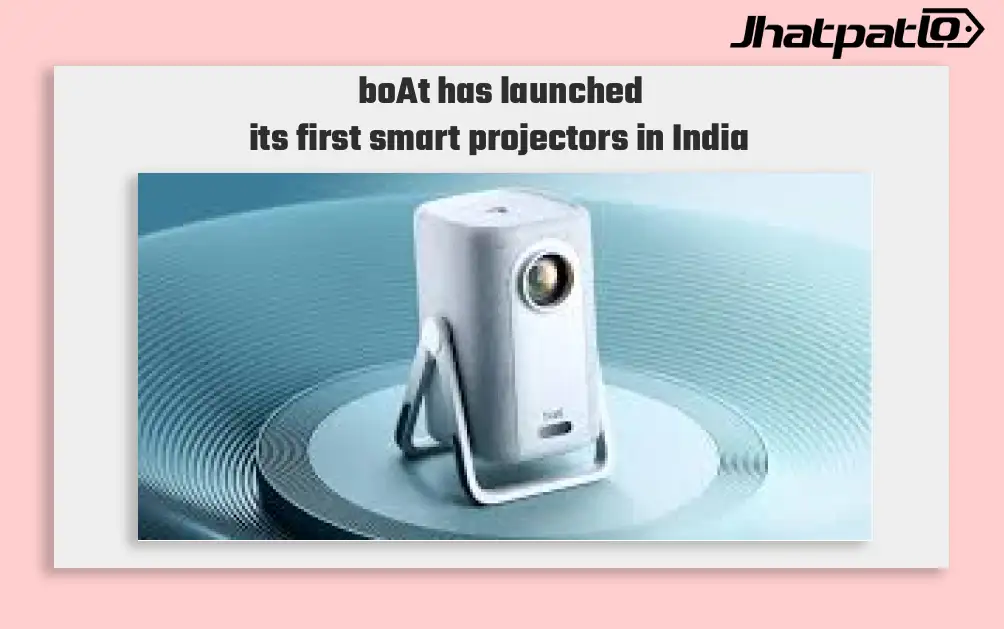
boAt Launches CineHead Smart Projectors in India With 150 Inch Projection
boAt enters projector market with CineHead M1 and E1 boAt has launched its first smart projectors in India, bringing two models under the CineHead line, the M1 and the E1. The company says both projectors support up to 150-inch projection, Android-based smart UI and up to 30,000 hours of lamp...