


Motorola Edge 70 Pro first impressions: slim style, big battery, and a few bold compromises
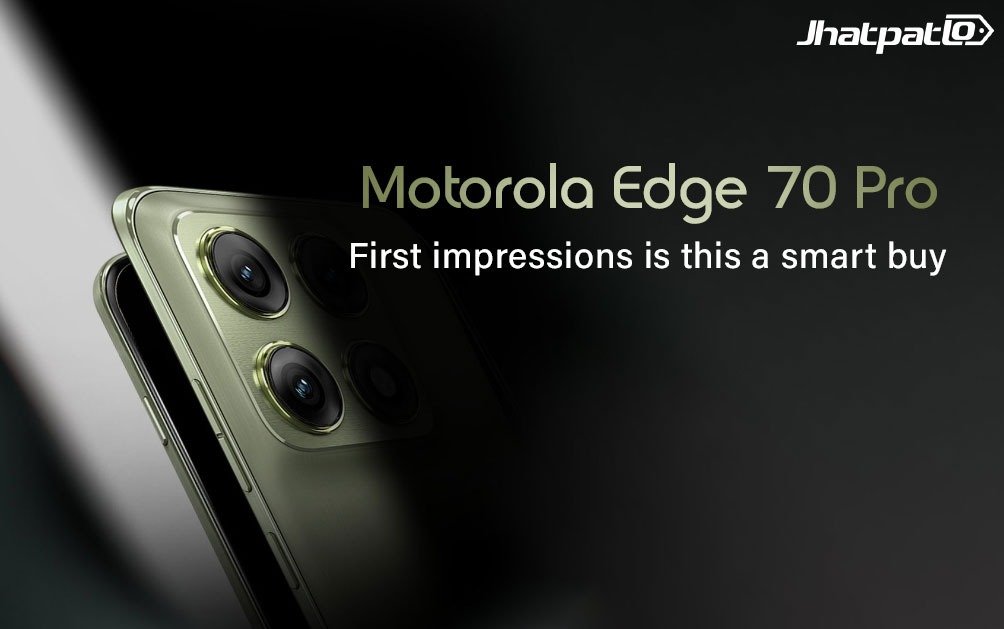
The Motorola Edge 70 Pro is one of those phones that tries to make an immediate impression without screaming for attention. And honestly, that’s a pretty smart move in a crowded mid-range market. On paper, it’s chasing the under Rs 40,000 crowd with a slim body, a massive battery, faster charging, and a spec sheet that looks like it wants to start a fight.
We spent some time with the device, and the first thing that stands out is how un-Motorola mid-range it feels in the hand. It’s light, sleek, and surprisingly confident. But there’s more going on here than just a pretty frame, because Motorola has also made a few deliberate trade-offs that you’ll probably care about if you’re comparing it with rivals in the same price bracket.
Quick Highlights
- Just 6.9mm thin, yet it packs a 6,500mAh battery
- 6.8-inch AMOLED display with 144Hz refresh rate
- Dimensity 8500 Extreme chip aims at top-tier mid-range performance
- No wireless charging and no telephoto lens
- Launch price starts at Rs 38,999 in India
A slim phone that doesn’t feel fragile
The first thing you notice about the Motorola Edge 70 Pro is the design. It keeps Motorola’s familiar squarish camera module, but the finish gives it a bit of personality. The Pantone Tea variant we saw comes with a satin lux back that feels polished without becoming too flashy. The camera island has a more eye-catching look, which creates a nice contrast. It’s the kind of detail you notice when you pick the phone up, not when you’re just reading specs online.
That matters more than people admit. A lot of phones in this segment are either too safe or too busy. This one sits somewhere in the middle. It looks premium, but not in the “trying too hard” way. Motorola also offers Pantone Lily White and Pantone Titan finishes, and those sound like the kind of colors that’ll appeal to different kinds of buyers: the clean minimalists and the slightly more traditional crowd.
Now here’s the part that really makes the Edge 70 Pro stand out: it’s slim. Very slim. At 6.9mm, it’s the slimmest Pro model Motorola has made so far. That’s not just a neat trivia point. Slim phones usually make you worry about battery life or durability, but Motorola seems to be pushing against that old compromise. At 190 grams, it still feels manageable in one hand, and the grip is comfortable enough that you don’t get that awkward wrist fatigue after a few minutes of scrolling.
The durability side looks reassuring too. With IP68 and IP69 ratings, plus MIL-STD-810H durability claims, the phone sounds like it can handle the usual drops, dust, and weather-related drama that comes with daily use. No one buys a phone hoping to test those ratings, but it’s nice to know they’re there. And the button placement is sensible, which sounds minor until you’re actually using the phone. The power and volume buttons sit where your thumb expects them, while Motorola has also added a physical key on the left edge for moto AI.
Why the display and battery combo feels like the real story
The Motorola Edge 70 Pro comes with a 6.8-inch 10-bit AMOLED quad-curved display, and on paper, it checks most of the boxes you’d want in a modern mid-range phone. You’re getting 1.5K resolution, up to 144Hz refresh rate, HDR10+ support, and a peak brightness rating of 5,200 nits. That last number is the kind of spec that sounds almost ridiculous until you remember how annoying outdoor visibility can be on cheaper phones. If Motorola’s tuning holds up in real use, this should be a very pleasant panel for watching videos, scrolling social feeds, and just doing regular phone stuff in bright light.
But the display isn’t the only thing doing the heavy lifting here. The bigger surprise is the 6,500mAh battery. That’s a lot of battery for a phone this slim, and it immediately changes the vibe of the device. Usually, a slim phone makes you assume one of two things: either it’s built for style first, or battery life will be “good enough.” This one appears to be trying to avoid both problems. The Silicon-Carbon battery tech is what makes that possible, and it’s paired with 90W TurboPower wired charging.
That’s the kind of combo that makes everyday life easier. You don’t have to baby the charger, and you don’t have to mentally prepare for a mid-day top-up the moment you leave the house. Of course, there’s a catch. There’s no wireless charging. Some people won’t care at all. Others will see it as the one premium feature that should’ve made the cut at this price. And that’s where Motorola’s decisions start to feel a little sharper.
| Specification | Motorola Edge 70 Pro | What it means for you |
|---|---|---|
| Thickness | 6.9mm | Very slim and easier to hold |
| Battery | 6,500mAh | Strong all-day endurance |
| Charging | 90W wired | Fast top-ups, no waiting around |
| Display | 6.8-inch 1.5K AMOLED, 144Hz | Smooth and sharp visuals |
| Processor | Dimensity 8500 Extreme | Aiming at strong mid-range performance |
The camera setup is good, but not the whole fantasy
Motorola has gone with a triple-camera setup on the Edge 70 Pro, but the most obvious omission is a telephoto lens. Instead, you get a 50MP Sony LYT 710 primary sensor, a 50MP ultrawide lens, and a 3-in-1 sensor. On the front, there’s a 50MP autofocus selfie camera, which should be handy for video calls and sharper self-portraits.
At first glance, this feels like a mixed bag. The primary and ultrawide cameras sound solid, and Motorola says low-light photography has been improved. That’s promising, especially because night shots are where a lot of mid-range phones quietly stumble. But the missing telephoto lens is hard to ignore when you compare the phone to rivals that are trying to offer a more complete camera package.
Here’s the thing: not everyone needs a telephoto camera. A lot of people rarely zoom beyond a couple of taps. Still, when you’re paying close to Rs 40,000, it’s fair to ask whether Motorola trimmed too much from the camera experience. The answer will depend on how well the main sensor handles detail, dynamic range, and skin tones in real-world use. First impressions say the hardware is decent. The review will have to tell us if it’s genuinely competitive.
Performance looks strong on paper, and maybe stronger in practice
Under the hood, the Edge 70 Pro runs on the MediaTek Dimensity 8500 Extreme SoC, backed by up to 12GB LPDDR5X RAM and 256GB UFS 4.1 storage. Those are seriously respectable numbers for this segment. Motorola claims an AnTuTu score of over 2.4 million, which puts the chip in very interesting territory. In plain English, that suggests the phone should feel fast, responsive, and good at handling demanding apps without turning into a laggy mess.
The 4,600mm2 vapor chamber cooling system is another useful detail. It’s the sort of thing you don’t think about until gaming or heavy multitasking starts heating up the phone. Cooling matters more than people give it credit for. A fast chipset can be impressive for five minutes and disappointing after fifteen if the phone can’t keep temperatures in check. So, the combination of a powerful chip and a serious cooling setup is a good sign, even if we still need a full review to see how it behaves under stress.
For people who care about speed in everyday use, this could be one of the more interesting mid-range phones of the year. Opening apps quickly, switching between tasks, and keeping the interface fluid are the things most users notice before benchmark numbers even enter the conversation.
Software support feels decent, but not class-leading
The Motorola Edge 70 Pro ships with Android 16-based Hello UI out of the box, which is nice because you’re getting the latest software rather than waiting around for an update promise to become a reality. Motorola is also committing to three major OS upgrades and five years of security updates.
That’s not bad. Not at all. But it’s also not the best in the segment anymore. Some rivals are now pushing four OS updates and six years of security support, and that difference can matter if you plan to keep your phone for a long time. For some buyers, software support is one of those boring-sounding details that ends up becoming surprisingly important two or three years later. For others, it won’t outweigh the immediate appeal of the hardware. That’s the balancing act here.
And honestly, Motorola seems aware of that. The Edge 70 Pro is clearly trying to win you over in the first few seconds: the slim profile, the good grip, the bright display, the large battery, the fast charging. It’s a very “feel good now” phone. The long-term question is whether the software promise and missing extras make it less convincing over time.
First impressions: a strong package with a couple of sharp edges
So, where does the Motorola Edge 70 Pro land after these first impressions? Pretty well, actually. It feels like a phone built for people who want style and stamina in the same device, without carrying around a brick. The design is clean, the battery story is unusually strong for such a slim handset, and the performance setup looks genuinely competitive for the sub Rs 40,000 smartphone space.
But it’s not a perfect all-rounder. The lack of wireless charging and the absence of a telephoto camera do stand out, especially when rivals are increasingly trying to make the mid-range feel more premium. And the software support, while decent, doesn’t exactly lead the pack. That doesn’t make the phone weak. It just means Motorola has picked its battles carefully.
If you care about a phone that feels light, looks polished, lasts long, and charges quickly, the Edge 70 Pro makes a very compelling case. If your priorities lean more toward camera flexibility or the longest possible update cycle, you may want to wait and compare it against the competition a little more closely. Either way, Motorola has made a phone that’s easy to notice, and not just because of the specs.
The starting price in India is Rs 38,999 for the 8GB RAM variant, while the 12GB version is priced at Rs 41,999. That puts it right where the pressure is highest. The full review will tell us whether the Edge 70 Pro can do more than just look convincing on paper, but for now, it’s already off to a strong, slightly ambitious start. And maybe that’s exactly what this segment needed.
Would you pick a slim phone with a huge battery over one with more camera extras? That’s the real question this device quietly asks.
Related Products


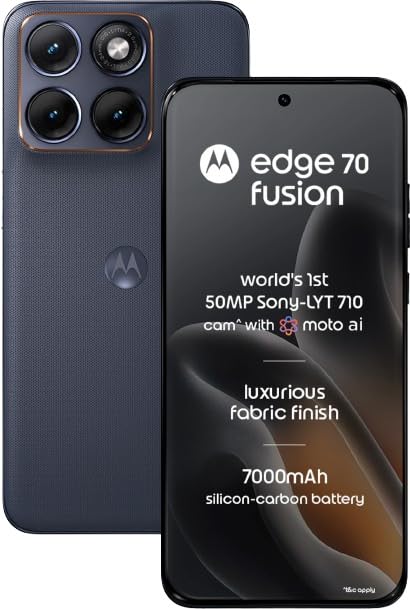


Motorola Edge 70 Pro Launches in India at Rs 38,999 with Dimensity 8500
Motorola Edge 70 Pro arrives in India Motorola Edge 70 Pro Launches in India, with pricing starting at Rs 38,999 for the 8GB RAM and 256GB storage variant. The new smartphone goes on sale exclusively through Flipkart from April 29, and the launch offer can bring the starting price down to Rs...
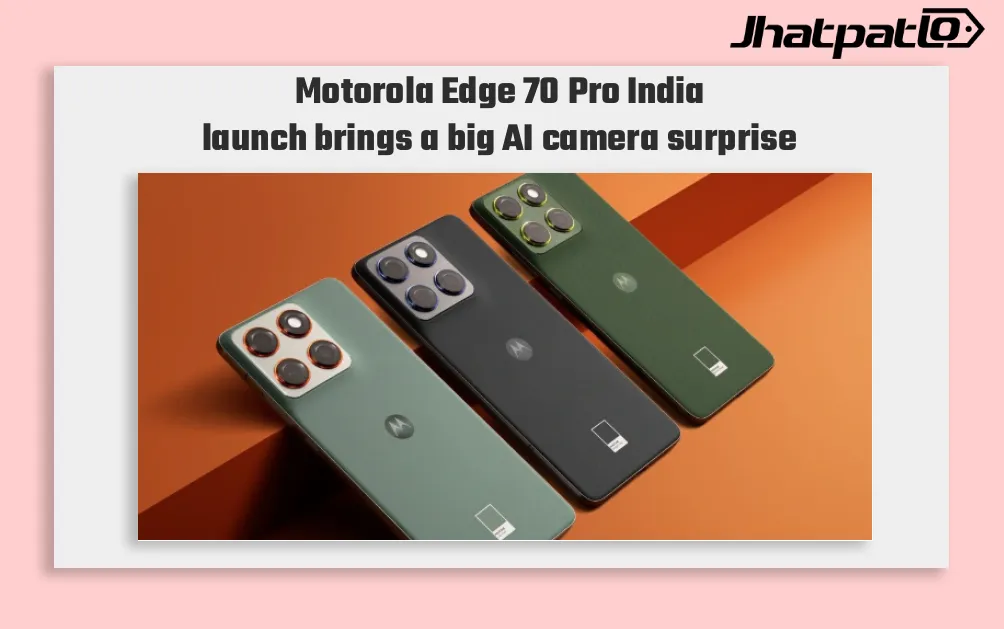
Motorola Edge 70 Pro India Launch Set for April 22 With AI Low Light Photography
Motorola Edge 70 Pro Set for India Launch on April 22 Motorola has confirmed the India launch of the Edge 70 Pro for April 22 at 12 pm, with the smartphone set to go on sale through Flipkart. The company has also teased improved low-light photography powered by AI, while the dedicated microsi...
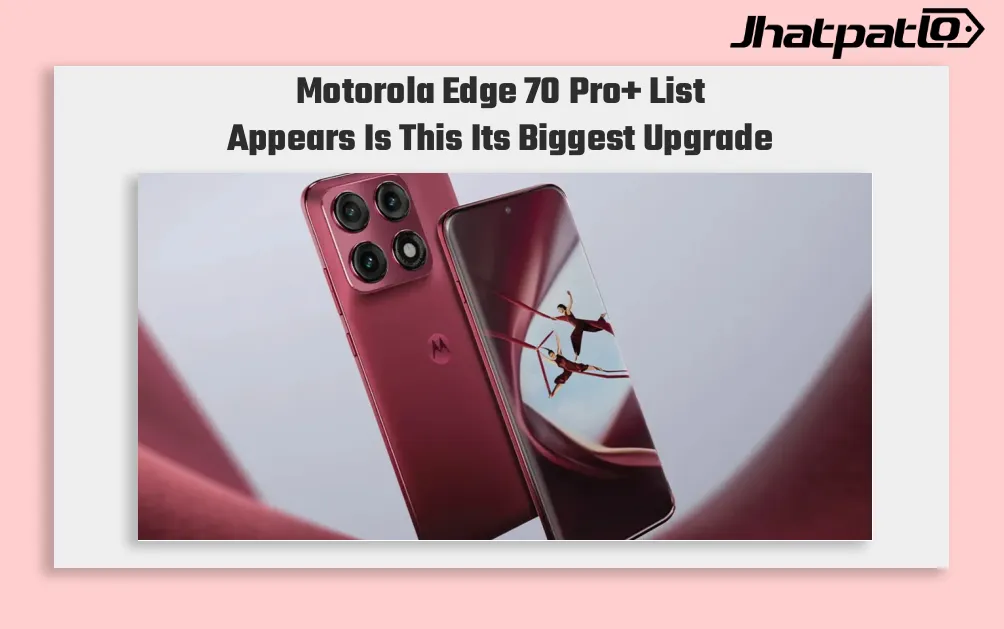
Motorola Edge 70 Pro+ Brings 6500mAh Battery Ahead of India Launch
Motorola Edge 70 Pro+ list appears with battery and camera focus Motorola’s upcoming Edge 70 Pro+ is set for an India launch on June 4, and the reported listing points to a 6,500mAh silicon-carbon battery, triple 50MP cameras, and a periscope zoom lens. The phone is also said to run Android 16 o...
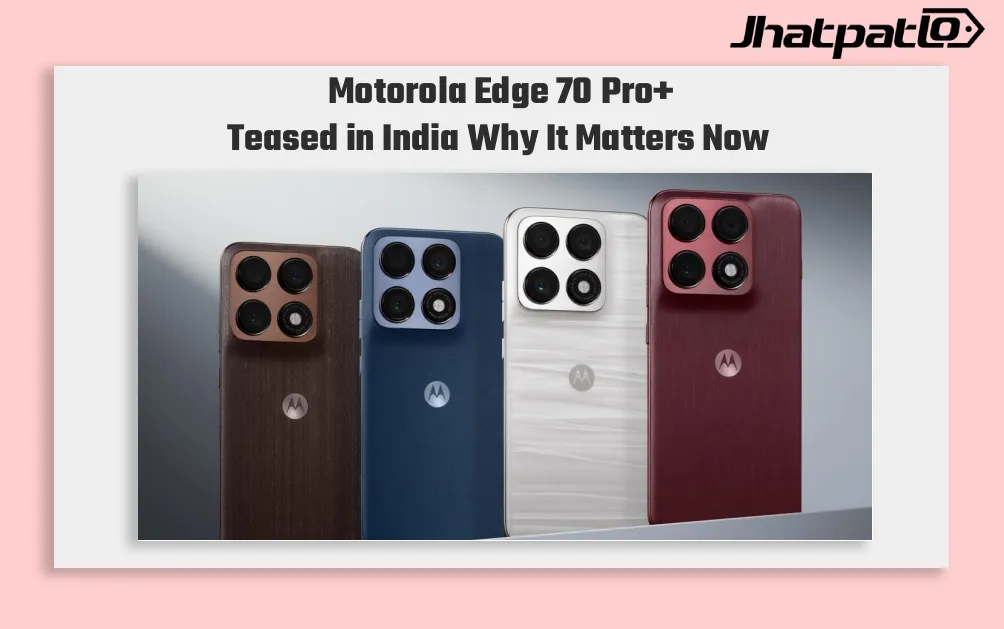
Motorola Edge 70 Pro+ Teased in India With Triple Camera and Textured Finishes
Motorola Edge 70 Pro+ teaser goes live on Flipkart Motorola Edge 70 Pro+ Teased in India through a Flipkart page even before a formal announcement from the company. The listing points to a launch coming within weeks of the standard Motorola Edge 70 Pro, while also showing triple rear cameras,...
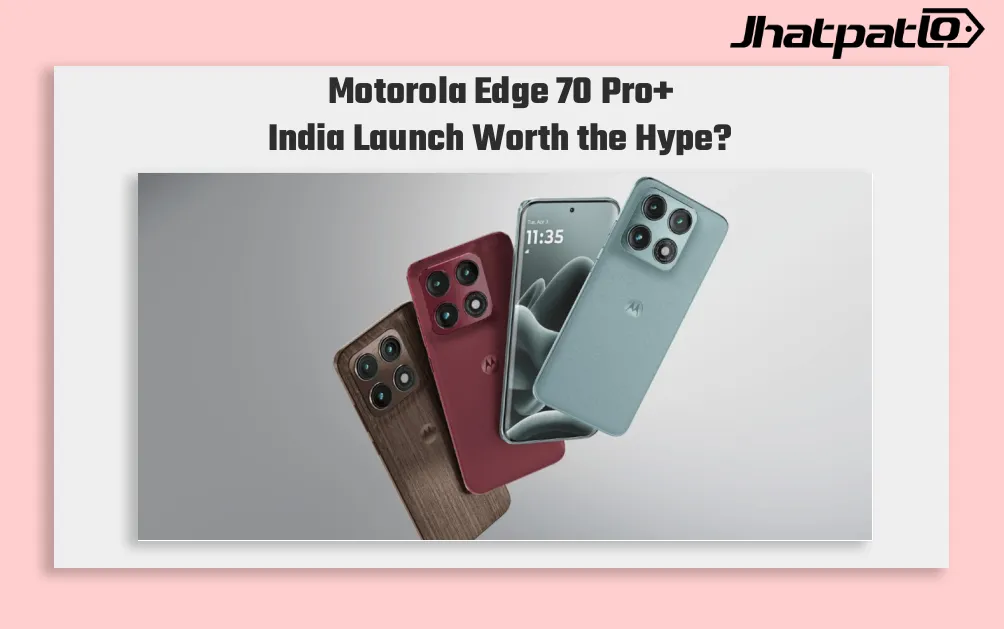
Motorola Edge 70 Pro+ Launches in India With 50MP Telephoto Camera
Motorola has launched the Edge 70 Pro+ in India with a 50MP telephoto camera, a 6,500mAh battery, and a price starting at Rs. 47,999. The phone sits above the regular Edge 70 Pro and keeps the Dimensity 8500 Extreme platform, which makes it a direct option for premium Android buyers looking at...

Motorola Edge 70 Pro+ Geekbench Listing Reveals Dimensity 8400 Before India Launch
Motorola Edge 70 Pro+ Leak Puts Chipset Choice in Focus A Geekbench listing for the Motorola Edge 70 Pro+ has surfaced ahead of the June 4 India launch, showing the phone with a MediaTek Dimensity 8400 chipset, 12GB RAM and Android 16. The leak has drawn attention because the Pro+ appears to...