


Nothing Phone (4a) vs Motorola Edge 70 a lifestyle-first face-off that tests design, cameras and battery life
 vs Motorola Edge 70.jpeg)
In a market crowded with mid-range options, two devices stand out not just for specs, but for the vibe they promise. Nothing Phone (4a) and Motorola Edge 70 sit at nearly the same price point in India, yet they push in very different directions when it comes to how you’ll actually use them day to day. If you’re someone who buys into a phone as part of a lifestyle, not just a tool, this face-off matters more than most on-paper comparisons. The Nothing 4a leans into a design-led identity with a bold Glyph Bar and a transparent back, while the Edge 70 favors durability, speed, and practical AI features. It’s a classic clash: aesthetics and attitude versus reliability and efficiency, with both trying to justify their price through real-world usefulness rather than just brag-worthy specs.
Prices aside, the real question is: which one fits your life better? If you’re the kind of person who notices the little details — the way a notification glows, the way a camera handles a sunset, or how long a battery lasts during a long day — you’ll want to read this with your daily routine in mind. Both phones are marketed as lifestyle devices, but as with any good lifestyle product, the value isn’t just in what they do, but how they make you feel while you’re using them. So, let’s dive into a hands-on comparison that covers design, display, performance, cameras, software, battery, and the all-important verdict on value for money.
- Distinct design vs rugged practicality: Nothing’s Glyph Bar and transparent back vs Edge 70’s slim, durable build.
- Camera trade-offs: Nothing emphasizes versatility with a telephoto lens, Edge 70 banks on detail and selfie quality.
- Software feel and AI features: NothingOS keeps things simple; MotoAI adds smart helpers without overloading the interface.
- Battery and charging: Nothing edges ahead on capacity, but Edge 70 charges faster in the box and recharges quickly.
Design: unique vs durable
Design conversations aren’t merely about color and shape; they’re about how a phone makes you feel before you even unlock it. The Nothing Phone (4a) leans into its identity with a transparent rear panel that shows a handful of the phone’s internals and a Glyph Bar that lights up for notifications, calls, and interactions even when the phone is laid face down. It’s a design statement that invites questions, and in real life, it does spark conversations wherever you go. The flat edges, relatively thick frame, and the bold color options — Black, White, Blue, and Pink — create a look that’s unmistakably modern and, frankly, a little theatrical. On a practical level, the build is sturdy enough for daily use, but IP64 means you should still be mindful of splashes and rain.
The Motorola Edge 70 takes a different route. It’s slimmer, lighter, and tuned for a more conventional daily carry. Build quality leans on an aluminum chassis with a fabric-like back that’s easier to grip and less prone to fingerprints. It’s IP68 water and dust resistant and MIL-STD-810H certified, which gives it an edge in the real world where drops and dust happen. If durability and a calmer aesthetic are your priorities, Edge 70 won’t shout for attention, but it certainly won’t disappoint when you’re out and about with it in your pocket.
Display: comparable visuals
Both phones pack a 6.7-inch near-identical panel with a 1.5K resolution, 120Hz refresh rate, and a wide color gamut (DCI-P3). The Nothing 4a uses an AMOLED panel, while the Edge 70 opts for a pOLED alternative. In day-to-day use, color accuracy and contrast feel comparable; HDR10+ support keeps streaming vibrant, and text remains crisp. The Nothing 4a does show brighter peak highlights (up to 5,000 nits) on certain scenes, which can help when you’re outdoors in strong sun. Yet in practice, most users won’t notice a dramatic difference in everyday viewing, unless you routinely watch HDR content outdoors. The audio experience leans slightly in Nothing’s favor thanks to more refined stereo speakers, which feel more balanced at typical listening levels.
If you’re someone who films a lot outdoors or in variable lighting, you might appreciate Edge 70’s more restrained vibrancy and the calmer, less aggressive color treatment. It’s not a “trend” phone in the traditional sense, but it’s a solid workhorse for everyday tasks and media consumption alike.
Performance: Snapdragon chipsets at play
You won’t find a night-and-day gap in performance between these two mid-rangers, but there are subtleties worth noting. The Edge 70 runs on a slightly stronger Snapdragon 7 Gen 4 SoC with faster RAM (LPDDR5X) and storage (UFS 3.1). The Nothing Phone (4a) uses the Snapdragon 7s Gen 4, paired with LPDDR4X RAM and the same storage standards. In synthetic tests, both devices score similarly, and in everyday use you’ll notice smooth scrolling, quick app launches, and reliable multitasking. If you’re a power user who often keeps many apps in memory, the Edge 70’s faster RAM and CPU clock speeds deliver a perceptible edge in some multitasking scenarios.
The practical takeaway: both are capable for gaming, camera bursts, and heavy browsing. The Edge 70 may feel quicker for certain tasks, especially when you’re juggling several apps, while Nothing 4a offers a slightly more punchy baseline vibe with its unique airflow-like interface cues. For most daily routines, the difference isn’t a deal-breaker, but if you’re chasing the last drop of speed when you’re switching between apps or starting large games, the Edge 70 earns a small advantage.
Cameras: one offers versatility, the other focuses on details
Camera prowess is where these two phones diverge in a meaningful way. Nothing Phone (4a) brings a triple-camera array with a 50MP primary sensor, an 8MP ultrawide, and a 50MP tetraprism periscope telephoto unit. The front camera is a 32MP shooter. This setup is designed for a flexible photography style: versatile daytime portraits, strong zoom tuning, and a surprising edge when it comes to creative periscope shots at mid-range distances. The ultrawide is decent but not exceptional, and while the telephoto shines on portraits with convincing edge detection and pleasing bokeh, the overall detail in shadows can dip in challenging light.
The Edge 70 sticks with a more traditional dual rear camera system: 50MP primary and 50MP ultrawide sensors. The front camera is also 50MP. In daylight and selfie captures, Edge 70 tends to edge ahead on detail and dynamic range, with crisper textures and more faithful rendering in a variety of scenes. The ultrawide is solid, preserving color and exposure well, but portraits can show some edge warping due to the lack of a dedicated telephoto lens. Overall, Edge 70 focuses on reliable, high-detail output and is especially strong in selfies and daylight photography.
In low light, you’ll notice both phones rely on computational tricks to salvage shots, but Edge 70 generally preserves highlights better and keeps skin tones balanced, while Nothing 4a’s telephoto contribution remains the more polarizing piece for portrait work. If your social feeds rely on consistent daylight detail and selfie clarity, Edge 70 could be the safer bet; if you like the idea of more experimental zoom and a distinct color signature, Nothing 4a is compelling.
Software: clean easy-to-use vs smart AI enhancements
Software experience can tilt a purchase as much as hardware. Nothing Phone (4a) runs NothingOS 4.1 on top of Android, choosing a minimalist aesthetic with a restrained feature set. It’s designed to feel lighter on preinstalled apps, with a focus on self-organization: wallpaper depth effects, simplified app organization, and a breathable lock screen experience. If you value a clean, distraction-free environment and a consistent update policy, Nothing offers a sense of long-term clarity: the brand promises six years of security updates, which is a meaningful window in the mid-range space.
The Motorola Edge 70 ships with Hello UI on top of Android 13 and brings a few pre-installed apps. You’ll notice AI features beyond the typical stock experience — Circle to Search, Gemini, and some photo-editing tools — plus MotoAI capabilities that help summarise notifications, offer contextual suggestions, and tag information via voice prompts. The software approach here is to blend convenience with a handful of smart features that can speed things up in daily use. It’s not as starkly minimal as NothingOS, but it remains close to stock with enough helpful extras to feel practical rather than intrusive.
In practice, software choices impact your daily flow more than you’d expect. Nothing’s approach feels airy and fast with fewer distractions, which matters if you spend long hours on your phone. Motorola’s features lean into real-world productivity, offering quick ways to manage conversations and notifications via voice prompts and AI-assisted tasks. If you value a clean, pared-down interface, Nothing is likely to feel calmer; if you want smart helpers and a few time-saving tricks, Edge 70 delivers more bite-sized benefits.
Battery: not class-leading, but dependable
Both phones ship with respectable, non-flagship capacities. Nothing Phone (4a) carries a 5,400 mAh cell, while the Edge 70 has a 5,000 mAh unit. In practical testing, Nothing could edge out the Edge in a pure endurance race by a few hours on PCMark, but real-world usage often tells a different story: Edge 70 tended to hold up well during a gaming/session-heavy day, showing slightly lower drain in mixed usage compared to Nothing in our internal tests. The difference isn’t night and day, but it’s noticeable if you’re a heavy user who keeps apps open, uses high brightness for long stretches, or relies on conditioning features all day long.
Charging is where the Edge 70 breaks away. It ships with a robust 68W PD fast charger in the box, capable of a full recharge in roughly 44 minutes. The Nothing Phone 4a supports 50W charging but arrives without a charger included, and its full recharge time hovers around 71 minutes. If you’re often away from a power outlet and you value a quick top-up, Edge 70’s charger stack is the practical advantage here. That said, both devices easily last a day for typical usage, and your mileage will depend on brightness levels, gaming, and how aggressively you use 5G or high-refresh features throughout the day.
Verdict
The core question is which phone fits your lifestyle better, not which one has the bigger numbers on a spec sheet. If you crave a design-forward device with a memorable visual identity, a richer camera experience in certain scenarios, and longer-term software support, the Nothing Phone (4a) is a compelling pick. Its six-year security roadmap is a powerful signal in the mid-range segment, and the Glyph interface adds a distinctive personality that can feel genuinely enjoyable after you move past first impressions. On the other hand, if durability, faster charging, and a more conventional, yet very capable camera system matter more to you, the Motorola Edge 70 excels in those practical corners. It blends strong daytime photography, solid battery endurance, and AI-assisted features into a package that’s tough to outgrow in real-world use.
In the end, neither phone is strictly the better device; both are lifestyle choices with different strengths. If you want a phone that looks, feels, and sounds like a personality, go Nothing. If you want a practical companion that’s reliable, quick to charge, and heavy on durable design, go Motorola. Your daily routine will tell you which path fits best.
So, which one would you choose if you’re shopping right now? Do you lean toward a bold, design-driven vibe with a unique notification system, or toward a calm, dependable device that feels like you can count on it for years to come? Tell us what matters most in your everyday smartphone life, and we’ll help you weigh the trade-offs in the context of your actual use.
Related Products


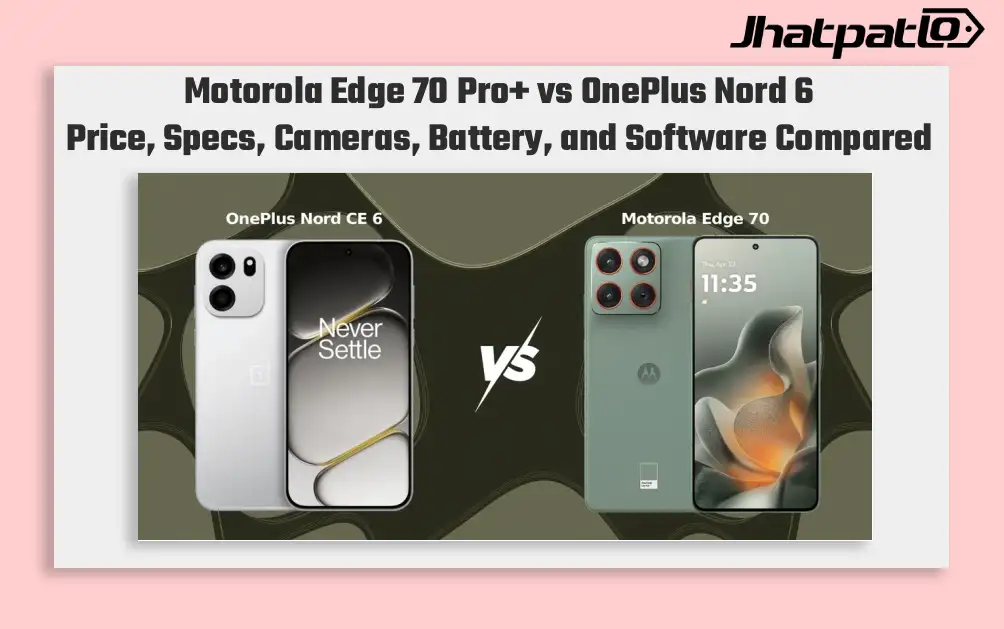
Motorola Edge 70 Pro Plus vs OnePlus Nord 6: Cameras or Battery Life?
The premium mid-range in India has a clear split here. Motorola Edge 70 Pro+ focuses on triple 50MP cameras and a periscope lens, while OnePlus Nord 6 puts a 9,000mAh battery and faster support cycle front and center. If you are comparing phones in the Rs 43,000 to Rs 48,000 range, the differences a...

Motorola Edge 70 Pro+ Geekbench Listing Reveals Dimensity 8400 Before India Launch
Motorola Edge 70 Pro+ Leak Puts Chipset Choice in Focus A Geekbench listing for the Motorola Edge 70 Pro+ has surfaced ahead of the June 4 India launch, showing the phone with a MediaTek Dimensity 8400 chipset, 12GB RAM and Android 16. The leak has drawn attention because the Pro+ appears to...
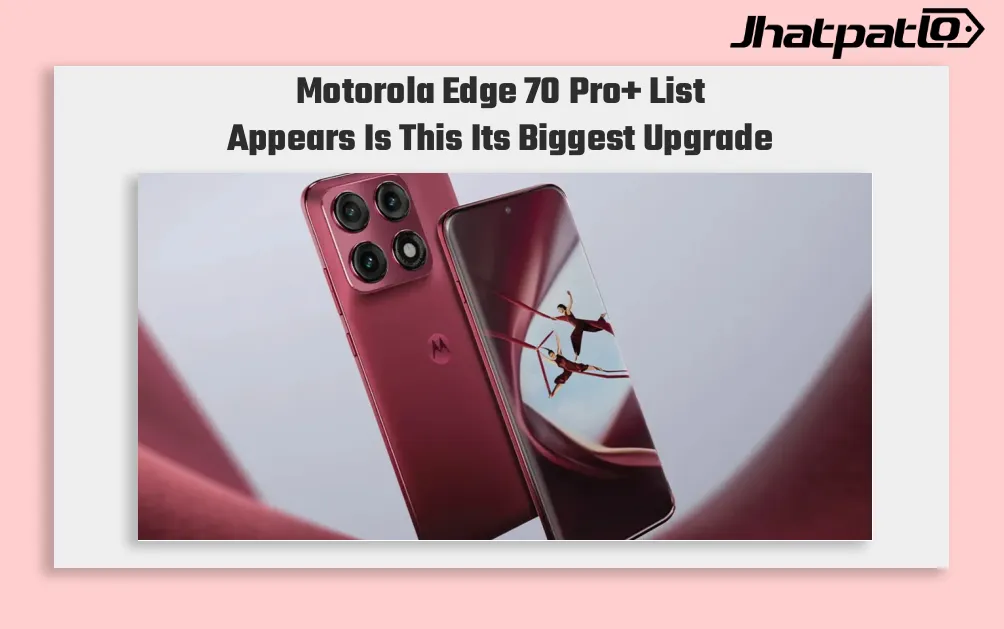
Motorola Edge 70 Pro+ Brings 6500mAh Battery Ahead of India Launch
Motorola Edge 70 Pro+ list appears with battery and camera focus Motorola’s upcoming Edge 70 Pro+ is set for an India launch on June 4, and the reported listing points to a 6,500mAh silicon-carbon battery, triple 50MP cameras, and a periscope zoom lens. The phone is also said to run Android 16 o...
 Launches in India.webp)
Nothing Phone (4a) Launches in India Next Week With Periscope Camera
Upcoming smartphone launches in India March opens with a lineup of smartphones poised to reach Indian buyers. Nothing will unveil the Phone (4a) globally and in India on March 5, followed by Motorola’s Edge 70 Fusion on March 6. Realme is also staging multiple launches in the period, incl...
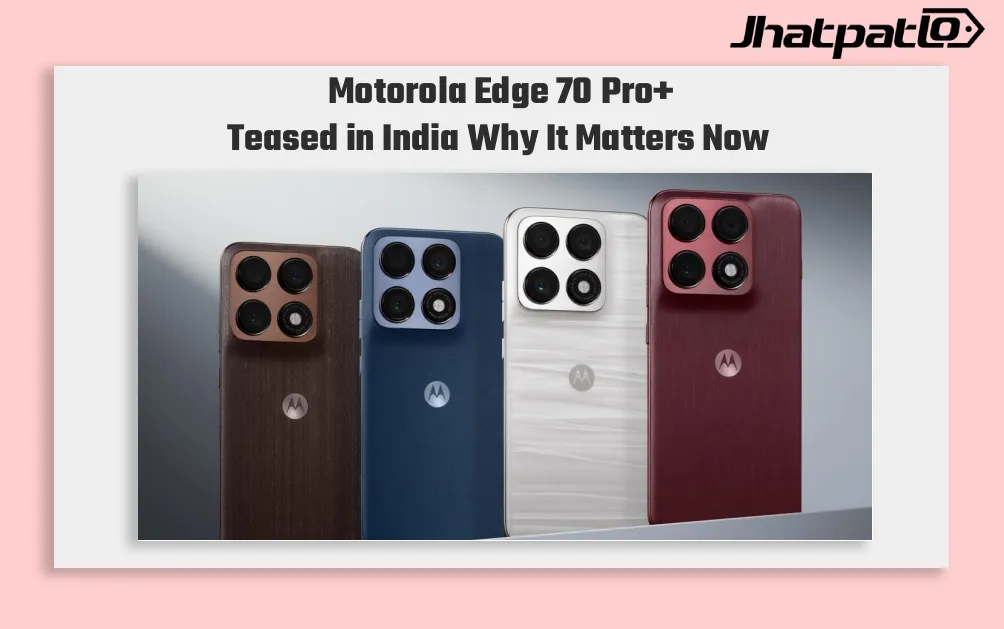
Motorola Edge 70 Pro+ Teased in India With Triple Camera and Textured Finishes
Motorola Edge 70 Pro+ teaser goes live on Flipkart Motorola Edge 70 Pro+ Teased in India through a Flipkart page even before a formal announcement from the company. The listing points to a launch coming within weeks of the standard Motorola Edge 70 Pro, while also showing triple rear cameras,...
Nothing Phone 4a and 4a Pro Compare Key Specs Prices and Colors
Pricing, storage and colour options Nothing is launching the Phone 4a and Phone 4a Pro with notable hardware upgrades and a refreshed design, with sales slated to begin on March 13. The company indicated a price rise compared with the previous generation, attributing part of the increase...