


Nothing Partners IIT Roorkee and IISc to Back Deep-Tech
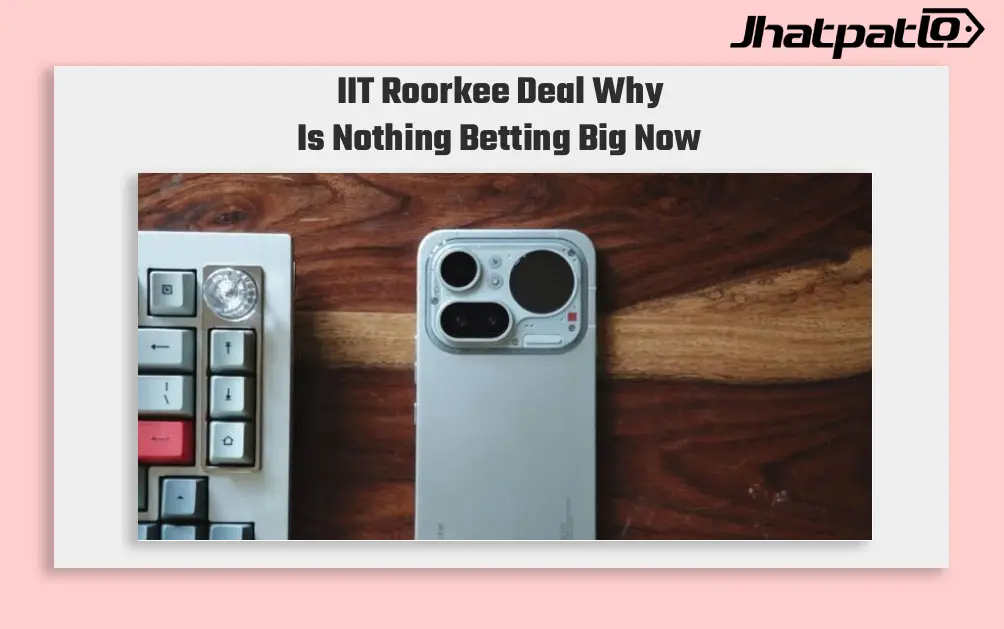
Nothing is deepening its India strategy with new MoUs at IIT Roorkee and IISc. The agreements focus on mentorship, startup support, design challenges and pilot projects, linking academia with industry in a practical way.
IIT Roorkee Deal Adds Mentorship and Design Challenges
Nothing has signed an MoU with IIT Roorkee to support deep-tech and product development initiatives. The collaboration is set to include expert-led sessions, industry case studies and knowledge-sharing for students and aspiring founders. That is the broad frame, but the more notable part is the proposed Industrial Design Challenge, which gives the company a direct channel into engineering and design talent. In practical terms, this can connect classroom learning with product thinking, especially in consumer technology where design choices matter as much as technical ones.
The agreement was signed at Bharat Innovates 2026 in Nice, where Nothing Co-founder and India President Akis Evangelidis met leaders from IIT Roorkee. The timing matters because hardware companies are increasingly looking for stronger local links in India. For Nothing, the move also fits a wider pattern of building ties beyond marketing and toward actual research and development engagement.
IISc Partnership Focuses on Incubated Startups and Pilot Projects
Nothing’s second MoU is with IISc, and the work will go through FSID, the institute’s innovation and incubation arm. The partnership is centered on mentorship, networking and startup programmes for incubated ventures. That structure points to a more hands-on model than a standard university tie-up, since it places startups closer to people who can help refine ideas, test assumptions and shape early commercial pathways.
The more important detail is the focus on pilot projects and commercial engagements. Those two pieces suggest a route from research to market validation, which is often the missing step for deep-tech startups in India. Pilot projects can help founders test whether a product or system actually works in a real setting, while commercial engagements can open the door to adoption and eventual scale. Nothing has not laid out the full list of projects, so the exact scope remains limited to what has been announced.
Seen together, the IIT Roorkee and IISc agreements show how Nothing is approaching India’s innovation ecosystem from two sides. One deal leans into student mentoring and design challenges. The other focuses on incubated startups and pilot work through a leading research institute. Both partnerships point toward a deeper relationship with India’s technical talent pipeline, rather than a one-off visibility effort. They also reflect a broader shift in the hardware and premium Android space, where companies are looking for stronger local credibility and long-term development networks.
For students, researchers and early-stage founders, the practical value will depend on how these programmes are executed over time. The outline announced by Nothing suggests a mix of learning, experimentation and commercial exposure. That combination is often what deep-tech teams need, especially when they are trying to move from lab-based ideas to usable products.

Aman Dixit
✉ aman79dixit@gmail.comRelated Products



Nothing Opens Bengaluru Flagship Store in India
Summary On Saturday, Nothing launched its first Indian flagship store. The Bengaluru showcase location is at: 660/1, 100 Feet Rd., 1st Stage, Indira Nagar, Bengaluru, opened by CEO Carl Pei and co-founder and President of India, Akis Evangelidis. The Bengaluru flagship marks...
Nothing Warns Customers Over Counterfeit Accessories as Delhi Police Seize Fake Nothing and CMF Devices
Delhi Police Seize Over 1,100 Fake Nothing and CMF Devices Nothing, the UK-based tech firm, has warned that counterfeit products bearing its branding and that of its sub-brand CMF have flooded the Indian market. In a social media awareness video released by Nothing India, Co-Founder and...
Nothing Cracks Down on Counterfeit CMF Products in India
Counterfeit CMF Products Seized Across Indian Retailers Raids have been executed by, in association with the local authorities, against various shops selling counterfeit CMF products via various law enforcement agencies. The raids were coordinated to target counterfeit CMF by Nothing pr...
Nothing Won’t Launch a Flagship in 2026, Focus Shifts to Phone 4a and Audio
Nothing outlines 2026 product and retail strategy Nothing released a news on Thursday featuring founder and CEO Carl Pei outlining the company’s plans for 2026. In the discussion, the year’s product strategy and retail expansion were addressed along with leadership changes and infrastructure plans....
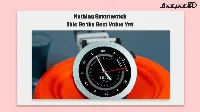
Nothing smartwatch September launch leak points to under 300 debut
Nothing’s first smartwatch is now being linked to a September launch, with leak chatter pointing to a price below $300. If that holds, the wearable would enter the market as a premium-leaning option rather than a budget watch, which could make it more relevant against midrange Wear OS riva...

Nothing Ear 3a and CMF Buds Neo may launch soon for budget earbuds buyers
Nothing Ear 3a and CMF Buds Neo have both appeared on regulatory databases, which is usually a sign that launch plans are moving ahead. The listings point to a possible budget TWS push from Nothing and CMF, with India likely to be an important market for both brands. According to the availabl...