


Portable AC vs Tower Air Cooler: Price, Power Use, and Cooling Trade-Offs
Introduction
When you compare a portable AC vs tower air cooler, the first thing most people notice is the price. And honestly, that alone can make the decision feel pretty obvious at first glance. Tower air coolers usually sit in the Rs 5,000 to Rs 15,000 range, while portable ACs start around Rs 25,000 and can climb beyond Rs 55,000. That’s a big jump, especially if you’re just trying to make one room bearable through the hotter months.
But here’s the thing: the cheaper option isn’t automatically the smarter one. The better choice depends on humidity, how much electricity you’re okay paying for, and how much maintenance you’re willing to handle without getting annoyed two weeks in. So before you spend, it helps to understand what you’re actually buying, not just the sticker price.
Quick Highlights
- Portable ACs cost much more upfront.
- Tower coolers are cheaper to run.
- Humidity changes everything.
- Maintenance is lighter on ACs, heavier on coolers.
Why these two coolers look similar but work differently
These two appliances get compared so often because, on the surface, they solve the same problem: they cool a room without needing permanent installation. That sounds similar enough, right? But the way they do it is completely different, and that difference shapes almost everything else.
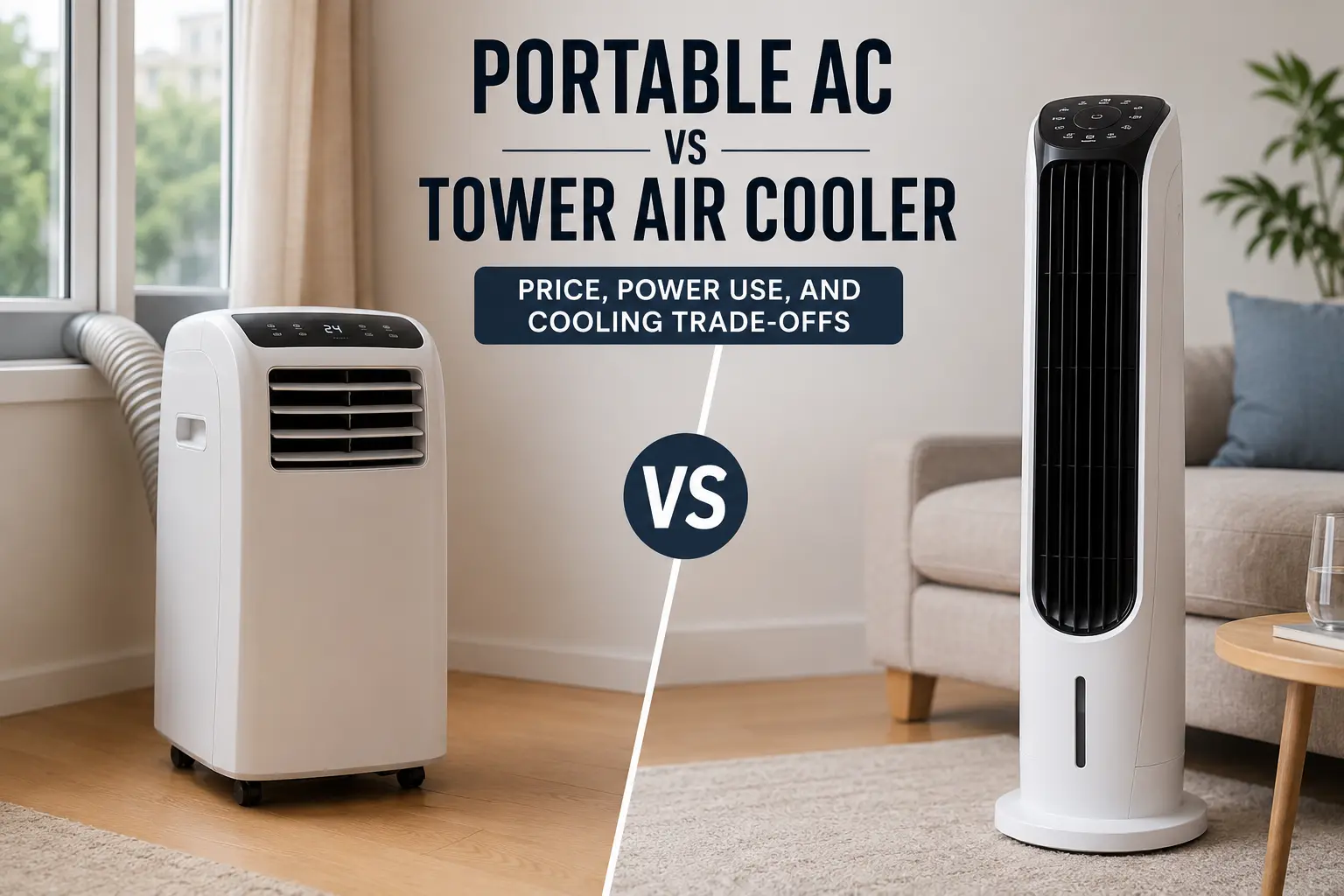
A portable AC uses a compressor and refrigerant to actually lower the room temperature. A tower air cooler, on the other hand, depends on water evaporation and cooling pads to make the air feel cooler as it moves through the unit. One is basically a mini air conditioner on wheels. The other is more like a smart fan that adds moisture-based cooling to the air.
That technical split matters a lot. It affects how much you pay, how much power it draws, whether it helps in damp weather, and even how comfortable the room feels after an hour or two. So once you understand that basic difference, the rest of the comparison starts making a lot more sense.
What you will pay upfront and what the price range really tells you
The upfront cost is one of the clearest reasons people lean one way or the other. A tower air cooler usually fits a tighter budget, while a portable AC asks for a much bigger investment from day one. And that matters, because plenty of buyers aren’t just shopping for cooling — they’re trying to fit a decision into a real monthly budget.
Portable AC price in India: starts at around Rs 25,000 and can go beyond Rs 55,000.
Tower air cooler price in India: usually falls between Rs 5,000 and Rs 15,000.
That difference isn’t small. It can be the deciding factor for someone who just wants a simple cooling setup for a bedroom, study, or small living space. But price alone doesn’t tell the whole story. A cheaper unit can still cost more over time if it runs poorly in your climate or forces you to use extra backup cooling later. That’s where the real trade-off gets interesting.
If you’re comparing models, don’t just ask which one is cheaper today. Ask which one solves the problem you actually have. A tower air cooler can be a very sensible buy in the right room. A portable AC can feel expensive at checkout, but if you need real cooling and moisture control, it may be the one that actually holds up better in practice.
How much each one adds to your monthly electricity bill
Running cost is where the gap becomes a lot more visible. A lot of people focus on the purchase price and then get surprised later by the power bill. That’s understandable. Cooling appliances often look like one-time buys, but they keep charging you quietly in the background every single day they run.
A portable AC usually consumes around 900 to 1,500 watts or even more. If it runs for about eight hours a day, the monthly electricity bill can rise by around Rs 2,000 to Rs 4,000. That’s not a tiny add-on. For some homes, it’s a meaningful jump, especially during peak summer months when other appliances are also working harder.
A tower air cooler is much lighter on power. It usually uses around 150 to 250 watts, and in most cases its monthly electricity cost stays below Rs 1,000. That’s a big difference, and it’s one of the main reasons coolers remain attractive for budget-conscious buyers.
Now, lower electricity use doesn’t automatically mean better value. If the cooler doesn’t make the room bearable on humid days, the cheap running cost won’t feel very comforting. But if you live in the right climate, that smaller bill can be a real relief month after month.
Side-by-side power and bill comparison
| Cooling option | Power use | Typical monthly cost |
|---|---|---|
| Portable AC | 900 to 1,500 watts or more | Rs 2,000 to Rs 4,000 for about 8 hours a day |
| Tower air cooler | 150 to 250 watts | Usually below Rs 1,000 |
That table makes the choice feel pretty clear on paper. But your actual savings still depend on how you use the machine. Run a portable AC sparingly in one sealed room and it may feel worth it. Run it all day in a leaky space, and the bill can get ugly fast. The same is true in reverse for the cooler: it stays cheap to operate, but only really shines when the air itself cooperates.
What kind of maintenance each one asks from you
Maintenance is one of those things people underestimate until they’ve lived with the machine for a while. At first, both options seem easy enough. Plug it in, turn it on, enjoy the cool air. But over time, upkeep starts to matter, and the difference between the two becomes pretty noticeable.
A portable AC is usually simpler day to day. It mainly needs its air filters cleaned every couple of weeks, plus the water collection tray emptied when needed. That’s manageable for most people, especially if you’re already used to basic home appliance care.
A tower air cooler asks for more frequent attention. You need to clean the water tank regularly to prevent dirt, mould, and bad smells, and the cooling pads need replacement after a period of use. If you ignore that, the unit can start smelling stale or working less effectively. And once that happens, the bargain doesn’t feel so attractive anymore.
So while the cooler is cheaper upfront and cheaper to run, it can be a little more hands-on. That doesn’t make it a bad product. It just means it works best for someone who doesn’t mind a bit of regular upkeep. If you prefer something that needs less fiddling, a portable AC often feels easier to live with.
The parts you actually have to keep on top of
- Portable AC: air filters every couple of weeks
- Portable AC: empty the water collection tray when needed
- Tower air cooler: clean the water tank regularly
- Tower air cooler: prevent dirt, mould, and bad smells
- Tower air cooler: replace the cooling pads after a period of use
Which one cools better in humid weather and which one works in dry heat
This is the part that decides the purchase for a lot of people, because climate can make or break the experience. A cooling appliance can look amazing in a showroom and then feel disappointing in your actual room if the weather doesn’t suit it.
A portable AC cools with refrigerant and removes moisture from the air, which makes it a better choice for humid cities and coastal areas. If you live somewhere sticky and heavy air is part of everyday life, this moisture control matters a lot. It’s not just about feeling cooler; it’s about feeling less trapped in that damp, uncomfortable heat.
A tower air cooler works by passing air through water-soaked cooling pads, so it performs well in hot, dry weather. That evaporative method can feel refreshing when the air is dry, because the added moisture helps the room feel less harsh. But where humidity is high, it loses a lot of its edge. The air is already full of moisture, so the cooling effect just doesn’t land the same way.
That’s why some people love coolers and others swear they don’t work. Both can be right. They’re not really meant for the same conditions, even though the box may suggest otherwise. Once you understand that, you stop blaming the machine for a climate mismatch.
Climate fit is the real dividing line
- Portable AC: better for humid areas
- Portable AC: stronger cooling
- Tower air cooler: better for dry climate
- Tower air cooler: weaker in high humidity
Which one should you buy for your room
If you’re still deciding, the simplest way to think about it is this: buy the machine that matches your room, your climate, and your tolerance for bills and maintenance. That sounds basic, but it’s honestly the cleanest way to avoid regret later.
Choose a portable AC if you live in a humid area, want stronger cooling, and do not want the hassle of filling a water tank every day. It’s also the better call if you need cooling without installing a fixed AC, especially when the room needs more than just a low-cost breeze. In smaller apartments, rented rooms, or spaces where permanent installation isn’t possible, that flexibility can be a real advantage.
Choose a tower air cooler if you want a budget-friendly option, lower electricity bills, and a practical cooling solution for a dry climate. It’s often the better fit for people who want relief from heat without committing to higher purchase costs or higher monthly running costs. Just be honest about your climate. That part matters more than most people think.
If your room gets unbearably sticky and muggy, the portable AC is likely to feel worth the money. If the air is dry and you mainly need a more comfortable breeze, the tower air cooler may be all you really need.
FAQ
These are the smaller doubts people usually have after they compare price, power use, and upkeep.
Q: Is a portable AC worth the higher price?
Yes, if stronger cooling and humidity control matter more than the upfront cost and higher running cost. It’s the more capable machine, but also the pricier one. If your room stays hot and sticky, that extra spend can feel justified pretty quickly.
Q: How much does a portable AC add to electricity bills?
At about eight hours a day, it can raise the monthly bill by around Rs 2,000 to Rs 4,000, depending on usage and wattage. That estimate can move up or down based on how often you run it and how hard it has to work.
Q: Why is a tower air cooler cheaper to run?
Because it usually consumes only around 150 to 250 watts, and that keeps the monthly electricity cost below Rs 1,000 in most cases. In other words, it’s simply less demanding on power.
Q: Which one is better for humid rooms?
A portable AC is the better choice for humid rooms because it removes moisture from the air while cooling. That makes the space feel more comfortable, not just cooler on paper.
Conclusion
If your priority is lower cost and lower bills, the tower air cooler wins; if your priority is stronger cooling in humid weather, the portable AC is the better fit. That’s the core trade-off, and it’s really the one that matters most.
For most buyers, the decision comes down to climate first, then price, then how much maintenance you are willing to live with. If you keep those three things in mind, you’re much less likely to buy the wrong appliance just because it looked similar at first glance. And that’s the real win here.

Mahi Gupta
✉ mahigupta708076@gmail.comRelated Products




Xiaomi Launches Mijia Air Conditioner Powerful Air Pro 1.5 HP in China
Xiaomi launches Mijia Air Conditioner Powerful Air Pro 1.5 HP in China Xiaomi launches new Mijia Air Conditioner Powerful Air Pro 1.5 HP (Super Level 1 Energy Efficiency) in China, adding a new flagship model to its smart home lineup. The company says the unit is built for rapid cooling and h...
.webp)
iNvent Offers iPhone Air and iPhone 17 Deals in India
iNvent Offers iPhone Air and iPhone 17 Deals in India iNvent, an Apple authorised premium reseller, has opened its largest experiential store in India. To mark the launch, the retailer is rolling out special offers across the entire iPhone 17 lineup. Shoppers can access flat discounts, bank cashbac...

Amazon Great Freedom Sale 2026 refrigerator deals slash prices on Haier LG Samsung
Amazon Great Freedom Sale 2026 is pushing large refrigerators into a sharper price band, with Samsung’s 653L side-by-side model listed at Rs. 67,990, down from Rs. 1,13,000. The sale also brings LG, Haier and Godrej models into view, along with bank discounts, Amazon Pay rewards and no-cos...

iPad Air 2026 With M4 Chip Launches in India Across 11 and 13 Inch Models
Apple on Monday launched the iPad Air (2026) with the M4 chip in India and other global markets. The tablet ships in two screen sizes, 11-inch and 13-inch, and is offered in four colourways with both Wi-Fi only and Wi-Fi + Cellular models. It runs iPadOS 26 and features the M4 chip with an...
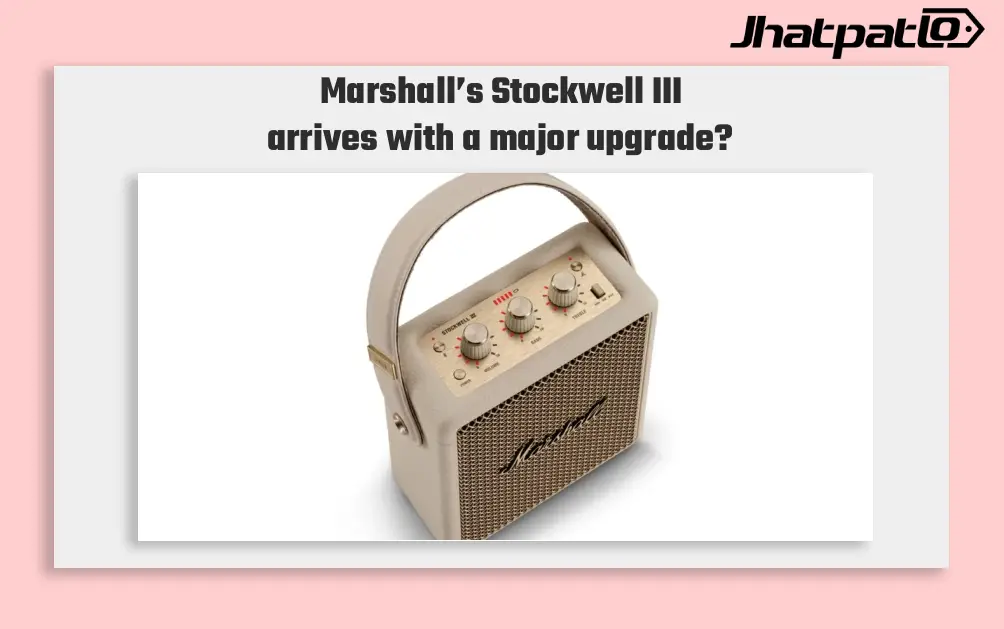
Marshall Stockwell III with 40-Hour Battery and Auracast Launches at Same Price
Marshall has returned to the Stockwell line after seven years with the Stockwell III, adding a 40-hour battery, Auracast support, Bluetooth 5.3, faster charging, and IP55 protection. The speaker also keeps the same launch price in the US, UK, and India, which gives it a more practical position...

Dell 15 Launches in India With Intel Core Ultra 2 Series H Processors
Dell 15 launches in India with Core Ultra 2 series H chips Dell has launched the Dell 15 in India with Intel Core Ultra 2-series H processors, a dedicated NPU for on-device AI, and a starting price of Rs 69,699. The laptop is being sold through Dell.com, Dell Exclusive Stores, and large-format...