


Redmi Pad 3 4G certifications point to 10,000mAh battery and faster charging
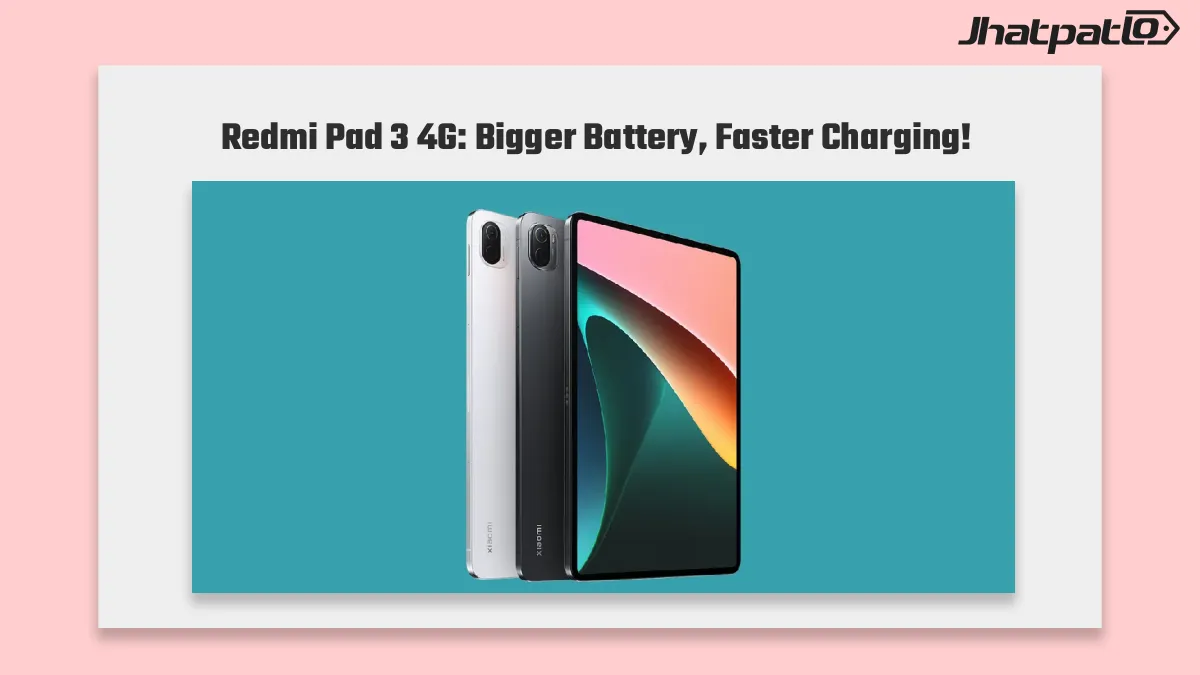
Redmi Pad 3 4G certifications are starting to sketch out a near-term launch, with listings pointing to a bigger battery, faster charging support, and RAM options that could range from 4GB to 8GB. The clearest signals so far suggest Xiaomi is lining up this tablet as a budget-friendly follow-up to the Redmi Pad 2.
Several filings also reveal practical details such as microSD expansion, 4G VoLTE support, dual-band Wi-Fi, and an IP52 rating. Taken together, they show a device aimed at buyers who want simple, affordable tablet hardware without giving up basic storage expansion or a little extra protection.
What You Need to Know
- Redmi Pad 3 4G certifications now point to a launch that appears closer than before, with the hardware trail becoming more specific across multiple listings.
- The tablet is expected to come in 4GB, 6GB and 8GB RAM variants, which gives Xiaomi a wider spread across entry-level and slightly higher configurations.
- Filings mention microSD support up to 2TB, 4G VoLTE, dual-band Wi-Fi and an IP52 rating, all of which fit the low-cost Android tablet category.
- A separate approval for a different model suggests a Redmi Pad 3 5G version may exist alongside the 4G model, rather than replacing it.
Redmi Pad 3 model 26104RPF2G adds microSD, VoLTE and IP52 details
The Redmi Pad 3 model 26104RPF2G has now shown up in both NCC and NBTC filings, and those certifications are where the most useful hardware clues appear. The listings point to microSD support up to 2TB, which should matter to buyers who want extra storage without paying for a larger built-in option. They also mention 4G VoLTE support, dual-band Wi-Fi and an IP52 rating, all of which keep the device in familiar budget-tablet territory.
That combination does not suggest a dramatic shift in Xiaomi’s approach. Instead, it looks like the company is keeping the Redmi Pad 3 4G practical and fairly straightforward. In most cases, that means a tablet built for everyday use, light media consumption and basic productivity rather than premium features. The certification trail does not reveal everything, but it does make the device easier to place in Xiaomi’s lineup.
The same set of listings also lines up with earlier hints about a larger battery and charger support. While the filings do not spell out the whole charging setup in detail, they do support the idea that Xiaomi is improving endurance and charging speed over the Redmi Pad 2. That would be an important step in a crowded budget segment where battery life often matters more than flashy extras.
Redmi Pad 3 5G variant may be coming separately
A separate TDRA approval for model 2610FRP38G points to a possible Redmi Pad 3 5G variant, which means Xiaomi may be planning two versions of the same tablet family. If that happens, the split would likely be based on connectivity rather than core hardware, since the current paperwork does not suggest a major difference in the overall spec direction.
That approach gives Xiaomi some flexibility. The 4G model could target entry-tier markets where cost matters most, while the 5G version could be positioned for regions where faster mobile data is more important and demand for 5G tablets is stronger. It is a common way to cover more markets without rebuilding the product from scratch.
For now, the certifications are the strongest sign that the Redmi Pad 3 line is moving forward. The exact launch timing is still not stated in the filings, but the mix of approvals, battery clues and configuration hints makes the release look more concrete than speculative. If the current details hold, the Redmi Pad 3 4G should arrive as a modest upgrade path with better battery backing, expanded RAM choices and the kind of features that matter in a low-cost tablet.

Related Products






Xiaomi Pad 8 price hike raises India tablet costs by up to Rs 3,000
Xiaomi and Redmi tablets in India are getting costlier, with the biggest increase touching the Xiaomi Pad 8 lineup by up to Rs 3,000. The new pricing affects both premium and mid-range models, including Pen bundles and Nano Texture variants, which changes the value equation for buyers watc...

Xiaomi Pad 9 BIS certification points to India launch
Xiaomi Pad 9 BIS certification has surfaced for model 26103RP65I, the India-specific unit already linked to HyperOS 9 code leaks. The filing does not confirm specs or launch timing, but it is a clear sign the tablet is moving closer to an India debut. The Xiaomi Pad 9 BIS certification co...

Xiaomi Pad 8 Price Hiked by Up to ₹3,000 in India
Xiaomi Pad 8 price hike in India has gone up by as much as ₹3,000, affecting the base model, Nano Texture variant, and Pen bundles. The tablet now starts at ₹38,999, while the highest bundles go up to ₹50,999, making the premium mid-range segment a little tighter for buyers. Xiaomi Pad 8...

Amazon Great Freedom Sale 2026 Best Tablet Deals on Samsung OnePlus Xiaomi Lenovo
Amazon Great Freedom Sale 2026 is pushing tablet prices lower across Xiaomi, OnePlus, Samsung, and Redmi, with some of the biggest cuts landing on premium Android models. The Xiaomi Pad 7 Nano Texture drops to an effective ₹26,249, while the OnePlus Pad 2 comes down to ₹30,249 with bank of...

OnePlus Pad 3 and Buds Pro 3 Hit Valentine’s Day Sale Across India
Valentine's Day Offers OnePlus has announced Valentine’s Day offers across its tablets and audio products in India. The deals are listed on the company’s official website and on e-commerce platforms and quick‑commerce delivery apps, and will be available until February 15. Buyers can acce...