


Samsung 17-inch foldable device prototype spotted in late testing
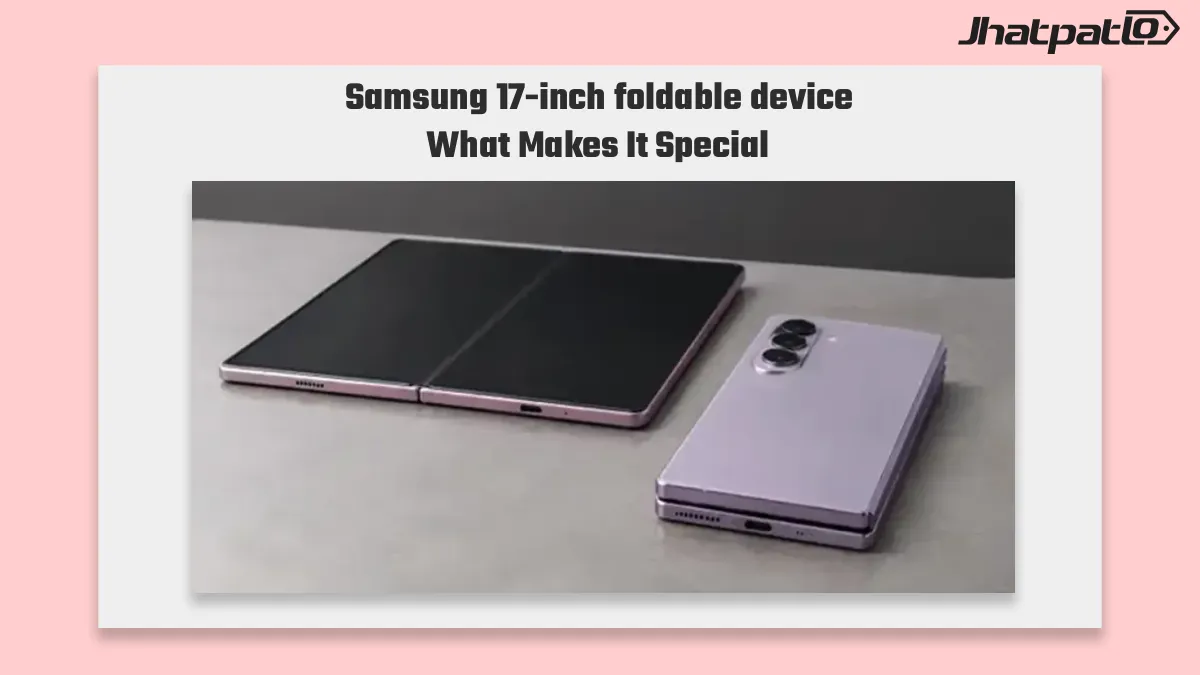
Samsung is reportedly testing a 17-inch foldable device that opens into a large flexible display and folds down to an 8-inch tablet. The reports point to a prototype that has moved beyond early concept work, with physical testing now aimed at a possible 2027-or-later launch window. Nothing is official yet, but the Samsung 17-inch foldable device suggests Samsung’s foldable ambitions are growing well beyond phones.
For readers tracking foldables, the important detail is not just the size. Samsung 17-inch foldable device prototype spotted in late testing. The device is said to use Samsung Display hardware, and that makes the panel stack, durability and crease control the main things to watch as testing continues.
News Highlights
- Samsung’s foldable prototype is reported to expand to a 17-inch flexible screen, then fold back into a compact 8-inch tablet form factor.
- The device is said to be in late-stage physical testing, which suggests Samsung is past the earliest concept phase and evaluating real-world hardware behavior.
- Reports link the panel to flexible OLED and Ultra-Thin Glass, two display technologies that matter most for durability and crease management.
- The current launch window being discussed is 2027 or later, so this is still a future-facing premium foldable rather than an imminent product.
Flexible OLED and Ultra-Thin Glass point to Samsung Display hardware
The panel is said to use flexible OLED backed by Ultra-Thin Glass display tech, which is the part that matters for durability and crease control. If that stack holds up in testing, Samsung could set the bar for large-format foldables while keeping the device thin enough for mainstream premium hardware.
That combination also fits the direction Samsung has taken in its display work more broadly. Flexible OLED is central to foldable devices because it allows the screen to bend without the rigid structure used in traditional panels. Ultra-Thin Glass adds another layer of protection and is often discussed as a way to improve the feel and resilience of a folding screen.
At this stage, though, the key point is still that this is a reported prototype. The information suggests Samsung is trying to solve the same problems that have shaped the foldable category from the beginning: keeping the device practical, limiting visible wear on the display, and making the folding mechanism reliable enough for daily use.
17-inch foldable could target multitasking, pen input and creators
That screen size makes the device look less like a novelty tablet and more like a foldable tablet workstation for split-screen work, video editing and digital art. The real test is whether Samsung can turn a big-screen multitasking device into something practical enough to compete with high-end tablets and hybrid laptops.
A 17-inch flexible display changes the use case in a noticeable way. It is large enough to support multiple windows side by side, and that makes it easier to imagine users treating it as a portable workspace rather than just another entertainment device. For creators, the size could also make pen input more useful, especially if the hardware and software are tuned for stylus-based tasks.
The comparison here is not really between a phone and a tablet. It is closer to a question of whether a foldable can bridge the gap between a tablet and a laptop replacement. That is where the challenge sits. Bigger screens can offer more flexibility, but they also bring questions about weight, usability and whether the folding design still feels natural in daily use.
Samsung’s reported testing suggests the company is exploring that middle ground. If the prototype progresses, it could become part of a wider push in premium foldables, where larger screens and more productive software experiences are becoming more important than just the novelty of folding hardware.
For now, the device remains a reported prototype in testing, not a confirmed consumer launch. But the combination of a 17-inch flexible display, an 8-inch folded state and Samsung Display panel technology makes it one of the more interesting foldable reports currently circulating.

Related Products





Vivo X Fold 6 Global Version Spotted on Geekbench
Vivo X Fold 6 global version has shown up on Geekbench with 12GB RAM, Android 17, and the Dimensity 9500, which suggests the foldable is moving through late-stage testing. The listing also gives an early look at performance, while certification records in several countries point to an internat...

iPhone Duo foldable shipments could lift Apple to No. 2 in 2026
Apple’s first foldable, the iPhone Duo, could ship about 5 million units in 2026, according to TrendForce. That forecast would give Apple a 24.8% share of the foldable market and place it behind only Samsung, with Huawei in third, even though the overall category is expected to grow only m...

Lenovo Yoga Pro prototype display points to under 1W battery gains
Lenovo’s Yoga Pro prototype display is drawing attention because TCL CSOT showed it as a milliwatt-class 14-inch panel with under 1W LCM power draw. The screen is positioned as a 1920x1200 notebook display with adaptive 120Hz refresh and an estimated 300 to 400 nits of brightness, Lenovo Y...

Huawei nova Flip wide foldable may feature a 6.3-inch display.
Huawei’s next nova Flip is now tipped to move to a wider 6.3-inch small foldable format, which would mark a bigger shift than the nova Flip S.Huawei nova Flip wide foldable The leak suggests Huawei is moving away from the usual clamshell layout and closer to the wide foldable style it is t...

Oppo Find X10 Pro Max Leak Points to Dual 200MP Cameras
Oppo Find X10 Pro Max Leak Points to Dual 200MP Cameras The Oppo Find X10 Pro Max is reportedly being tested with a dual 200MP camera setup, along with a Dimensity 9600 Pro chipset and a large LTPO display. The leak also points to multiple prototype configurations as Oppo prepares the ne...