


Apple Pay India Launch Moves to Mid-2026 as Banks Confirm Talks
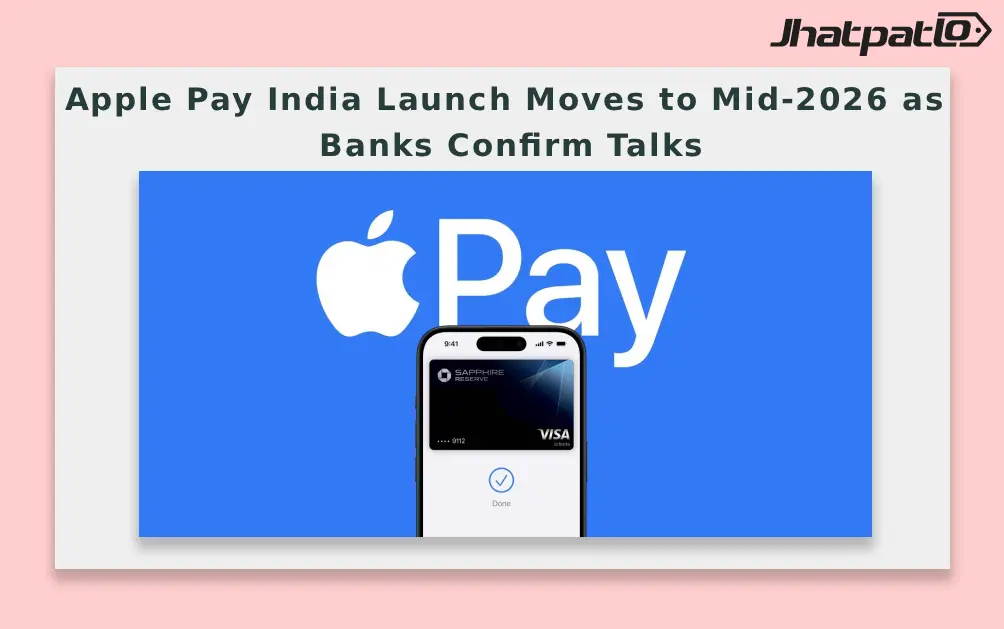
Apple Pay India Launch in Focus
Apple Pay is entering a new phase in India, with Bloomberg reporting that the Cupertino company is in talks with three large Indian banks to bring its proprietary digital payments service to the country. People aware of the matter say the discussions involve ICICI Bank, HDFC Bank, and Axis Bank as potential partners for a nationwide rollout. The reported timeline targets the middle of 2026, a shift from earlier expectations that the service would debut by year-end. The information underscores Apple’s continued push into India’s fast-growing digital payments market, aiming to capitalise on a large and young demographic base.
Officials involved in the matter noted that the mid-2026 target is contingent on regulatory approvals and the outcome of financial-technology negotiations. The report cited that Apple is pursuing a phased approach to market entry, with initial support for card-based contactless payments and later integration of NPCI’s Unified Payments Interface (UPI). The regulatory landscape, particularly around UPI integration, has been cited as a potential hurdle in past discussions.
Bloomberg’s sources also indicated that Apple is negotiating fee structures with card networks as part of the rollout. It was noted that Apple would not immediately rely on a third-party application provider (PSP) for UPI integration at launch, suggesting a gradual involvement with India’s payment rails as regulatory and technical steps are completed.
Timeline, Partners, and Payment Methods
The report reiterates that discussions with major Indian banks are at a late stage, with preliminary plans to launch around the middle of 2026. The banks named—ICICI Bank, HDFC Bank, and Axis Bank—would be the initial on-ground partners to integrate Apple Pay into their card ecosystems and merchant networks.
On the payments side, the plan reportedly centers on two streams: card-based contactless payments at first, then a phased introduction of UPI via NPCI. The NPCI-UPI integration has been described as contingent on regulatory approvals, with Bloomberg’s sources saying the company would pursue UPI support as part of a broader payment strategy in India. The early focus on card payments would enable Apple Pay to tap into existing issuer and merchant networks while regulatory clearance progresses for UPI participation.
Industry observers familiar with the matter noted that Apple is in talks with card networks to determine fee arrangements. Mastercard and Visa were identified in the discussions as part of the settlement framework, and there was no immediate indication that Apple would employ a third-party PSP for UPI at launch. These details, however, remain contingent on formal confirmation from Apple and regulatory sign-offs, which have not yet occurred in a public comment.
Bloomberg also cited that Apple Pay’s India rollout would position the service against a crowded field of digital payments options.
In terms of regulatory posture, the report indicates that pending approvals could influence the pace of integration with NPCI’s UPI. The RBI’s regulatory framework and NPCI’s policies remain a factor in the timing and scope of any UPI-enabled features, according to people familiar with the matter. Apple has not publicly confirmed these plans, and company officials were not available for comment at the time of Bloomberg’s briefing.
Context and Future Directions for Market
Apple Pay's potential entry into India's marketplace will serve as a landmark achievement both for Apple's global payment footprint and for India's rapidly-evolving digital payments ecosystem. The company's outlined strategy of entering the market through card-based payments first with subsequent entry through UPI, will not only be consistent with the regulatory expectations of the country, but will also provide an opportunity for Apple to test their services with major Indian banks prior to a push into larger scale rollout of their services on consumers' digital wallets. The three major banking networks in India, namely ICICI Bank, HDFC Bank, and Axis Bank, are currently in preliminary discussions with respect to Apple's entrance into India; however, large scale deployment will depend on the successful alignment of regulatory and commercial terms.
Officials involved indicated that the company continues to weigh regulatory and market factors ahead of any formal launch announcement. Apple Pay's status in India is still subject to regulations/businesses' approval, plus Apple's own confirmation; therefore, everything reported by Bloomberg is still treated as an overview of the ongoing discussions taking place between Apple and various entities until Apple has officially confirmed it. So for those of you that are interested in following the digital payment infrastructure in today's consumer technology industry, this development reinforces India's acceptance of international players within the industry, as well as through NPCI-supported payment rails, continuing to establish an opportunity for international digital payment platforms to find a market in India.
Next steps, as outlined in the briefing, are clearing up any potential issues to allow for the UPI integration, obtaining any required approval regulations, and receiving a formal confirmation from Apple. Once everything is finalized, if Apple proceeds with its plans to launch Apple Pay's services in the Indian market, Apple will be entering a very competitive arena and most likely redefine how international digital payment platforms are going to go about establishing themselves in India and using the previously mentioned regulatory/commercial targets as guide-posts through that process.
- In talks with ICICI Bank, HDFC Bank, Axis Bank
- Mid-2026 launch target
- Initial card-based contactless payments
- UPI integration planned later; regulatory approvals pending
- Fee structures under negotiation with card networks
- Mastercard and Visa discussions; no immediate PSP for UPI at launch
- Competition with PhonePe, BHIM UPI, Google Pay, Amazon Pay
Sources: Bloomberg reporting and people aware of the matter
Related Products

Real time price comparison India Apple delays Siri upgrades for iOS 26.4
Delay details Apple is delaying a set of AI powered Siri upgrades planned for iOS 26.4, according to Bloomberg's Mark Gurman. The features were expected to push the voice assistant toward more contextual understanding, a personalized Siri, and deeper app integration, but development challenges have...

Apple Expands Indian Retail Footprint with Hyderabad Store Hint
Hyderabad Expansion Signals Sixth Apple Store in India Apple is expanding its retail footprint in India with signs of a new store in Hyderabad. The company currently operates five branded stores in Mumbai, Pune, Delhi, Bengaluru, and Noida. The Noida store, inaugurated in December 2025 at the DLF M...

Apple Expands AI Wearables Beyond iPhone with Glasses and Pendant in Development
Apple AI Wearables in Development Apple is reportedly pursuing a new wave of AI-centric hardware beyond the iPhone and Vision Pro, with early prototypes already tested internally. A Bloomberg report by veteran tech journalist Mark Gurman outlines a lineup that reportedly includes smart glasses, cam...

India Prepares Smartphone Export Incentives to Boost Apple and Local Suppliers
Overview New Delhi is drafting a second phase of its smartphone manufacturing incentives that would link government subsidies to exports and deeper use of locally made components, according to people familiar with the matter. The move is expected to benefit Apple, Samsung Electronics and...
Apple Readies Entry-Level iPad With A18 Chip, AI Support in H1 2026
Launch timeline and AI features Bloomberg's Mark Gurman suggests that Apple has plans to update its least expensive iPad version. His prediction is that this will happen sometime during Early 2026. This upgrade will enable Apple's lowest-cost tablet model (i.e., the entry iPad) to achie...
Apple Reaches 2.5 Billion Active Devices as India Becomes Growth Market
Apple Reaches 2.5 Billion Active Devices as India Becomes Growth Market Apple's ecosystem now includes about 2.5 billion active devices worldwide, Tim Cook said during the company's fiscal 2026 first-quarter earnings call. The figure covers iPhone, iPad, Mac, Apple Watch and other products, and i...