


Fastest Charging Phones Under Rs 60000 Which Ones Recharge Fast and Last Longest
Introduction
Even a five-minute charge can now buy hours of usage, which is exactly why this price band got interesting again. In the Rs 50,000 to Rs 60,000 range, charging speed only really makes sense when you look at battery capacity alongside it, because a phone that fills fast but dies early can be more annoying than helpful. That’s where this list gets useful. We’re not just chasing big watt numbers here. We’re looking at the phones that actually make life easier in daily use, especially now that some models are packing 7,000mAh to 10,000mAh batteries and the charging story is a little more complicated than it used to be.
So if you’ve been comparing the fastest charging phones under Rs 60000, the real question isn’t just which one hits 100W. It’s which one gives you the best mix of quick top-ups, real endurance, and practical value once the battery size and usage patterns are part of the equation.
Quick Highlights
- The iQOO 15R recharges the fastest.
- The Redmi Note 17 Pro Max lasts the longest.
- Battery size matters as much as charging speed.
- Wireless extras can still change the buying choice.
Which phone charges fastest in this price range, and which one actually lasts the longest?
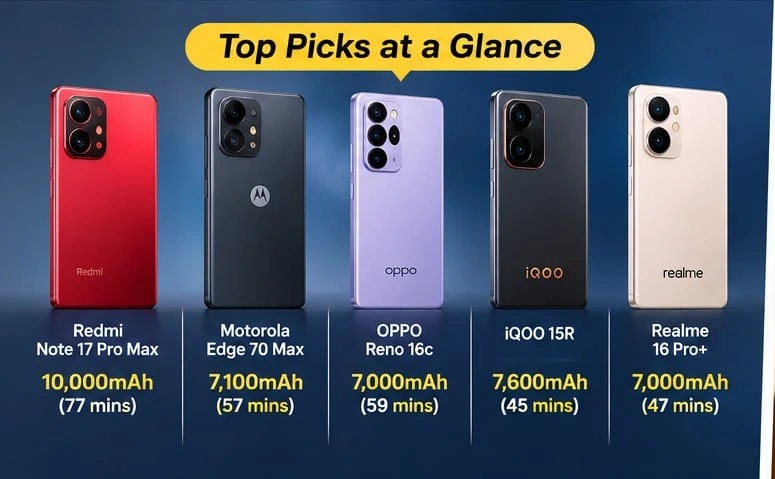
The list starts with a simple comparison: charging time, battery size, and real endurance all pull in different directions. The Redmi Note 17 Pro Max has the biggest battery at 10,000mAh, while the iQOO 15R posts the quickest top-up at 45 minutes from 20% to 100%. That contrast is the whole story in one glance. Bigger battery doesn’t automatically mean slower in every useful way, but it does change the charging experience enough that you can’t judge these phones by wattage alone.
That tension runs through the whole table, which is why the order here is not based on charging watts alone. A phone can look impressive on paper and still feel less convenient if its endurance is only average or if the charging curve slows down too much near the top. Real use is messy like that. Some people need a phone that survives a long commute, while others just want a quick power boost before heading back out. Both are valid, but they lead to different winners.
| Phone | Price | Battery | Charging speed | Charging time (20–100%) |
|---|---|---|---|---|
| Redmi Note 17 Pro Max | Rs 52,999 | 10,000mAh | 100W | 77 minutes |
| Motorola Edge 70 Max | Rs 54,999 | 7,100mAh | 90W | 57 minutes |
| OPPO Reno 16c | Rs 52,999 | 7,000mAh | 80W | 59 minutes |
| iQOO 15R | Rs 53,999 | 7,600mAh | 100W | 45 minutes |
| Realme 16 Pro+ | Rs 53,999 | 7,000mAh | 80W | 47 minutes |
*Prices are as of November 18, 2026.
Why the Redmi Note 17 Pro Max still matters even though it is not the quickest charger
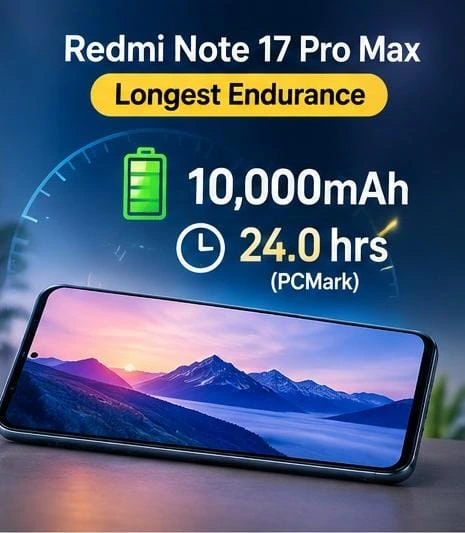
Its 10,000mAh battery is the standout fact here, and the 100W charging keeps it from feeling sluggish despite that size. In testing, it took 77 minutes to go from 20% to 100%, and the PCMark score hit 23 hours and 59 minutes. That’s the kind of result that sounds a little boring until you actually need a phone that just keeps going. Then it starts looking a lot more appealing. If your day is long, your usage is heavy, or you just hate reaching for a charger every few hours, this is the phone that gives you the most breathing room.
For heavy users, that balance could be more useful than chasing the fastest charging figure on the spec sheet. A person who spends hours watching videos, playing games, using GPS, or working from a phone may get more practical value from having a huge battery than from shaving a few minutes off the charging process. The phone is essentially built around the idea of reducing how often you need to think about charging.
What do the battery tests say once real usage gets involved?
PCMark changes the conversation because it shows how long these phones keep going under simulated everyday use. The Redmi Note 17 Pro Max led with 24.0 hours, while the Motorola Edge 70 Max came last at 16.6 hours, even though it still charges quickly. That spread is important because it reminds you that raw charging speed doesn’t automatically translate into the best all-day experience. A phone with a smaller battery can still do well if the software and hardware are tuned properly, while a bigger battery can sometimes carry extra weight without giving a perfectly proportional gain.
That’s why battery capacity and optimisation matter as much as charging wattage. If you’re deciding between phones in this segment, endurance is not some side note. It’s a big part of what makes a phone feel dependable or annoying after a few weeks of use.
| Phone | PCMark battery score | Battery size | Notable takeaway |
|---|---|---|---|
| Redmi Note 17 Pro Max | 24.0 hours | 10,000mAh | Longest endurance in the group |
| OPPO Reno16c 5G | 21.2 hours | 7,000mAh | Outlasts some phones with larger batteries |
| realme 16 Pro Plus | 19.0 hours | 7,000mAh | Balanced result with strong all-round battery life |
| iQOO 15R | 18.4 hours | 7,600mAh | Strong performance, slightly behind the leaders on endurance |
| Motorola Edge 70 Max | 16.6 hours | 7,100mAh | Good enough for a day, but the lowest score here |
The test conditions also matter: PCMark was run overnight at 80% brightness and 50% volume, and it measures battery life from 100% down to 20%. That doesn’t perfectly mimic every single person’s routine, of course, but it gives a useful baseline. It’s a bit like comparing all these phones on the same treadmill. Not identical to real life, but close enough to expose who’s genuinely efficient and who just looks good on paper.
Why the iQOO 15R stands out for people who care more about speed than sheer battery size
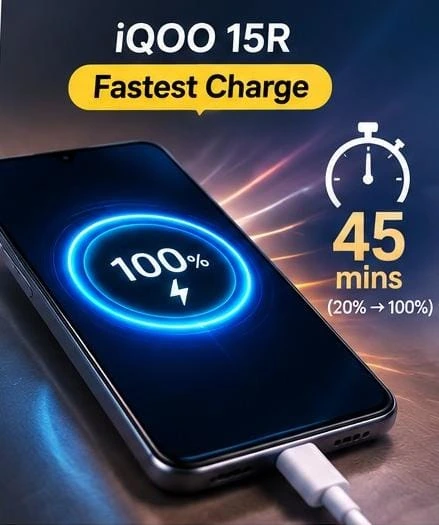
The iQOO 15R pairs a 7,600mAh battery with 100W charging, so it lands in a sweet spot instead of chasing the biggest cell. It charges from 20% to 100% in 45 minutes and is also reported to deliver around 7 to 8 hours of screen time. That combination matters because it means you’re not sacrificing convenience just to get quicker charging. Heavy users tend to notice this immediately. The phone can handle a serious day, and when it does need a refill, it gets back on its feet faster than the others in this group. That makes it one of the easiest phones to recommend if speed is your main obsession.
Gaming is another area where this approach makes sense. Long gaming sessions can drain a phone considerably faster than casual social media use or messaging. Being able to plug the phone in and recover a large portion of its battery relatively quickly can make the charging experience feel less disruptive. The same applies to people who use their phone for navigation, video calls, photography, streaming, and hotspot usage throughout the day.
There is also a practical advantage for people who do not like charging overnight. With charging this fast, you can top up during a meal, while getting ready, or during a short break and still add a meaningful amount of battery. That flexibility is arguably more important than the charging wattage itself because it changes how often you need to think about keeping the phone plugged in.
Which phones are the better picks if you care about design, cameras, or extras too?
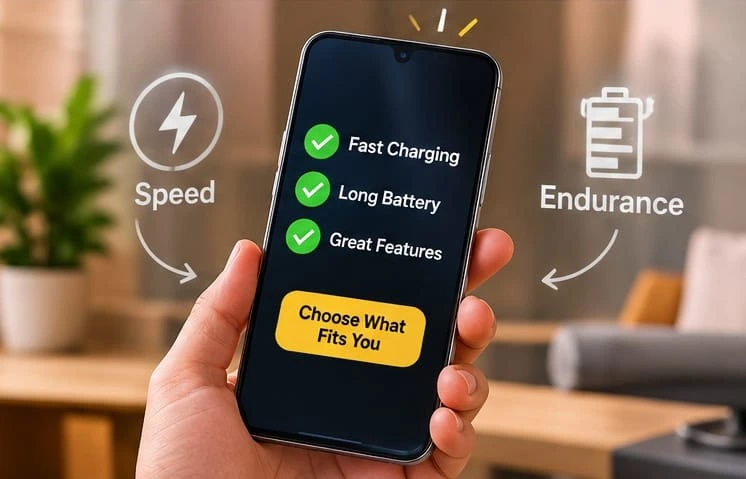
The charging numbers are only half the story, because some phones are clearly aimed at a broader buying decision. The Motorola Edge 70 Max adds 25W Qi2.2 wireless magnetic charging, while the Realme 16 Pro+ includes the 80W charger in the box. Those details sound small until you actually live with the phone. A charger in the box saves hassle right away, and wireless magnetic charging can be a bigger deal than it first appears if you already use accessories or want a cleaner desk setup.
The OPPO Reno 16c and Realme 16 Pro+ also lean harder into style and camera flexibility than the rest. So if you’re not only thinking about battery behavior but also how the phone feels to carry, how it looks in hand, and what kind of photos you want to take, these two start making more sense.
- Motorola Edge 70 Max — 7,100mAh, 90W charging, 25W Qi2.2 wireless magnetic charging, and compatibility with iPhones’ MagSafe accessories.
- OPPO Reno 16c — 7,000mAh battery, 80W charging, 21.2 hours in PCMark, and a rear camera setup of 50MP + 8MP + 50MP.
- Realme 16 Pro+ — 7,000mAh, 80W charging, 19.0 hours in PCMark, and an included 80W charger.
- iQOO 15R — performance-first positioning, 7,600mAh battery, 100W charging, and Snapdragon 8 Gen 5 power.
The hardware details that separate the five phones
Redmi Note 17 Pro Max: 6.83-inch FHD+ AMOLED, 120Hz, Snapdragon 6 Gen 5, 50MP + 8MP rear, 32MP front, 10,000mAh, 100W.
Motorola Edge 70 Max: 6.8-inch QHD+ Extreme AMOLED, 144Hz, Snapdragon 8 Gen 5, 50MP + 8MP + 2MP rear, 32MP front, 7,100mAh, 90W.
OPPO Reno 16c: 6.57-inch FHD+ AMOLED, 120Hz, Dimensity 7300, 50MP + 8MP + 50MP rear, 50MP front, 7,000mAh, 80W.
iQOO 15R: 6.59-inch FHD+ AMOLED, 144Hz, Snapdragon 8 Gen 5, 50MP + 8MP rear, 32MP front, 7,600mAh, 100W.
Realme 16 Pro+: 6.8-inch FHD+ AMOLED, 144Hz, Snapdragon 7 Gen 4, 200MP + 50MP + 8MP rear, 50MP front, 7,000mAh, 80W.
That mix shows pretty clearly that these phones are not identical at all. The Redmi Note 17 Pro Max is the battery monster. The Motorola Edge 70 Max is the flashy premium-feeling one with extras. The OPPO Reno 16c leans into balanced endurance and camera hardware. The iQOO 15R feels tuned for speed and performance. And the Realme 16 Pro+ throws in a high-resolution main camera and a charger in the box, which is the kind of practical touch people appreciate more than they expect.
So which one should you actually buy?
If battery endurance and fast charging are the priority, the Redmi Note 17 Pro Max makes the strongest case because of its 10,000mAh battery and top-class 24.0-hour PCMark result. It’s not the fastest to refill, but it stays alive for a very long time, and for plenty of people that matters more. If you want the fastest top-up, the iQOO 15R wins that race with 45 minutes from 20% to 100%. It also keeps battery size respectable, so you don’t feel like you’re buying speed at the cost of everything else.
The Motorola Edge 70 Max, OPPO Reno 16c, and Realme 16 Pro+ each make more sense when design, cameras, or extras matter as much as charging speed. That’s the real takeaway here. In this segment, the best phone is not always the one with the biggest number. Sometimes it’s the one that matches the way you actually use your phone every day.
FAQ
These questions come from the smaller doubts readers usually have after comparing the phones side by side.
Q: Which phone charges the fastest under Rs 60,000?
The iQOO 15R is the quickest here, taking 45 minutes to go from 20% to 100%.
Q: Which phone has the biggest battery in this list?
The Redmi Note 17 Pro Max has the biggest battery at 10,000mAh, and it also posts the best PCMark score.
Q: Does 100W charging always mean the fastest phone?
Not necessarily. Battery size and charging optimisation change the result, which is why the 100W Redmi Note 17 Pro Max is slower to full charge than the 100W iQOO 15R.
Q: Is the Motorola Edge 70 Max worth it for wireless charging?
It can be, especially if 25W Qi2.2 magnetic wireless charging and MagSafe compatibility matter to you.
Conclusion
The fastest charging phones under Rs 60000 do not split neatly into one winner, because charging speed, battery size, and endurance pull in different directions. The best choice depends on whether you want the quickest refill, the longest battery life, or the most balanced all-round phone. And honestly, that’s a good thing. It means you can choose based on your habits instead of just chasing one flashy spec.
If you want the safest pick on endurance, start with the Redmi Note 17 Pro Max; if speed is the real obsession, the iQOO 15R is the sharper answer.

Riya Katiyar
✉ riyakatiyar337@gmail.comRelated Products








WhatsApp Adds Prepaid Mobile Recharge Feature in India in Phased Rollout
WhatsApp adds prepaid recharge inside the app WhatsApp has introduced a feature that lets users recharge prepaid mobile numbers without leaving the app, adding WhatsApp prepaid mobile recharge to its growing list of in-app payment features. The rollout was announced this week and will reach...

TRAI Rule Lets Rs 10 Recharges and this surprising change could reshape 2G plans
New Delhi: The Telecom Regulatory Authority of India has published updated guidelines aimed at widening access to affordable mobile services for 2G users. The new rules, released in December 2024, direct telecom operators to introduce top-up vouchers at small denominations and to extend th...

Pixel 10 Flipkart Sale Price Could Drop to Rs 59,999 on May 9
Google Pixel 10’s Pixel 10 Flipkart sale price could fall to Rs 59,999 during Flipkart’s Sasa Lele sale, which begins on May 9. The figure appears to be an effective price rather than a flat cut, with bank offers, exchange value and base discounts likely contributing to the final amount. What...

Jio Free Incoming SMS Over VoWiFi for Travellers
Reliance Jio is reportedly offering a new benefit for international travellers: free incoming SMS over Wi‑Fi calling, or VoWiFi. The change is described in a FoneArena report as a feature that lets users receive incoming messages abroad at no extra cost, without needing an active internati...

JioHome Cricket Offer Announced in India With Bundled OTT Apps and Cashback
Overview Reliance Jio has announced a limited-period JioHome Cricket Offer in India aimed at the telecom operator's broadband and entertainment subscribers. The promotion bundles high-speed internet with live cricket streaming and a range of OTT apps under a single subscription, timed to...