


Huawei MatePad Air Z brings a 12-inch 144Hz display and PaperMatte
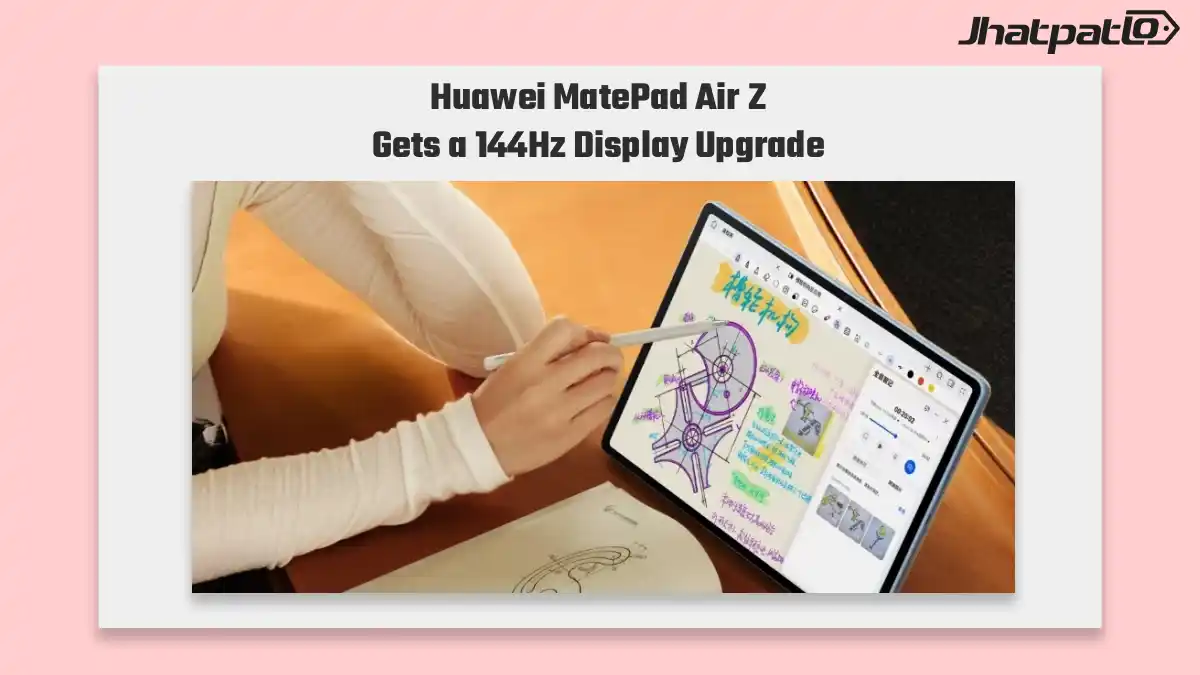
Huawei has launched the MatePad Air Z in two versions, with a 12-inch 2.8K PaperMatte display, 144Hz refresh rate, and HarmonyOS 7 at the center of the pitch. The tablet also comes with the Kirin T93S23 chip, while pricing starts at 2,999 yuan for the Enjoy Edition.
That makes the MatePad Air Z a screen-first tablet with a clear split between the Standard and Enjoy Edition models. The display, battery, and charging details are the main differences buyers will likely compare before choosing between them.
Key developments
- The Huawei MatePad Air Z uses a 12-inch 2.8K PaperMatte panel with a 144Hz refresh rate, putting display quality at the center of the device’s design.
- Huawei pairs the tablet with the Kirin T93S23 chip and HarmonyOS 7, which sets the software and hardware base for both versions.
- The Enjoy Edition starts at 2,999 yuan for the 8GB/128GB model, while higher trims go up to 4,999 yuan.
- Both versions carry a 10,100mAh battery, but charging speeds differ, with 66W on the Standard model and 40W on the Enjoy Edition.
Huawei MatePad Air Z price starts at 2,999 yuan in Enjoy Edition
The Huawei MatePad Air Z price is split across Standard and Enjoy Edition models, which makes the lineup easier to sort but also a little uneven in what it offers. The Enjoy Edition starts at 2,999 yuan for the 8GB/128GB version, giving it a lower entry point for buyers who mainly want the display and core tablet experience.
At the other end of the range, higher trims reach 4,999 yuan. That places the MatePad Air Z in the mid-to-premium tablet segment, where buyers tend to pay close attention to storage, RAM, and screen characteristics rather than just the brand name alone. In that context, the PaperMatte panel and 144Hz refresh rate become part of the value argument, not just spec-sheet extras.
Huawei’s pricing also suggests the company is trying to separate the two versions by more than storage. The Standard model is positioned above the Enjoy Edition, while the lower-priced option gives the series a broader reach in China’s crowded tablet market.
MatePad Air Z battery and 66W charging differ by model
Battery capacity stays the same across both versions. Huawei fits the MatePad Air Z with a 10,100mAh cell, which should give the tablet a solid base for long use. The real difference comes in charging, where the two models diverge more clearly.
The Standard model supports 66W charging and comes with a bundled 66W adapter. The Enjoy Edition, by contrast, ships with a 40W charger. That means Huawei is reserving its faster refill speed for the better-equipped version, while still keeping a large battery across the range.
This split is typical of a product line that is trying to balance cost and features without making the entry model feel stripped down. In practical terms, the charging gap matters because it is one of the few major hardware differences between the two versions. For buyers comparing the models, that detail could be just as important as the storage options.
Huawei also pairs the battery setup with the rest of the tablet’s hardware in a way that keeps the focus on daily use. A big battery, fast charging on the Standard model, and a high-refresh display all point toward a device built around screen time, not just basic productivity.
Huawei MatePad Air Z brings a 12-inch 144Hz display and PaperMatte
The most attention-grabbing part of the Huawei MatePad Air Z is the display. Huawei uses a 12-inch 2.8K PaperMatte panel, and that alone makes the tablet stand out in a segment where screen quality is often the deciding factor. The PaperMatte finish suggests Huawei is leaning into glare control and a more comfortable viewing experience, which may matter more than raw specs for many tablet buyers.
The 144Hz refresh rate is another important part of the story. It should make scrolling and general motion feel smoother, and it gives the tablet a spec that is easy to compare against premium Android rivals. The 88% screen-to-body ratio also helps the device look more modern and compact around the edges, even with a 12-inch panel.
Under the display, Huawei pairs the tablet with the Kirin T93S23 chip and HarmonyOS 7. That combination sets the foundation for performance and software behavior, although the outline does not go into deeper detail about memory configurations beyond the base 8GB/128GB option. Even so, the device is clearly being positioned around its screen first, then everything else.
For buyers looking at large tablets, that is usually how the decision starts anyway. Display smoothness, glare control, battery size, and charging speed are the points that shape the final choice. The MatePad Air Z builds its identity around those exact areas, with the two-version setup giving Huawei a way to cover both entry-level and higher-end interest in one release.

Related Products



Huawei MatePad 11.5 PaperMatte Launches on Flipkart with Keyboard
Huawei MatePad 11.5 PaperMatte is now available in India at Rs. 45,999, sold exclusively on Flipkart with a keyboard bundle. The tablet brings an 11.5-inch 2.5K 120Hz display with PaperMatte treatment, which clearly positions it for work, study, and long reading sessions rather than casual...
Huawei MatePad 11.5 and MatePad SE 11 Specs Revealed in India
Huawei MatePad 11.5 and MatePad SE 11 Specifications Revealed The Huawei MatePad 11.5 and the MatePad SE 11 are listed on Flipkart with full specifications and starting prices in India. The listings confirm that both tablets will be sold only as Wi-Fi models in the country and will go on sale vi...
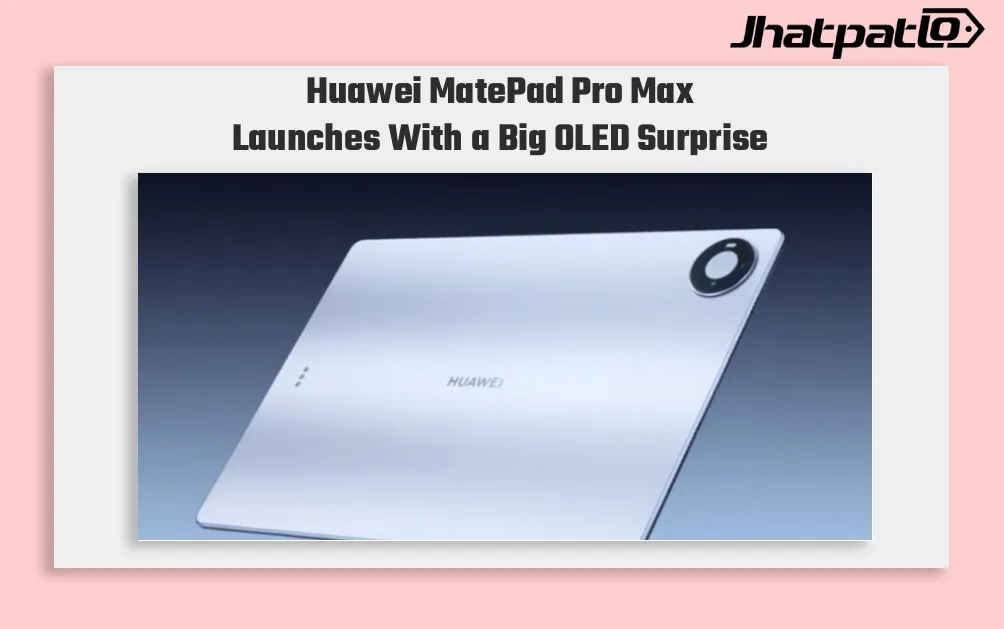
Huawei MatePad Pro Max Goes Global With 4.7mm Design and OLED Display
Huawei launches MatePad Pro Max globally Huawei MatePad Pro Max Launches, putting a 4.7mm chassis, a 13.2-inch OLED PaperMatte display and productivity tools at the center of the launch. The tablet starts at EUR 1,399 and is being positioned around work use, with PC-style WPS Office features,...

Huawei MatePad 11.5 2026 Teased for India Launch as Flipkart Teases Comeback
Huawei Set to Return to Indian Market With Tablet Teaser Huawei is signaling a return to India with a teaser for a tablet on Flipkart. A dedicated microsite has gone live, showing a silhouette that resembles a tablet paired with a detachable keyboard. The visuals suggest a device...
Huawei MatePad Mini Global Launch Brings 8.8 Inch 2.5K Display
Huawei has launched the MatePad Mini in global markets, highlighting an 8.8-inch 2.5K display, a 6,400mAh battery with 66W charging, and HarmonyOS 4.3.0. The device comes in Graphite Black and Spruce Green, with 8GB or 12GB RAM options and 256GB of onboard storage as standard. Huawei notes...