


iOS 27 Adds Liquid Glass Controls and Faster App Launches
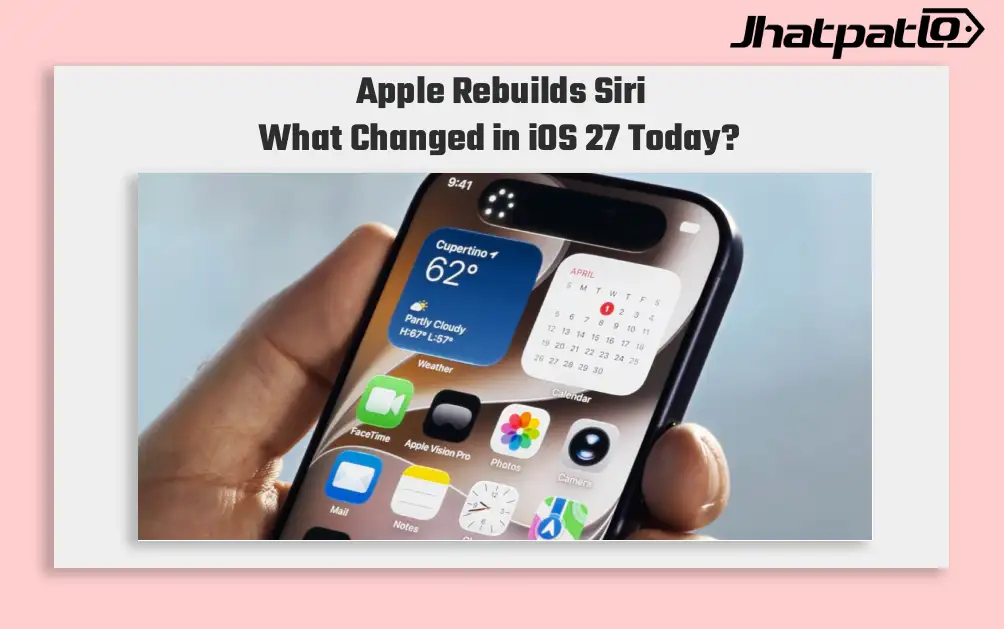
Apple’s iOS 27 update focuses on refinement, not a full redesign. The software brings Liquid Glass opacity controls, faster app launches, and a rebuilt Siri, while some AI features remain limited to iPhone 15 Pro and newer.
Developer beta access starts first, public betas follow in July, and the stable rollout is expected by mid-September. That makes iOS 27 one of the more noticeable software divides in Apple’s current iPhone lineup, especially for users comparing newer premium models with older supported devices.
Apple Rebuilds Siri in iOS 27, but Only Newer iPhones Get It
Siri is getting one of the biggest changes in iOS 27. Apple has turned it into a standalone app, and it can keep context from earlier conversations. That is a meaningful shift from the usual yearly update cycle, where Siri has often picked up smaller improvements rather than a full rebuild.
According to the outline, Apple says the assistant uses its own Foundation Models along with Google’s Gemini models. It also adds voice customization and broader system-level help. In practical terms, that points to a more capable assistant that can do more inside the operating system instead of handling only basic requests.
Still, the biggest point is device support. Those AI features are reserved for hardware with the right support, which means iPhone 15 Pro and newer models get the full experience. Older supported iPhones can still run iOS 27, but they will not get the same AI layer. That creates a cleaner split between standard devices and Apple’s latest premium phones.
The update also reinforces a wider trend in Apple software. New features are increasingly tied to hardware capability, not just the latest version number. For users shopping between models, that distinction matters more than it used to.
Liquid Glass controls and faster app launches focus on everyday use
Beyond Siri, iOS 27 is leaning into interface refinement. Apple is adding Liquid Glass opacity controls, which let users adjust the transparency of the system look. That sounds small, but it can change how readable and comfortable the interface feels in daily use. The update is not presented as a redesign. It is more about tuning the existing experience.
The other headline improvement is speed. Apple is claiming faster app launches, which will likely matter more to most people than any visual change. Faster opening times affect basic phone use all day long, from messaging and maps to social apps and browsers.
Even without a long list of new features, that combination gives iOS 27 a clear identity. It is not trying to reinvent iPhone software. It is aiming to make the system feel smoother, cleaner, and a bit more responsive. For many users, that is the kind of update they notice fastest.
There is also a practical side to this release cycle. Since developer beta access comes first, app makers and testers get an early look at what needs updating. Public betas follow in July, which gives broader users a chance to try the new build before the final version lands. Apple’s stable rollout is expected by mid-September, in line with the usual iPhone software schedule.
For now, the main story is simple. iOS 27 brings visual controls, speed improvements, and a rebuilt Siri, but the AI features are not spread evenly across all supported devices. That makes the update useful for most iPhone users, while still leaving the newest hardware with the strongest advantages.
Related Products




iOS 27 Reportedly Brings Standalone Siri App to iPhone Home Screen
iOS 27 Reportedly Adds New Siri AppApple’s iOS 27 is expected to arrive in a few months, and reporting suggests it will include a standalone Siri app on the iPhone Home Screen. The app is described as part of Apple’s broader AI overhaul for Siri, with a new interface built around chats, saved conver...

iOS 27 Developer Beta 5 Adds Liquid Glass Icons and Siri Controls
iOS 27 Developer Beta 5 is now available, and the biggest changes are easy to spot right away: refreshed Liquid Glass icons, smoother Siri voice control tuning, and new system app updates. Apple is also limiting the developer beta to supported iPhones starting with iPhone 11 and iPhone SE...

Apple Plans iOS 27 Codebase Cleanup to Boost Battery Life
Apple To Change Codebase of iOS 27 For Battery Life Improvements Apple's iOS 27 will likely see an overhaul of the codebase, with the intention of enhancing battery performance, according to a Bloomberg report in the Power On newsletter; this is expected to be released in conjunction with the...

iOS 27 Beta 7 update brings faster Camera launch and Siri AI intro
iOS 27 Beta 7 is now rolling out, and Apple appears to be focusing on cleanup before the stable release. The update speeds up Camera app launch, adds a new Siri AI splash intro, and fixes a few everyday bugs that testers have been seeing. Some issues are still lingering, though, so this be...

Apple WWDC 2026 Teaser Hints at Siri Overhaul With New AI UI
Apple WWDC 2026 teaser points to Siri changes Apple has reportedly teased a major Siri overhaul ahead of WWDC 2026, with early signs pointing to a redesigned interface and deeper AI integration in iOS 27. Bloomberg’s Mark Gurman said the conference artwork may be hinting at the next version o...

Apple Plans Siri App Revamp With Gemini Access and New AI Features
Apple Plans Siri App for iPhone, iPad and Mac Apple is reportedly preparing a broader artificial intelligence push that includes a major Siri overhaul, with a standalone app under testing for iPhone, iPad and Mac. According to Bloomberg's Mark Gurman, the redesigned Siri interface could r...