


Redmi Pad 3 Wi-Fi listing points to 18W charging and model 2610FRP38G
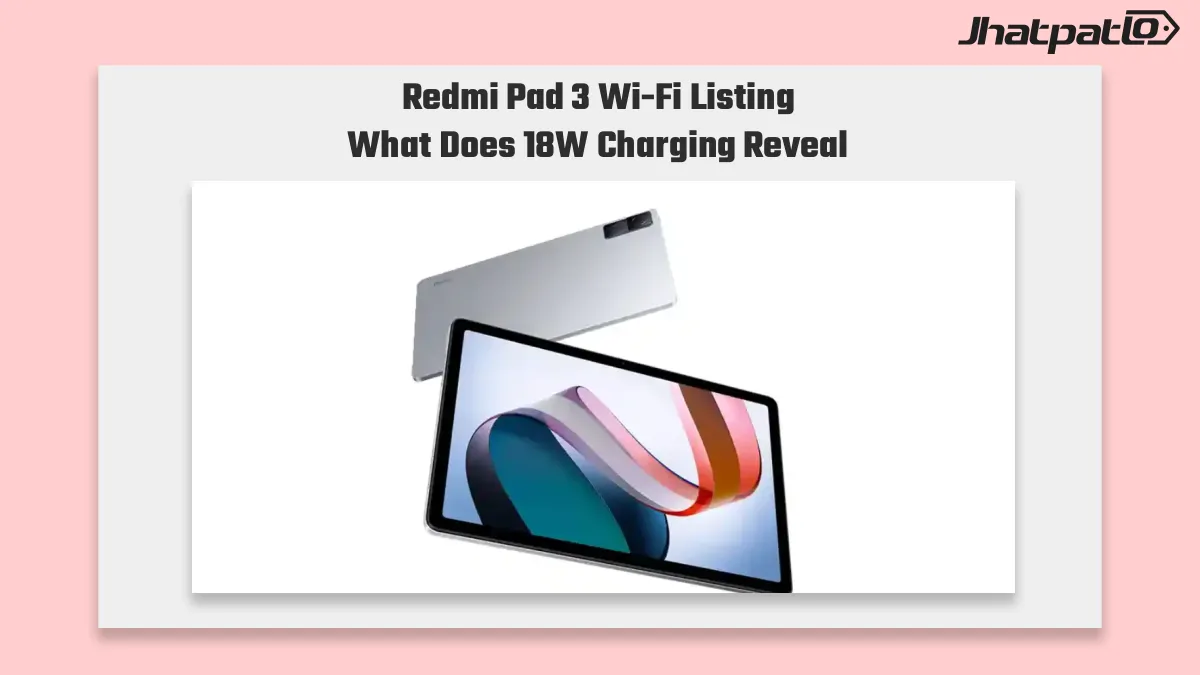
Redmi Pad 3 Wi-Fi listing details from SDPPI and TÜV now tie the tablet to model 2610FRP38G. The filings also point to a familiar 18W charging setup, keeping Xiaomi in the same entry-level tablet bracket as the Redmi Pad 2 and its regional rivals.
News Highlights
- Redmi Pad 3 Wi-Fi has appeared in SDPPI and TÜV filings, and both listings point to model number 2610FRP38G for the tablet.
- The certification trail suggests an Indonesia launch window, since the SDPPI filing names PT Xiaomi Technology Indonesia as the applicant.
- TÜV paperwork points to 18W charging, which keeps the tablet in a modest power category rather than a faster-charging segment.
- Other filings already connect the Wi-Fi-only version with a large battery, microSD expansion, and HyperOS, though the full spec sheet is still not confirmed.
Those filings do not reveal everything yet, but they do narrow the picture. Redmi Pad 3 Wi-Fi listing points to 18W charging and model 2610FRP38G. The Redmi Pad 3 appears to be another value-focused Xiaomi tablet, built for buyers who want basic everyday use rather than a premium charging setup or a top-tier tablet feature set. The key detail is the mix of certification clues, which usually arrive before launch.
Redmi Pad 3 SDPPI listing hints at an Indonesia launch window
The Indonesia certification is one of the clearest signs that the Redmi Pad 3 Wi-Fi is moving toward release. It names PT Xiaomi Technology Indonesia as the applicant and identifies the device as a tablet computer. That is a fairly standard step in the approval process, but it still matters because filings like this often show up late, when a product is getting close to launch.
For that reason, the listing puts the Redmi Pad 3 Wi-Fi launch in play for Southeast Asia first. It does not confirm an exact date, and it does not say how broad the rollout will be. Still, the presence of the Indonesian paperwork gives the tablet a more concrete timeline than a rumor alone would.
The model number attached to the device, 2610FRP38G, also helps link the filings together. In practice, this kind of matching is useful because tablet certifications can appear across different agencies before the company officially says anything. When the same model shows up in more than one place, it usually strengthens the case that the device is real and nearing market entry.
Redmi Pad 3 TÜV charging listing keeps HyperOS tablet specs modest
The TÜV filing adds another important piece to the puzzle: 18W charging. That is not a particularly fast figure by current tablet standards, and it suggests Xiaomi is not trying to push the Redmi Pad 3 into a more aggressive charging category. Instead, the tablet seems to sit comfortably in the entry-level bracket, where battery life and price tend to matter more than charging speed.
Other filings already linked the Wi-Fi-only model to a large battery, microSD expansion, and HyperOS on the software side. Put together, those details suggest a practical tablet rather than a spec-heavy one. The Redmi Pad 3 HyperOS tablet appears designed for simple media use, browsing, note-taking, and general everyday tasks.
That positioning also makes sense next to the Redmi Pad 2 and other regional rivals. Xiaomi has used this segment before, where a tablet does not need to be flashy to be competitive. A large battery and expandable storage can carry a lot of the appeal, especially when the device is expected to be affordable.
What is still missing is the full official spec sheet. The filings point to the model, charging level, and some broad hardware hints, but they do not confirm display details, chipset choice, cameras, or pricing. For now, the evidence is enough to say the Redmi Pad 3 Wi-Fi is advancing through certification and keeping its feature set restrained.
If Xiaomi follows the same pattern as past releases, more filings or a formal teaser could arrive soon. Until then, the current clues suggest a tablet aimed at the value segment, with 18W charging and a region-first rollout strategy leading the story.

Related Products





Xiaomi Pad 9 BIS certification points to India launch
Xiaomi Pad 9 BIS certification has surfaced for model 26103RP65I, the India-specific unit already linked to HyperOS 9 code leaks. The filing does not confirm specs or launch timing, but it is a clear sign the tablet is moving closer to an India debut. The Xiaomi Pad 9 BIS certification co...

Xiaomi Pad 8 price hike raises India tablet costs by up to Rs 3,000
Xiaomi and Redmi tablets in India are getting costlier, with the biggest increase touching the Xiaomi Pad 8 lineup by up to Rs 3,000. The new pricing affects both premium and mid-range models, including Pen bundles and Nano Texture variants, which changes the value equation for buyers watc...

Redmi Pad 3 4G certifications point to 10,000mAh battery and faster charging
Redmi Pad 3 4G certifications are starting to sketch out a near-term launch, with listings pointing to a bigger battery, faster charging support, and RAM options that could range from 4GB to 8GB. The clearest signals so far suggest Xiaomi is lining up this tablet as a budget-friendly follow-up to th...
Xiaomi Pad 8 Price Hiked by Up to ₹3,000 in India
Xiaomi Pad 8 price hike in India has gone up by as much as ₹3,000, affecting the base model, Nano Texture variant, and Pen bundles. The tablet now starts at ₹38,999, while the highest bundles go up to ₹50,999, making the premium mid-range segment a little tighter for buyers. Xiaomi Pad 8...

OPPO Pad 6 F SIRIM listing points to Malaysia launch soon
OPPO Pad 6 F is edging closer to launch after a SIRIM listing in Malaysia confirmed the OPD2605 model, making it the clearest release sign so far. The filing does not reveal hardware details, but it does strengthen the case for an incoming Wi-Fi tablet aimed at Southeast Asia.There is also a separat...