


Refurbished Phone Prices Rise as Smartphone Shipments Fall 6% in Q2
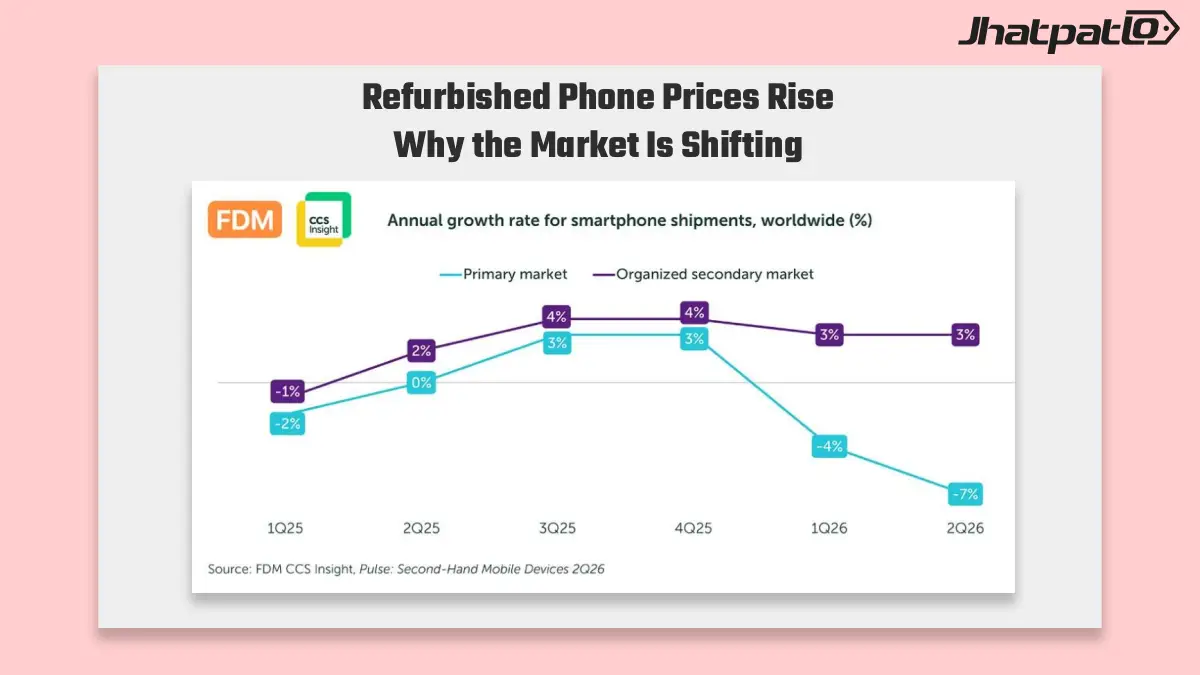
Refurbished phone prices are rising as global smartphone shipments fell 6% in Q2 2026, while new device costs climbed on memory shortages. FDM CCS Insight says new phones were 13% pricier quarter on quarter, and that is pushing more budget buyers toward the secondary market.
The shift is already changing demand across the phone trade. Second-hand sales are growing, developed markets are holding up better than emerging markets, and higher memory prices are expected to keep pressure on new smartphone pricing in the second half.
Second-hand phone sales grow as new smartphone prices keep rising
Second-hand phone sales rose 3% year over year, according to the figures in the outline, and FDM is projecting near-10% growth for 2026. That growth is happening even though supply remains tight. The main reason is straightforward: rising memory prices are making new smartphones more expensive again, and buyers in price-sensitive markets are responding by looking at refurbished or used phones instead.
In practice, that means more people are stretching replacement cycles. When the cost of a new phone moves up, some buyers simply keep their current device longer. Others move to the secondary market, where the price gap can make more sense for basic needs. The result is more demand flowing away from lower-end new devices and into refurbished hardware.
This also affects how the market is moving overall. The outline points to a widening gap between new and second-hand devices, with the pressure strongest where budgets are tighter. That does not mean every region or every buyer reacts the same way, but the direction is clear: as new smartphone prices keep climbing, the used phone market benefits.
Europe and North America hold up while emerging markets slip harder
Developed markets fell only in low single digits, while emerging markets saw sharper declines. The difference seems to be how quickly buyers reacted to higher sticker prices. In regions where smartphone spending is more flexible, demand softened but did not collapse. In more price-sensitive markets, the slowdown was faster and more visible.
The remaining sales are also changing shape. Premium smartphone models are taking a bigger share of the phones still selling, which suggests buyers who do purchase new devices are leaning toward higher-end models. At the same time, lower-end new devices are losing some demand to refurbished hardware and cloud-based alternatives. That shift does not happen everywhere in the same way, but it is part of the wider adjustment happening in the market.
For the industry, this split matters. A market that is falling in low single digits in one region and much harder in another does not behave like a uniform slowdown. It changes inventory planning, pricing strategy, and the balance between new and second-hand sales. It also shows why rising memory prices are not just a component issue. They are feeding into retail prices, buyer behavior, and the pace of replacement across the smartphone market.
For now, the main trend is simple: new phone prices are under pressure, refurbished demand is gaining ground, and emerging markets are feeling the squeeze more sharply than developed ones. If memory costs stay high, that divide is likely to remain in place through the rest of the year.

Related Products



IDC Forecast Global Smartphone Shipments Drop to a Decade Low as Memory Shortage Drives Prices Up
Global smartphone shipments are forecast to fall to 1.1 billion units in 2026, a 12.9 percent year-on-year decline, as memory shortages tighten supplies and push costs higher. The International Data Corporation (IDC) says the drop will bring annual shipments to their lowest level in more t...

Smartphone Price Hike Roundup Lists Revised Prices Across Samsung OPPO Vivo and More
Smartphone Price Hike across brands Smartphone prices are climbing across the board, with revised tags now appearing on devices from Samsung, OPPO, OnePlus, Realme, Vivo, iQOO, Motorola and Nothing. The increases are being linked to a strained supply of memory components, and the changes are...

Smartphone prices will keep rising as AI demand tightens memory supply
Carl Pei Warns Smartphone Prices are likely to keep rising in 2026 as AI demand tightens memory supply and lifts component costs. He also suggested festive smartphone discounts in India may stay shallow if brands have less room to cut prices without hurting margins. Festive Smartphone Discoun...

Smartphone Prices Rise in 2026 as Flagships and Midrange Models See Higher Prices
What the price hike means for your next smartphone purchase There has been a year-on-year increase in smartphone prices, but none has been as significant as the one happening right now. Early trends reveal that successors to popular devices are going to be roughly 20 percent more expensive....
Qualcomm Brands Cut Shipments Amid Memory Shortage
Q1 2026 Results and Outlook Qualcomm reports Q1 2026 revenue of $12.2 billion and projects Q2 revenue at $10.2 to $11 billion. The results come as the company identifies a global memory shortage weighing on handset production. On the Q1 earnings call, Chief Financial Officer Akash Palkhiwala no...

Realme raises prices latest move could change buying decisions
Realme raises prices across six phone seriesRealme has increased prices across six phone series in India from May 1, with the C71 4G, 15x, 15T, C85, 16 Pro and 16 Pro+ all affected. The company reportedly sent a circular to trade partners confirming the revised pricing, which applies a Rs 1,000 hike...