


Sony patents buttonless PlayStation controller with touch
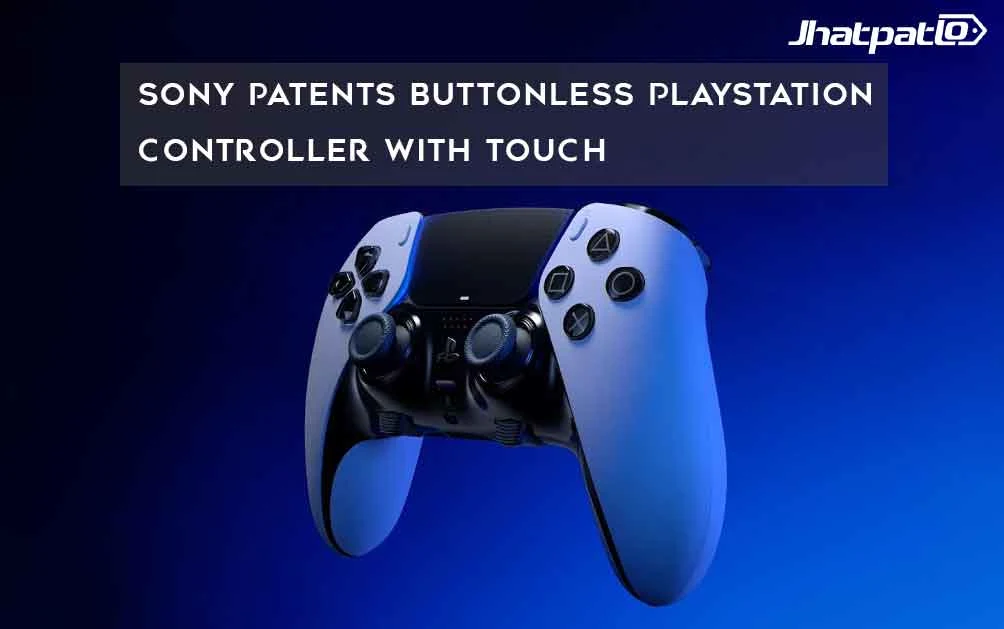
Futuristically speaking, Sony just got approved for a new game controller concept with no physical buttons thanks to a touch screen surface. Their recent patent grant by the US Patent Office is for patenting devices/methods for an input device that will not have buttons – rather, it will exclusively utilize some form of an optical sensor(s) to detect player inputs on the game console.
According to the patent documents, input can come from touch, tap, swipe, press, pinch, or joystick actions applied to one or more surfaces of the controller. The described sensor arrangement would support these inputs via the touchscreen surface rather than traditional hardware keys.
Sony notes that traditional controllers have a fixed configuration that may be uncomfortable for some users. The touch-based design would let users customize the layout of the D pad, buttons, and joysticks on the controller face.
Patent details
The patent describes a buttonless controller surface with a touchscreen interface. It mentions an optical sensor to detect input and a method for mapping touch or gesture inputs to controller actions. The filing date is listed as 2023, and the grant occurred in the most recent week prior to the document being made public.
- Buttonless surface replaces traditional hardware controls
- At least one optical sensor to detect input
- Inputs include touch, tap, swipe, press, pinch, and joystick actions
- Layout of D pad, buttons, and joysticks can be customized on the controller face
Discovery and context
The patent was discovered by the tech leaker xleaks7. The document refers to devices and methods for a game controller but does not specify a product name or release timeline. No launch date or further product details are provided in the transcript of the patent filing.
This report is filed as part of ongoing tech patent coverage and reflects the information disclosed in the patent document as of its grant. The concept highlighted here aligns with broader discussions around touch interfaces and customizable control layouts in gaming hardware.
Related Products




Sony May Back Away From PC Launches for Single-Player Games
Sony's PC strategy under review Sony is described in latest industry chatter as potentially stepping back from releasing first party single player games on PC. The reporting, drawn from Bloomberg journalist Jason Schreier on the Triple Click podcast, suggests Sony could be returni...
MacBook Pro With OLED Touchscreen to Launch Late 2026 With Dynamic Island
A Summary of Expected Product Launches This Year According to reports, Apple has several hardware updates planned this year; among them are new MacBook Pro models with M5 Max and M5 Ultra processors and a lower-cost MacBook model with an A18 Pro processor. In a separate report, Apple is...

OnePlus Ace 6 Ultra Reveals Strix G15 Controller Ahead of April 28 Launch
OnePlus Ace 6 Ultra launch set for April 28 in China OOnePlus has confirmed that the OnePlus Ace 6 Ultra will launch in China on April 28, and the phone is being introduced with a companion accessory, the OnePlus Strix G15 handheld gaming controller. The OnePlus Ace 6 Ultra Reveals a stronger...
Next-Gen Xbox 2027 Launch in Doubt? Microsoft’s Windows-First Console Plans Revealed
Launch Timeline Under Review The next-generation Xbox is not yet formally locked to a 2027 launch by Microsoft, according to a Windows Central report. The piece notes that while 2027 remains the best-case scenario in internal discussions, the company has not “fully internally committed” t...

iQOO 15 Ultra Launches with Touch Shoulder Triggers and Independent Chips
Launch timing and key features The iQOO 15 Ultra, the higher-end sibling of the flagship iQOO 15, is confirmed to launch in China in February before the Spring Festival. A company official outlined gaming features including capacitive touch-based shoulder triggers and independent control chips to r...

Oppo Pad Mini Leak Reveals a Surprise Feature That Changes the Game
Oppo Pad Mini leak details compact tablet with OLED screen and Snapdragon chip Oppo is reportedly preparing to enter the compact tablet segment with a device said to be called the Oppo Pad Mini. Leaked specifications shared by tipster Digital Chat Station point to an 8.8-inch LTPO AMOLED displ...