


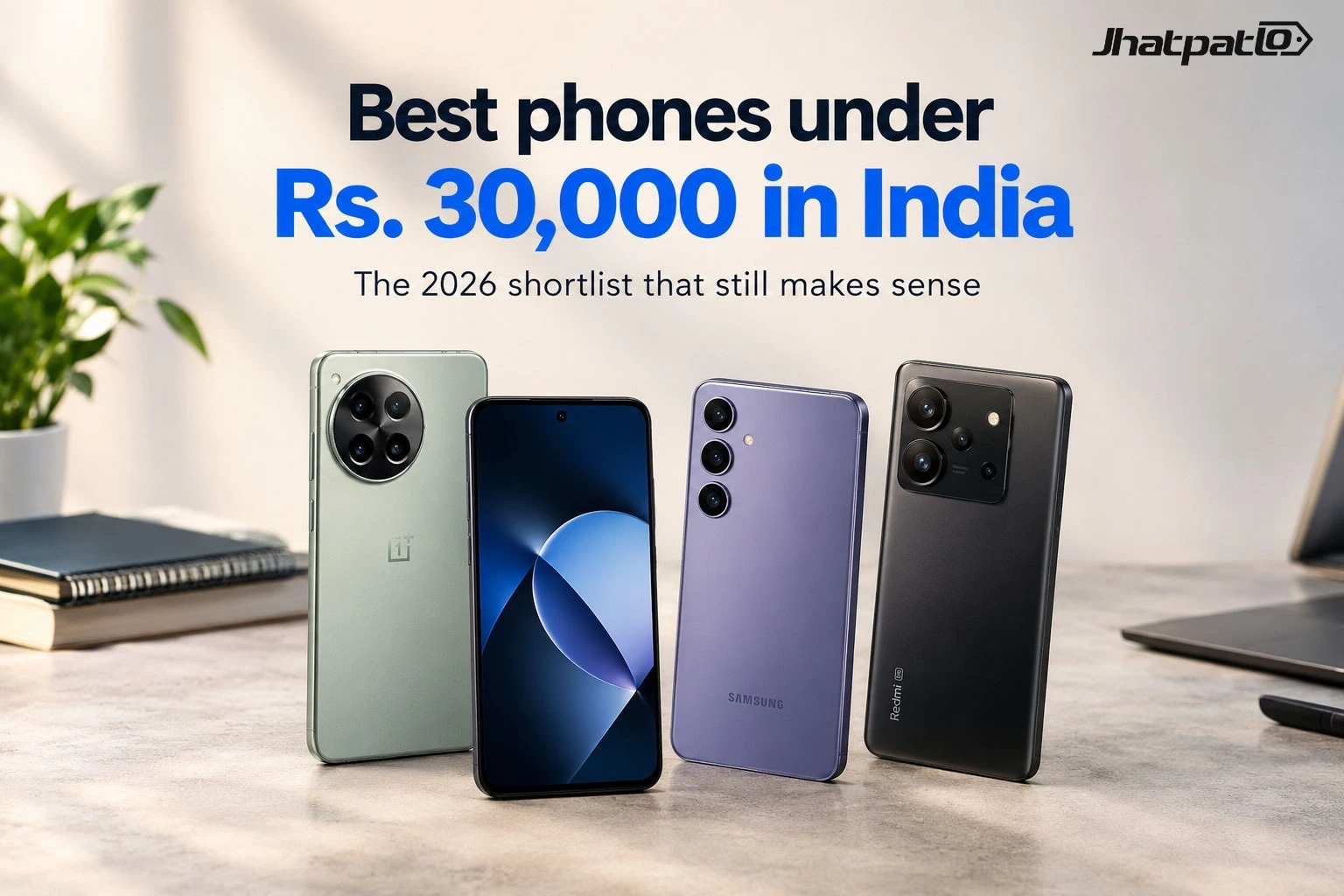
Best phones under Rs. 30,000 in India the 2026 shortlist that still makes sense
Introduction
Motorola Edge 70 Fusion leads this updated list with IP69 durability, a bright AMOLED screen and all-day battery life under Rs. 30,000. And honestly, that already tells you a lot about where this segment is headed. You’re not just looking for a phone that works anymore. You’re looking for the one that feels right when you live with it every day.
The real question is not which phone looks best on paper, but which one still feels worth buying once you notice the trade-offs, the out-of-stock risk on 2025 models, and the fact that not every mid-ranger here is built for gaming. That’s where this shortlist gets interesting. Some phones are battery monsters. Some lean into premium feel. And one or two are trying to do the full balanced-package thing without falling apart somewhere obvious.
Quick Highlights
- Battery life and charging speed matter a lot in this range.
- Some phones are better for gaming, others for cameras or design.
- Motorola Edge 70 Fusion is the safest all-rounder.
- Realme P4 Power is the clear endurance champ.
- Motorola Edge 70 is the only one with wireless charging.
Why this Rs. 30,000 range is still interesting right now
This price band is where budget buyers start getting real extras instead of just acceptable basics. The better 2025 phones in particular bring bright HDR-capable displays, big batteries, fast charging and designs that feel more premium than the segment used to allow. That’s a big deal if you’ve spent years seeing the same boring compromises repeat again and again.
The guide also makes one blunt point: 2026 phones tend to be capable all-rounders, but not specialists, and some of the older 2025 models may disappear from stock soon. So if you spot a good deal, it may not sit there forever. That doesn’t mean you should rush blindly, but it does mean timing can matter almost as much as specs.
Phones in this list all carry an 8/10 Gadgets 360 rating, but the reasons they earn it are very different. One might be amazing for endurance, another for premium design, and another because it quietly nails the balance between the two. This is why the best phones under Rs. 30,000 in India aren’t really about one “winner.” They’re about fit.
- Motorola Edge 70 Fusion — ₹29,499, 8+128
- Realme P4 Power 5G — ₹28,999, 8+128
- Motorola Edge 70 — ₹27,999, 8+256
- Motorola Edge 60 Pro — ₹29,999, 8+256
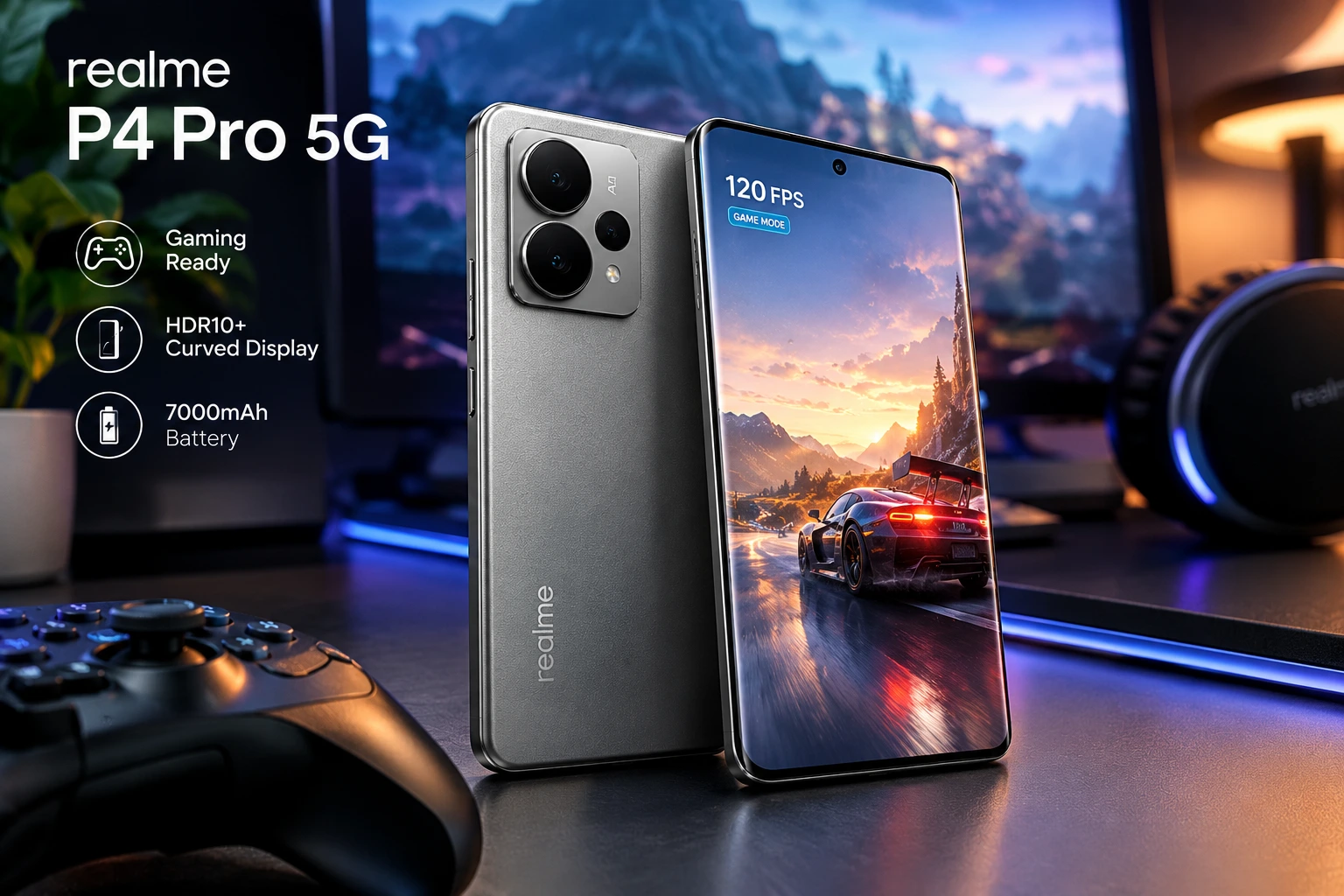
- Realme P4 Pro — ₹26,999, 8+128
The phones that are really about battery, not everything else
Realme P4 Power is the obvious battery-first pick, and the numbers make the point immediately: a 10,000mAh battery, nearly two hours to fully charge, and enough reserve to keep going even at 5 percent. That kind of spec sheet sounds almost silly until you remember how many people are tired of charging a phone every night and still seeing a low battery warning before dinner.
The trade-off is just as clear. Its Dimensity 7400 Ultra is fine for daily multitasking, the design is chunky because of the battery, and the cameras only just meet expectations. So if you’re the kind of person who wants a phone to fade into the background and simply survive, this is your style. If you want something light, sleek and camera-happy, the fit gets shakier.
Motorola Edge 70 Fusion sits closer to the middle: its 7,000mAh battery lasts a full day with heavy use, but raw performance is only decent and gaming is not its strong suit. That balance is what makes it appealing to so many buyers, though. It doesn’t chase one extreme at the expense of everything else. It just tries to be sensible, which is surprisingly rare.
Realme P4 Power 5G is the outlier for sheer battery life
The phone’s battery story is the whole pitch: it can work as a power bank, drains slowly, and is still the only device in India doing this at this level. If you travel a lot, forget chargers at home, or hate the mental tax of watching battery percentage all day, that’s a real quality-of-life win.
It also comes with IP69-rated dust and water resistance, a bright HDR-certified display, and the awkward detail that its 144Hz refresh rate only works with two apps. That last part is exactly the kind of thing buyers miss if they only skim specs. So yes, it sounds impressive, but the real-world experience is a little more complicated.
Still, this is where the Realme P4 Power 5G makes sense. It’s not pretending to be delicate or slim. It’s a giant battery wrapped in a usable phone body, and for the right person, that’s enough.
Motorola Edge 70 Fusion gives more balance, less stamina-extremism
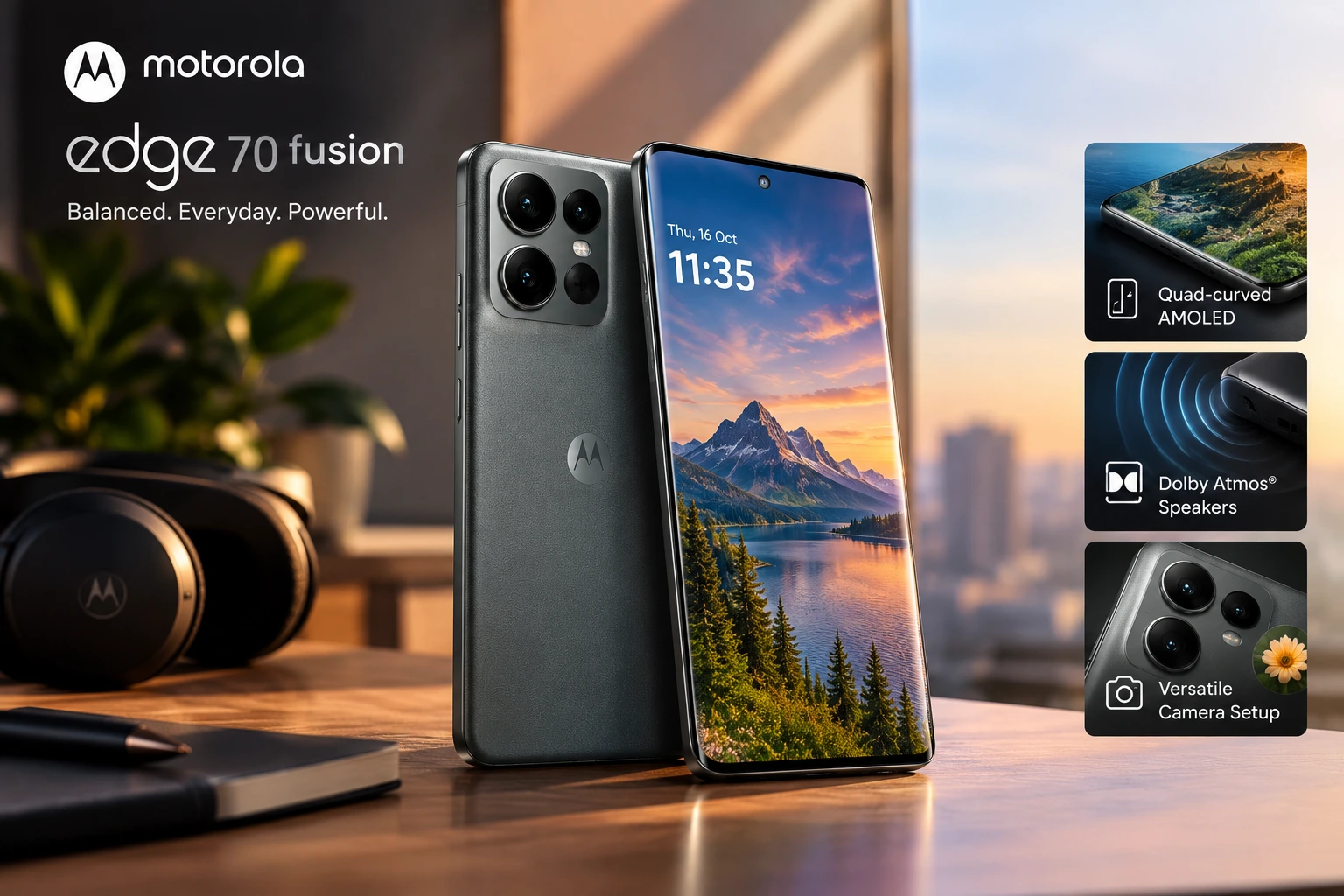
This one swaps the battery headline for a more rounded set of strengths: a bright quad-curved AMOLED panel, Dolby Atmos-certified speakers, a capable main camera and an ultrawide that doubles as a macro lens. That combination feels more everyday-friendly, especially if you don’t want a phone that needs a spreadsheet to explain its personality.
Its weaknesses are also easy to name: no HDR support on the display, a poor ultrawide camera in the official rating, preinstalled apps, and performance that is good for multitasking but not for gaming. But look, not every buyer needs a gaming beast. If your day is mostly WhatsApp, streaming, maps, social apps and photos, the Edge 70 Fusion probably makes more sense than a spec-sheet hero.
That’s the thing about this category. The best value is often not the loudest device. It’s the one that does enough things well without making you feel the compromises every hour.
Which phones actually feel premium in hand
Motorola Edge 70 and Motorola Edge 60 Pro are the two devices here that lean hardest into the “this feels more expensive” effect. The Edge 70 is just 6mm at its thinnest point, while the Edge 60 Pro keeps a more traditional mid-range shape but adds premium extras that still matter. You can usually feel that difference the moment you pick them up. Some phones just seem to have a point of view.
The comparison is less about specs on a sheet and more about what each phone chooses to spend its budget on: thinness, finishes, wireless charging, a 3X telephoto camera, or just more conventional versatility. That’s why these two stand out. They aren’t simply throwing every feature at the wall. They’re making different bets.
Motorola Edge 70 is the only phone here with wireless charging
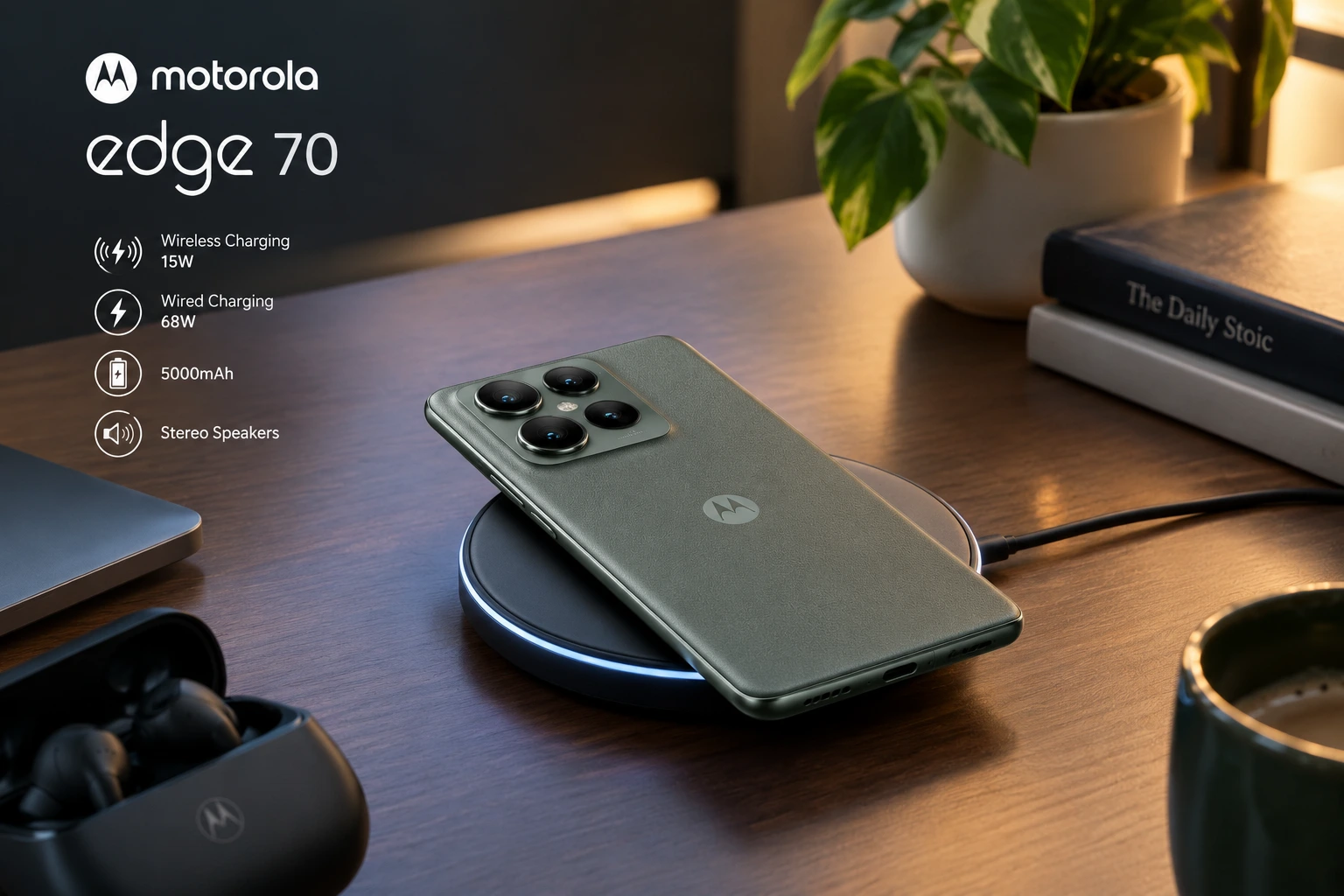
It gets 15W wireless charging, 68W wired charging, a 5,000mAh battery and stereo speakers, which is a very unusual mix at this price. Wireless charging still feels like one of those features people don’t care about until they have it. Then, suddenly, dropping the phone on a pad every evening starts to feel weirdly luxurious.
The camera system is also the strongest in this list at this price point, although low light is still a weak spot and the box does not include a case. That last detail may seem small, but it matters. If you’re spending nearly ₹28,000, little omissions start to feel less little.
Still, the Edge 70 is the kind of phone that gets under your skin in a good way. It’s slim, a bit different, and has just enough premium extras to justify its place here.
Motorola Edge 60 Pro is the most versatile bargain in the group
This is the one that feels easiest to recommend if you want a little of everything: wireless charging, a 3X telephoto camera, a Dimensity 8350 Extreme processor and enough battery life from its 6,000mAh cell to get through more than a day of heavy use. In other words, it doesn’t force you to pick one emotional angle and stick with it.
It is also the phone here with the clearest “older but still relevant” appeal, especially compared with the more battery-obsessed or style-obsessed newer models. Some phones age badly because they were built around a short-lived trend. The Edge 60 Pro feels more stable than that. It may not be the flashiest, but it still makes sense.
If your buying style is less about chasing headlines and more about avoiding regret, this one deserves a close look. It’s the quiet overachiever of the bunch.
Where the cameras and gaming claims actually hold up
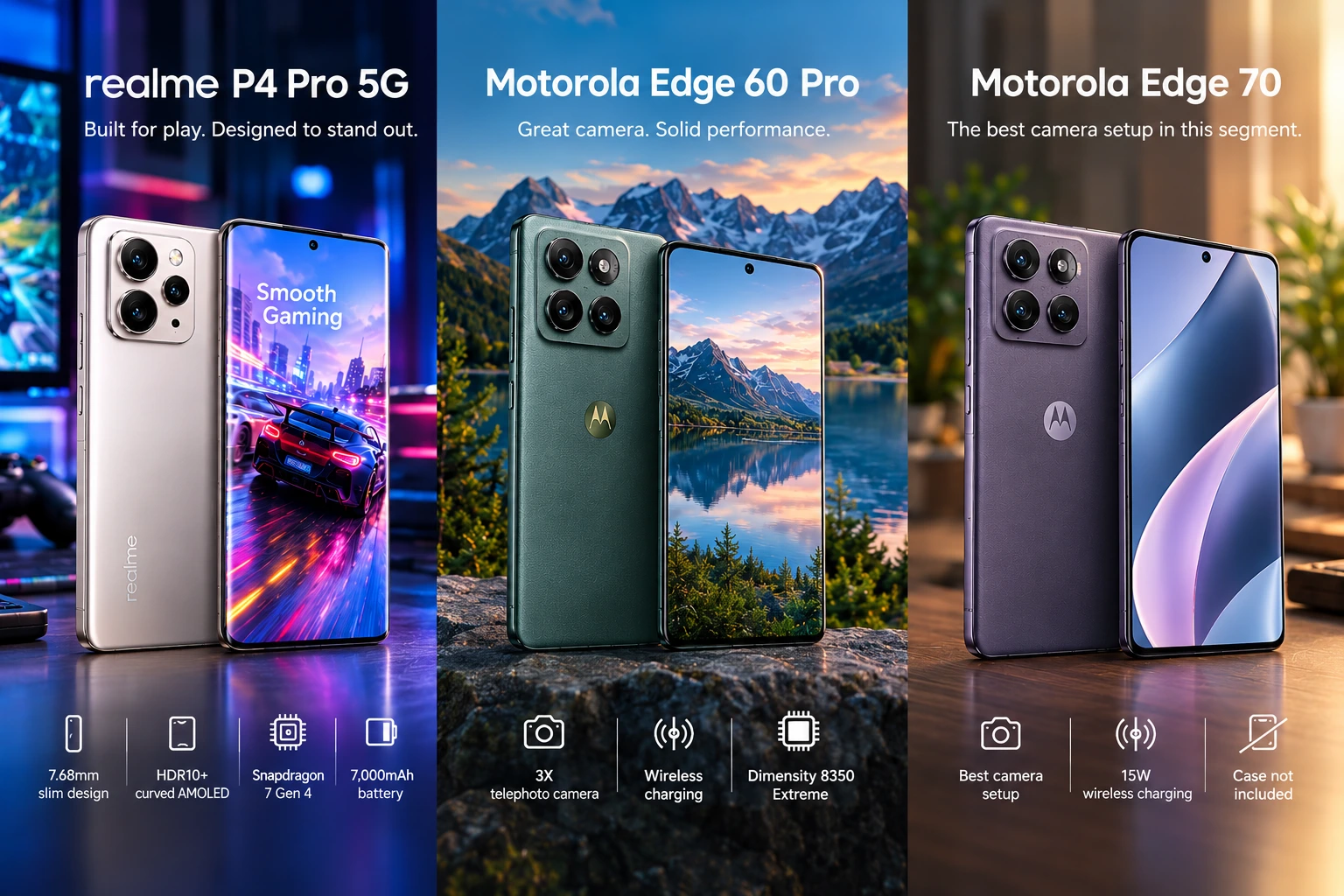
Realme P4 Pro is the most obvious answer if you want a phone that tries to do gaming and design at the same time. It has a slim 7.68mm body, an HDR10+ certified 4D-curved AMOLED display, and the Snapdragon 7 Gen 4 SoC with a Hyper Vision AI chip assisting gaming visuals through MEMC. That is a very specific kind of appeal, but it’s also pretty clear. This phone wants to look fast and feel fast.
The camera story is more mixed: the primary camera is strong in all lighting, but the ultrawide struggles in low light and low-light video is also weak. So it’s not the perfect “do everything” machine people sometimes hope for. But if you mainly want a good-looking phone that handles games confidently and still takes solid everyday photos, the pitch is strong.
Across the list, the practical takeaway is simple: the better gaming phone is not always the one with the biggest battery, and the better camera phone is not always the one with the flashiest display. In this segment, you have to ask what you’ll actually use most. A great spec on paper won’t save a phone from being annoying in real life.
| Phone | Key strength | Clear trade-off |
|---|---|---|
| Realme P4 Pro 5G | Gaming-focused features, HDR10+ curved display, 7,000mAh battery | Poor ultrawide camera, poor low-light video, heats up in the camera app |
| Motorola Edge 60 Pro | 3X telephoto camera, wireless charging, Dimensity 8350 Extreme | Battery is good, but not as impressive as newer 2026 phones |
| Motorola Edge 70 | Best camera setup in this price range, 15W wireless charging | Cameras struggle in low light, and no case is included |
That table really sums up the category. Every phone here wins on something, and every phone here asks you to tolerate something else. There’s no clean escape hatch. But there is a smarter choice depending on what annoys you most.
FAQ
These questions come from the smaller doubts buyers usually have after they narrow the list down: whether battery is enough, whether gaming matters more, and whether wireless charging or durability should change the decision. And honestly, those are the right questions to ask. Most people don’t need more jargon. They need clarity.
Q: Which phone has the best battery life under Rs. 30,000?
Realme P4 Power is the clear answer because of its 10,000mAh battery. It even works as a power bank, though it also takes nearly two hours to fully charge. So yes, it’s the battery king, but it pays for that crown with bulk and slower charging.
Q: Is the Motorola Edge 70 good for gaming?
It is not the strongest gaming pick here. The phone is more about design, camera quality and wireless charging than raw performance. If you game casually, it’ll be fine. If gaming is one of your main reasons for buying, you should probably look elsewhere.
Q: Which phone is best if I want wireless charging?
Motorola Edge 70 is the only phone in this list with wireless charging, and it does it at 15W. That makes it a pretty easy pick if you’re specifically after that convenience.
Q: Should I choose Realme P4 Pro for gaming or the Edge 60 Pro for value?
If gaming features matter more, Realme P4 Pro has the sharper pitch. If you want a more balanced all-rounder with a 3X telephoto camera and broader usefulness, Edge 60 Pro makes the stronger case. In other words, choose the one that matches your daily habits, not the one with the louder marketing angle.
Conclusion
If you want the best phones under Rs. 30,000 in India, the real answer depends on which compromise you can live with: battery first, premium feel first, or one phone that tries to do almost everything well. That’s the honest truth here. This isn’t a segment where one model crushes every other option. It’s a segment where priorities matter.
Motorola Edge 70 Fusion is the safest overall lead recommendation, but the smarter buy may be Realme P4 Power, Motorola Edge 70 or Edge 60 Pro depending on whether you care most about endurance, wireless charging or balance. And if you’ve been waiting for a phone that finally feels tailored to how you actually use your device, this is the kind of shortlist worth slowing down for.

Related Products







Ai+ smartphone price hike pushes Nova 2 Pro and Ultra up by Rs 2,000
Ai+ smartphone price hike is now live across Pulse 2, Nova 2 and Nova 2 Neo 5G, with the biggest jump landing on the Pro and Ultra models. The company says memory, manufacturing and logistics costs forced the revision, adding more pressure to the under-₹20,000 5G segment. Ai+ Pulse 2 pric...

OPPO Reno16 Price Hike India Pushes 12GB 256GB Model to Rs 72,999
OPPO Reno16 price hike India now leaves the 12GB + 256GB variant at Rs 72,999, up Rs 5,000 from launch. The matching 8GB model has also crossed the Rs 66,999 mark, making the cost of OPPO’s premium 5G phones higher for buyers in India. Reno16c 5G revised prices lift all three variant...

Samsung Galaxy A27 5G price hike hits India again by Rs 2,000
Samsung Galaxy A27 5G price hike takes effect from October 7, 2026, lifting the phone’s entry price to Rs 35,999. The revision applies across all three variants in India, with channel partner stock moving to the updated list rate at once. The Samsung Galaxy A27 5G price hike has reportedl...

Redmi Book 2026 Launches in China With 120Hz Displays and Intel Meteor Lake Chips
Redmi Book 2026 Launches in China with two models Xiaomi has made the non-Pro Redmi Book 2026 lineup official in China, bringing two laptops with 120Hz displays and Intel Meteor Lake power. The series includes the Redmi Book 14 2026 and Redmi Book 16 2026, with the starting model priced at CN...

OnePlus 5G phones price hike hits Nord 6, CE6 and N6 series
OnePlus 5G phones price hike hits has now reached several India models, with updated prices across the Nord and N lines. The biggest jump appears on the Nord CE6 Lite, which rises by ₹4,000 and takes its top variant to ₹34,999. For buyers tracking OnePlus 5G phones in India, the new p...