


Carl Pei Says Apps Will Disappear as Smartphones Become Agentic
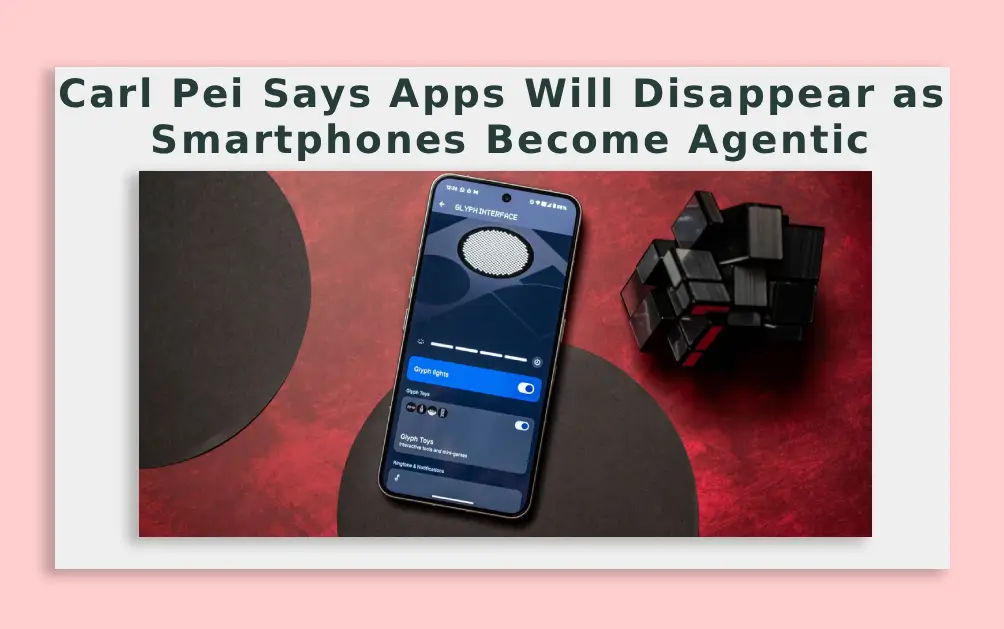
Carl Pei Predicts an App-Less Smartphone Experience
Nothing CEO Carl Pei told audiences at the South by Southwest festival that apps on smartphones will be replaced by autonomous AI agents. In his remarks, Pei described the current app-centric model as boring and largely unchanged for about 20 years. He argued that using a phone today often feels like administrative work, with users juggling multiple apps to complete a task and switching between different interfaces to reach a final result.
Speaking during a SXSW session on Thursday, Pei reiterated his stance on an app-less future for smartphones. He cited the prevailing interaction model as stuck in an era before the iPhone transformed mobile design. “The current way we use phones is very old school. It's pre-iPhone[..] You have lock screens, home screens, apps. You browse different apps; each app is like a full-screen thing. There's some kind of app store that allows you to download more apps. So it hasn't really changed for like 20 years, this interaction model,” he said.
Pei described the present workflow as repetitive and inefficient, offering a concrete example to illustrate why users may soon prefer AI agents over traditional apps. If someone wants to meet for coffee, they would typically need to use one app to book a table, another messaging app to inform the other person, possibly a calendar entry to set the plan, and another service to arrange transportation. According to him, today's app-first model has a task flow that demonstrates how much friction there currently is within that paradigm.
His vision of the future is to take the burden off users by allowing them to inform an AI agent about what they want to accomplish instead of having to navigate through several applications. The AI agent will be able to comprehend all of the tasks that must be executed and will do so. As technology advances and more sophisticated AI agents are developed, they will be capable of achieving increasingly complex results with regard to health-related objectives such as improving quality of life or losing weight. In addition, Pei stated that as AI continues to develop, it will provide users with customized recommendations that are superior to the users' own understanding of their preferences due to the AI's increased knowledge of their preferences.
Based on this perspective, Pei argued that the concept of apps as a standalone paradigm will disappear in the near term. He also issued a caution to developers and company leaders whose core business relies on building and distributing applications. He urged them to consider opening up application programming interfaces (APIs) or connector protocols—such as Anthropic's MCP—so that users can automate functionality via AI agents rather than through manual app-based interactions. “The future is not the agent using a human interface. You need to create an interface for the agent to use. I think that's the more future-proof way of doing it,” Pei said.
Implications for the ecosystem and next steps
The remarks from Pei touch on a broader debate about how smartphone ecosystems adapt to AI-enabled automation. When agents can understand what users are trying to accomplish and build a series of steps (actions) between many different services in order to reach their goal, users will likely have less need for multiple separate applications to assist them in accomplishing those tasks. This development will produce an increased focus on how well different services are able to work together (interoperability) and how well they can work together in an agent-assisted workflow. Pei did not outline a specific timeline/plan for implementing this, but his push for open API's and connector protocols suggest that an API-first environment will help the app economy stay relevant in the agent-assisted future.
The session did not include independent confirmations or counterpoints within the transcript provided. Officials involved in the event did not offer alternative data in this report. What remains clear is Pei’s insistence that the current user experience is outdated and that a new model—where AI agents carry out tasks with minimal human input—could redefine smartphone interaction. The practical and aesthetic implications of a transition to agent-driven automation will depend on how development teams, platform owners, and AI providers implement access points and how individual users respond when using AI agents to complete tasks autonomously.
For those keeping up with technology trends, the SXSW conversation captures a potential pivot point at which mobile user experience (UX) design may change. If the ecosystem is headed toward agent-driven automation, users will interact with their devices via natural language prompts rather than by tapping app icons. In essence, users will provide commands to the agent rather than command their device directly.
In summary, this vision articulated by Pei suggests a future where apps are no longer the primary method by which we complete tasks on a smartphone. Instead, AI agents will interpret what the user wants to do and carry out multi-step actions across multiple services and applications. Developers will be encouraged to facilitate these workflows through open application programming interfaces (APIs) and connectors. This conversation signals a major juncture in how smartphones can operate as intelligent assistants as opposed to relatively independent apps.
You need to create an interface for the agent to use. I think that's the more future-proof way of doing it.
This report reflects the statements as presented in the SXSW session. No additional data or independent confirmation is included in this summary beyond the provided transcript.
Related Products


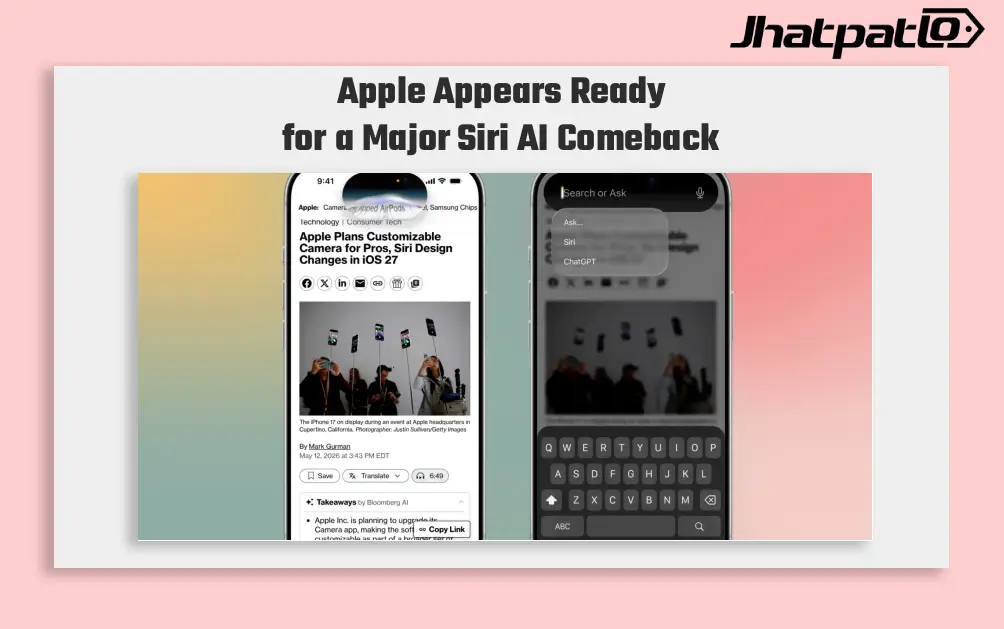
iOS 27 Leak Shows Apple Rebuilding Siri Around AI Search
Apple appears to be reshaping Siri inside iOS 27 Leaked iOS 27 illustrations suggest Apple is preparing a redesigned Siri experience built around AI search, Dynamic Island access and a new Search or Ask interface. The reported changes point to a broader shift in how Apple may place artificial...
Apple Plans Siri App Revamp With Gemini Access and New AI Features
Apple Plans Siri App for iPhone, iPad and Mac Apple is reportedly preparing a broader artificial intelligence push that includes a major Siri overhaul, with a standalone app under testing for iPhone, iPad and Mac. According to Bloomberg's Mark Gurman, the redesigned Siri interface could r...
Apple Expands AI Wearables Beyond iPhone with Glasses and Pendant in Development
Apple AI Wearables in Development Apple is reportedly pursuing a new wave of AI-centric hardware beyond the iPhone and Vision Pro, with early prototypes already tested internally. A Bloomberg report by veteran tech journalist Mark Gurman outlines a lineup that reportedly includes smart glasses, cam...
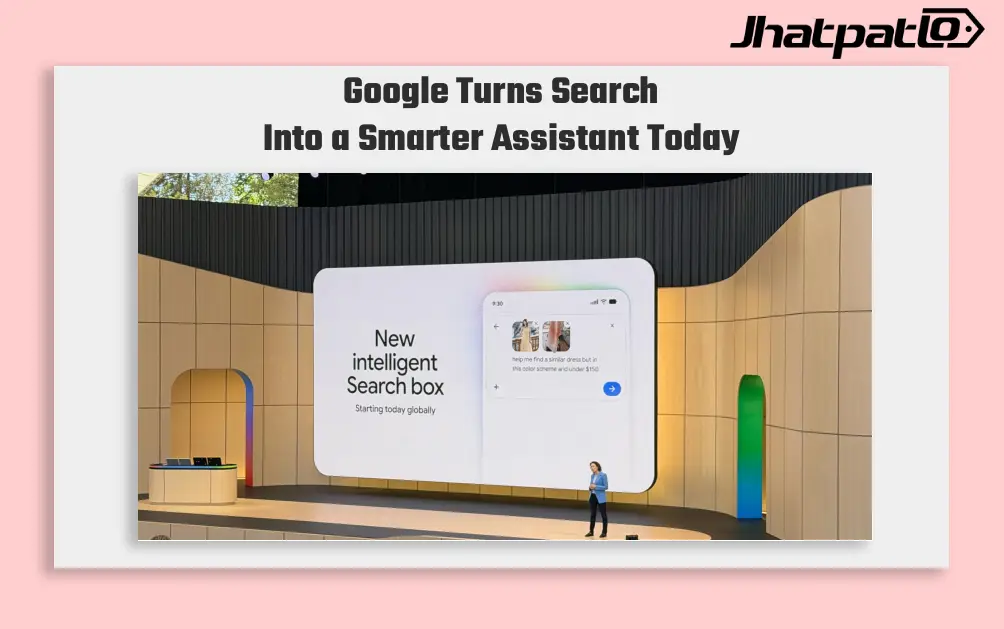
Google Search AI Agents Could End the Era of Blue Links
Google Turns Search Into an AI System Google used I/O 2026 to push Search into a different role, with AI agents that can monitor information, browse on behalf of users and act across tasks. The company also said AI Mode has passed one billion users and that Gemini 3.5 Flash is now the default...

Amazon Transformer AI Smartphone in Development With Alexa Integration
Reuters reports that Amazon is developing a new smartphone under a project internally known as Transformer. The device is described as a handset that would integrate with Alexa and feature inbuilt artificial intelligence capabilities, aiming to keep users connected to Amazon’s ecosystem. T...
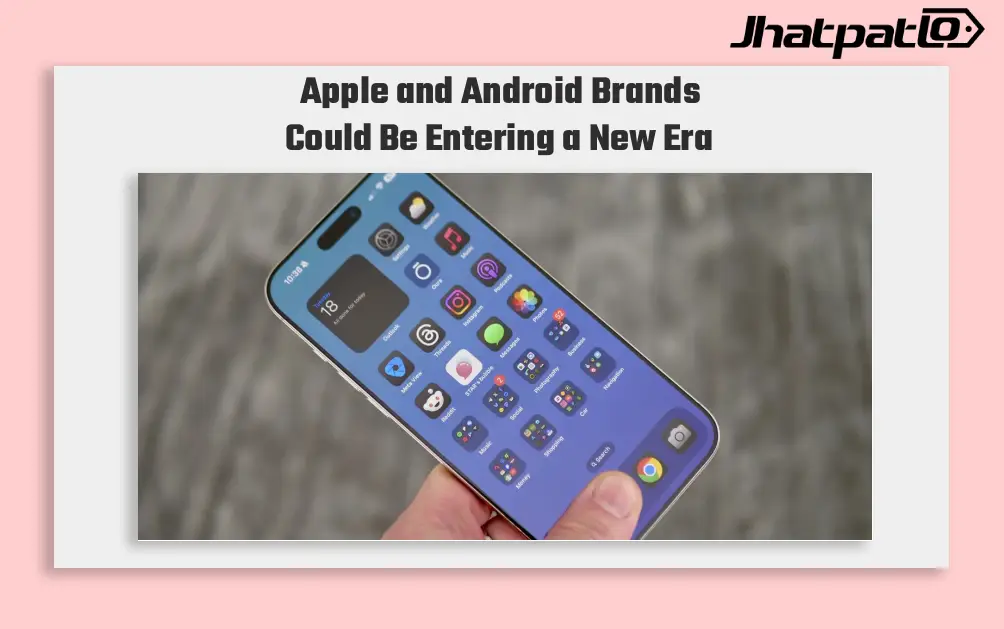
Apple’s Bezel Free iPhone Push Points to a 2027 Design Shift
Apple and Android brands test bezel free designs Apple is reportedly testing a radically redesigned iPhone with a quad-curved, nearly bezel-free display as smartphone makers line up for a possible design shift in 2027. The latest supply-chain leaks also point to Huawei and Xiaomi experimentin...