


Samsung mobile division loss fears grow as Q2 2026 profit leans on chips

Samsung’s mobile business is under fresh scrutiny as Q2 2026 profit appears increasingly dependent on semiconductors rather than phones. Reports from DealSite South Korea point to a possible swing in MX results, and the bigger issue is simple: even strong Galaxy sales may not be enough to protect handset margins if component costs keep rising.
Galaxy S26 series performance is not stopping cost pressure
Samsung’s latest flagship line is still selling well, but that has not insulated the handset unit from margin erosion. The outline points to a possible shift from a KRW 1.9 trillion profit to a KRW 1.5 trillion loss, based on DealSite South Korea’s reporting, which is a sharp reminder that unit sales and profit are not the same thing.
For Samsung MX, the pressure seems to be coming from both sides at once. Premium Android phones are already operating in a tighter pricing environment, and that makes it harder to pass through higher component costs without losing some competitiveness. Even if Galaxy S26 series performance stays solid in the market, the operating picture can still weaken if input costs rise faster than pricing power.
That is why the fear around a Samsung MX quarterly loss is getting attention. The handset business has long been one of Samsung’s most visible engines, but the current setup suggests that visibility does not automatically translate into healthy margins. In a quarter where semiconductors may carry a larger share of profit, the mobile unit looks more exposed than usual.
RAM chip cost increase and NAND flash storage cost squeeze phone margins
The cost side of the equation is getting worse for premium smartphones. Market estimates in the outline show that the RAM chip cost increase for an $800 phone has risen from 14% to 23%. That is a meaningful jump, especially for a category where buyers expect top-tier specs without a major price change.
NAND flash storage is also taking a larger share of production cost, now reaching about 15% of the total. These are the kinds of components that sit deep in the bill of materials, so even moderate inflation has a real effect on the final margin. Once memory costs move up, every hardware decision becomes a little harder to balance.
For Samsung, this matters because the company is active across the full premium range, not just in one niche segment. If the cost of memory keeps climbing, then Samsung’s next Galaxy pricing in the global flagship market comes under pressure as well. That does not automatically mean a price increase is coming, but it does mean the economics of each launch become less forgiving.
In practical terms, higher RAM and NAND costs reduce the room to absorb other expenses such as manufacturing, logistics, and marketing. The result is a narrower cushion for the mobile division at the same time the semiconductor business may be doing more of the heavy lifting in overall earnings.
That is the key point in this Q2 2026 Samsung Electronics profit story. The headline may still look strong, but the mix underneath matters. If chips are supporting the quarter while mobile margins tighten, then the first quarterly loss ever for Samsung’s mobile division becomes a real possibility worth watching closely.

Mahi Gupta
✉ mahigupta708076@gmail.comRelated Products


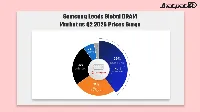
Samsung leads global DRAM market share as Q2 2026 prices rise
Samsung held 39% of global DRAM sales in Q2 2026, staying ahead of SK Hynix at 26% and Micron at 25%. Rising DRAM prices helped, but Samsung also benefited from stronger HBM execution, which added more pressure across the DRAM supply chain. That mix of pricing and product strength is impo...

IDC Forecast Global Smartphone Shipments Drop to a Decade Low as Memory Shortage Drives Prices Up
Global smartphone shipments are forecast to fall to 1.1 billion units in 2026, a 12.9 percent year-on-year decline, as memory shortages tighten supplies and push costs higher. The International Data Corporation (IDC) says the drop will bring annual shipments to their lowest level in more t...
Qualcomm Brands Cut Shipments Amid Memory Shortage
Q1 2026 Results and Outlook Qualcomm reports Q1 2026 revenue of $12.2 billion and projects Q2 revenue at $10.2 to $11 billion. The results come as the company identifies a global memory shortage weighing on handset production. On the Q1 earnings call, Chief Financial Officer Akash Palkhiwala no...

Samsung Rules Out iPhone Air Rival and TriFold Amid Weak Demand
Samsung has reportedly adopted a conservative approach to launching new smartphone form factors, with no commitment to introducing new-form factor devices such as an iPhone Air competitor and Galaxy Z TriFold successor within the next year. The cautious approach comes after a recent Bloomb...

Qualcomm's Snapdragon 8 Gen 6 Pro Reportedly Priced Higher, Tipster Claims
Primary development A Weibo post by tipster Digital Chat Station claims Qualcomm's next-generation flagship chipset, codenamed SM8975, will be “extremely expensive” and marketed as the Snapdragon 8 Gen 6 Pro. The post says the chip will be built on Taiwan Se...
Apple Sees Memory Costs Pressure on Q2 Gross Margin
Apple Sees Memory Costs Pressure on Q2 Gross Margin Apple beat estimates for its fiscal quarter ended December 27, reporting record revenue of $143.8 billion, up 16 percent year over year. The company said supply chain cost pressures have had a limited impact on its results so far. During the ea...