


Samsung leads global DRAM market share as Q2 2026 prices rise
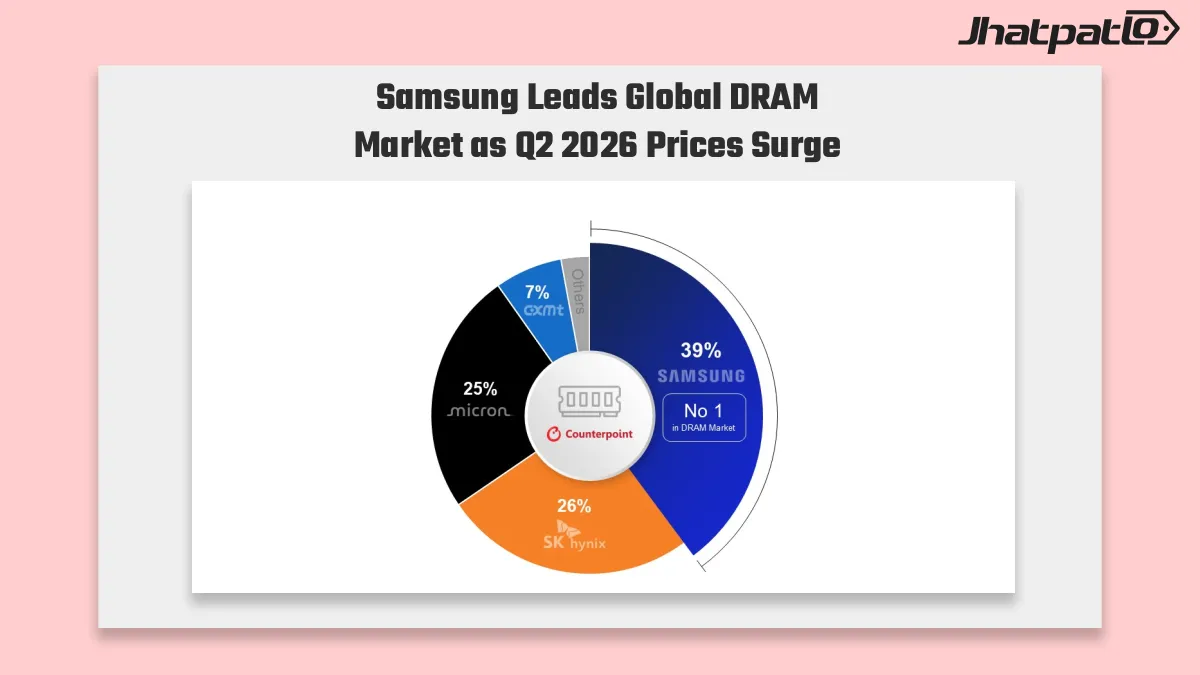
Samsung held 39% of global DRAM sales in Q2 2026, staying ahead of SK Hynix at 26% and Micron at 25%. Rising DRAM prices helped, but Samsung also benefited from stronger HBM execution, which added more pressure across the DRAM supply chain.
That mix of pricing and product strength is important because it shows why Samsung continues to lead the global DRAM market in Q2 2026, even as rivals keep spending heavily on memory capacity. The numbers also point to a widening split in how the top vendors are preparing for the rest of the decade.
Samsung DRAM capacity growth points to a bigger lead by 2030
Nomura projects Samsung Electronics’ DRAM output to rise from 655k wafers a month at the end of 2024 to 1,264k by the end of 2030. The biggest additions are expected to come from P4, P5 and P6. That matters because more output gives Samsung more room to protect pricing power in the high-end memory market.
In practical terms, this kind of capacity growth can strengthen supply control if demand stays firm. It also suggests Samsung is not just holding its current position. It is building a path that could make its lead harder to challenge later in the decade, especially if DRAM pricing remains elevated.
- Projected DRAM output at end-2024: 655k wafers a month
- Projected DRAM output by end-2030: 1,264k wafers a month
- Main capacity additions: P4, P5 and P6
For the market, this is a clear signal that scale still matters. Even with competitive pressure from SK Hynix and Micron, Samsung appears to have a more aggressive long-term expansion path in DRAM.
SK Hynix NAND capacity trends lag now, then turn sharply higher
SK Hynix is following a less even NAND path. Capacity is expected to contract in 2025 and again in 2027 before turning sharply higher in 2028. By 2030, it is projected to reach 580k wafers a month. That pattern suggests a slower start, followed by a more forceful ramp later in the decade.
Micron’s DRAM regional split is steadier by comparison, but the broader picture is still uneven across the memory industry. Rivals are entering the decade with different fab timing and different levels of capital intensity, which can affect how quickly they respond to pricing changes and demand shifts.
- SK Hynix NAND contraction expected in 2025
- Another contraction expected in 2027
- Growth surge begins in 2028
- Projected NAND capacity by 2030: 580k wafers a month
That uneven timing is part of why Samsung’s position looks strong right now. While competitors are balancing expansions, pauses and later ramps, Samsung’s DRAM path appears more direct. For buyers, suppliers and analysts watching the memory cycle, the main takeaway is simple: the top players are not moving in sync, and that could shape pricing and share through 2030.

Related Products


Samsung memory price lawsuit targets DRAM prices in US class action
Samsung memory price lawsuit claims consumers paid inflated costs after DRAM shortages pushed RAM prices sharply higher across PCs, phones, and other devices. The filing puts Samsung, Micron, and SK Hynix in the center of a US consumer damages claim, with possible fallout for memory pricin...
HBM4 Memory Chips Drive Demand as Samsung Reveals New Designs
Samsung Signals Strong Demand for HBM4 Memory Samsung expects demand for its memory chips to stay high through 2027 as AI hyperscalers order memory at unprecedented levels, pushing prices higher. Song Jai-hyuk, the CTO of Samsung’s Device Solutions division, spoke at Semicon Korea and out...
Samsung mobile division loss fears grow as Q2 2026 profit leans on chips
Samsung’s mobile business is under fresh scrutiny as Q2 2026 profit appears increasingly dependent on semiconductors rather than phones. Reports from DealSite South Korea point to a possible swing in MX results, and the bigger issue is simple: even strong Galaxy sales may not be enough to...

SK hynix fab investment 2026 lifts Yongin Y2 and M17 output plan
SK hynix fab investment 2026 centers on KRW 54 trillion, or about $38 billion, split between Yongin Y2 and Cheongju M17. The company is targeting cleanroom openings in 2029 and 2028 as it tries to keep HBM, DRAM, and NAND supply aligned with AI memory demand changes. That matters for cust...
IDC Forecast Global Smartphone Shipments Drop to a Decade Low as Memory Shortage Drives Prices Up
Global smartphone shipments are forecast to fall to 1.1 billion units in 2026, a 12.9 percent year-on-year decline, as memory shortages tighten supplies and push costs higher. The International Data Corporation (IDC) says the drop will bring annual shipments to their lowest level in more t...
Qualcomm Brands Cut Shipments Amid Memory Shortage
Q1 2026 Results and Outlook Qualcomm reports Q1 2026 revenue of $12.2 billion and projects Q2 revenue at $10.2 to $11 billion. The results come as the company identifies a global memory shortage weighing on handset production. On the Q1 earnings call, Chief Financial Officer Akash Palkhiwala no...