


Huawei Mate TV 2 Max Arrives With 110-Inch Screen and 6,000-Nit Brightness
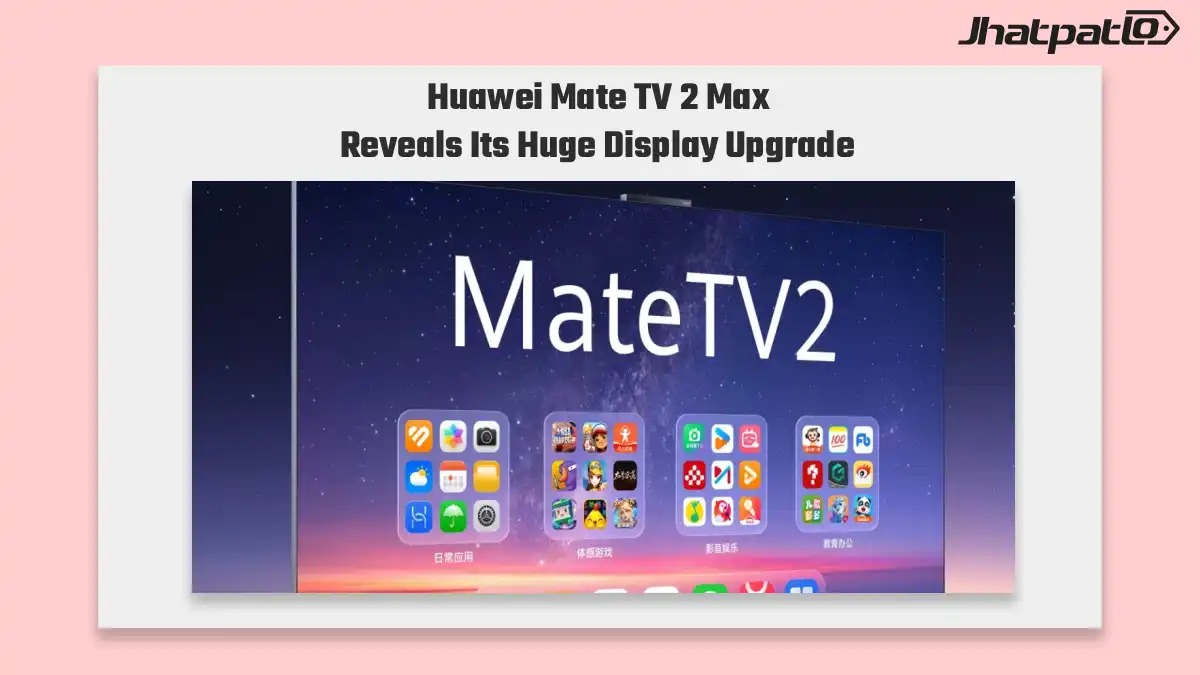
Huawei has launched the Mate TV 2 series, led by the Mate TV 2 Max with a 110-inch Super MiniLED display and 6,000-nit peak brightness. The lineup is built around Huawei’s Kirin T92 TV platform and HarmonyOS 7, with the Pro and Max models also offering 12GB+256GB storage.
The Huawei Mate TV 2 Max has launched as part of the Mate TV 2 series, bringing a massive 110-inch display with up to 6,000-nit peak brightness. The flagship television is powered by Huawei’s Kirin T92 chip and runs HarmonyOS 7, combining high-end display technology with the company’s latest smart TV platform. The Mate TV 2 Max is aimed at users looking for a large-screen premium viewing experience with powerful hardware and advanced features.
News Highlights
- The Mate TV 2 Max is the flagship model and stands out with a 110-inch Super MiniLED panel, placing it in the high-end home cinema segment where very large screens matter most.
- Huawei is using the Kirin T92 TV platform across the lineup, with HarmonyOS 7 handling the software layer for the Enjoy, standard, Pro, and Max versions.
- The Pro and Max models go up to 12GB+256GB storage, showing Huawei is tying the TV line closely to its wider smart ecosystem and performance positioning.
- Beyond display hardware, Huawei is adding real-time 3D rendering for 2D content and 4K screen casting from phones, tablets, and computers.
Huawei Mate TV 2 lineup uses Kirin T92 and HarmonyOS 7 across four models
The Huawei Mate TV 2 series is not just about one oversized model. The lineup includes four versions: Enjoy, standard, Pro, and Max. Across the range, Huawei is using the Kirin T92 TV platform together with HarmonyOS 7, which keeps the software and hardware approach fairly consistent from one model to the next.
That matters because smart TVs are increasingly judged on more than panel size alone. In Huawei’s case, the platform choice suggests the company is leaning on its own ecosystem rather than treating the TV as a standalone display. The Pro and Max models also move up to 12GB+256GB storage, which is a notable spec for a TV and points to heavier software demands.
For buyers comparing premium smart TVs, this part of the lineup is likely to matter almost as much as the screen itself. Storage, platform support, and system responsiveness can shape the experience just as much as brightness or contrast, especially when the TV is expected to handle streaming, casting, and other connected features smoothly.
Huawei Mate TV 2 Max brings a 110-inch screen and 6,000-nit brightness
The headline model is the Huawei Mate TV 2 Max, and the main numbers are hard to miss. It pairs a 110-inch Super MiniLED panel with 6,000-nit peak brightness. That puts it firmly in premium territory, especially for users looking at a true home cinema setup rather than a regular living room TV.
Size and brightness are the two specs that define this model most clearly. A 110-inch panel is already far beyond the usual consumer TV range, and the 6,000-nit brightness figure suggests Huawei is aiming for strong HDR impact as well. In practice, that combination should make the Max model the attention-grabber of the series, even before you get into the software features.
Huawei is clearly targeting the part of the market where screen scale matters almost as much as image quality. The description of the panel as Super MiniLED also places it in the category of modern high-end TV hardware, though the outline does not add more technical detail beyond that. Still, the spec sheet alone is enough to show where this model is meant to sit.
Huawei adds 3D rendering for 2D content and 4K casting
Huawei is also pushing features that go beyond raw panel specifications. One of the more notable additions is real-time 3D rendering for 2D content. Another is 4K screen casting from phones, tablets, and computers. Both features are aimed at making the TV more useful as part of a broader connected setup.
These additions give the Mate TV 2 series a different kind of appeal. A lot of premium TVs compete on brightness, screen size, and panel quality, but software features can be just as important for some buyers. Casting support, in particular, makes the TV easier to use with other devices, while real-time 3D rendering adds a more distinctive software layer to the experience.
In simple terms, Huawei seems to be building the Mate TV 2 lineup as more than a display-first product. It is a TV series that leans on ecosystem integration, strong hardware, and a few software features that may help it stand out in the premium market. The most visible headline is still the 110-inch Max model, but the broader lineup shows the company is thinking about how the TVs fit into everyday connected use.

Related Products





Huawei Mate 90 launches in China with Kirin 9030 and 6,600mAh battery
The Huawei Mate 90 launch in China introduces a new premium flagship powered by the Kirin 9030 chipset, backed by a large 6,600mAh battery and 66W wired charging. Starting at CNY 5,999, the Huawei Mate 90 runs HarmonyOS 7 and focuses on performance, extended battery life, and imaging upgra...
Huawei Mate XT 2 Launches with Reworked Tri Fold Hinge and Built in ECG
Huawei has launched the Mate XT 2 tri-fold with a reworked G-shaped Wing Fold hinge, IP58/IP59 protection, and a folded profile that drops to 12.3mm. The phone also brings a 10.2-inch OLED display, Kirin 9050 Pro performance, and higher-end trims with built-in ECG support, putting the focus on...
Huawei Mate XT 2 Design and Pre Order Details Revealed Ahead of Launch
Huawei Mate XT 2 tri-fold pre-orders are live in China ahead of the Sept. 7 reveal, and Huawei has already confirmed a key detail: all variants will come with 16 GB RAM. The lineup also reaches a 2 TB storage option, which pushes the foldable firmly into luxury-phone territory before prici...
Huawei Mate XT 2 tri fold gets first official look before September 7
Huawei Mate XT 2 tri-fold has appeared in a teaser video ahead of its September 7 China unveiling, giving the clearest look yet at its inward-folding design revealed. The shift away from the earlier foldout approach is the biggest detail so far, and it hints that Huawei is still refining i...

Huawei Mate 80 Pro Global Variant Design Teased Ahead of February 26 Madrid Launch
Huawei Mate 80 Pro Global Variant Design Teased Ahead of Madrid Launch Huawei has shown the design of the Mate 80 Pro ahead of its international debut. The company posted official visuals on X highlighting a new Dual Space Ring rear design that appears to be the same as the model already available...